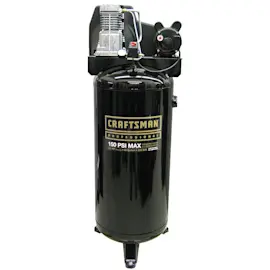
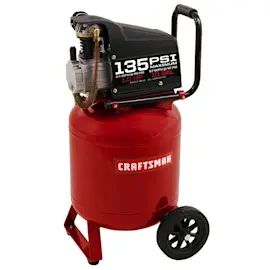
Owner’s manual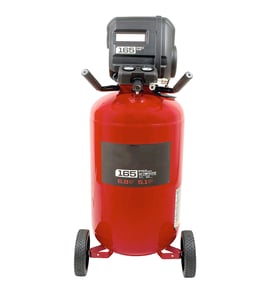

Is it worth it to repair a compressor?
Yes, repairing a Craftsman air compressor model 919166600 is worth it when the problem is a common service item (like a pressure switch, check valve, or leaking fitting) and the tank is in good condition; those repairs typically restore safe, reliable operation for far less than replacement.
Quick way to decide
We use these checkpoints to decide whether repair makes sense:
- What failed: controls (pressure switch), valves, gauges, fittings, or the pump are usually repairable
- Tank condition: any sign of severe corrosion or damage makes replacement the smarter choice
- How it failed: sudden no-start or leaking is often a single-part fix; repeated overheating or chronic low pressure can mean deeper wear
- Age and usage: light DIY use favors repair; heavy daily use may justify replacement sooner
- Safety first: any repair that involves electrical or pressurized air must be done with the unit unplugged and the tank fully drained
What the manual says that affects the decision
The manual emphasizes two repair-or-replace factors:
- Safe service steps: before maintenance or repair, unplug the compressor and bleed off all tank pressure. This reduces risk while troubleshooting and replacing parts. See the owner's manual.
- Tank health depends on draining: if water is not drained, it can corrode and weaken the air tank. A weakened tank is not a good repair candidate. See the owner's manual.
Common repair scenarios (and typical effort)
| Symptom | Likely cause | Typical repair level |
|---|---|---|
| Safety valve pops | Pressure switch not shutting off | Moderate (control part replacement) |
| Air leaks at fittings | Loose tube fittings | Easy (tighten, soap-test) |
| Air leaks at/inside check valve | Dirty or defective check valve | Moderate (valve service/replacement) |
| Won't start | Electrical/control issue or pressure-related issue | Moderate (diagnose, then repair) |
For guided troubleshooting, use air compressor won't start.
Why it matters
A “worth it” repair is one that restores safe pressure control and leak-free operation. If the tank has been kept dry by regular draining and storage in a clean, dry location, repairs tend to pay off with longer service life.
Ordering parts
We recommend matching parts by model number 919166600 and the exact part description from the parts list; you can also search by model on Sears PartsDirect if you are sourcing additional items.
Last updated: February 2026
What does 4.0 scfm at 90 PSI mean?
“4.0 SCFM at 90 PSI” means your Craftsman 919166600 air compressor can deliver about 4 standard cubic feet of air per minute while maintaining 90 PSI at the outlet. It is a quick way to match the compressor’s airflow to the needs of air tools and accessories.
How to use that rating to pick the right tool
Most pneumatic tools list an airflow requirement (SCFM) at a working pressure (often 90 PSI). For reliable performance, we recommend choosing a compressor that meets or exceeds the tool’s requirement.
- Find the tool’s required SCFM at 90 PSI (or its stated operating pressure)
- Compare it to the compressor rating: 4.0 SCFM at 90 PSI
- Add a buffer (about 25% to 50%) for continuous use tools (sand ers, grinders, paint sprayers)
- Remember: higher PSI does not replace missing SCFM; airflow is what keeps the tool running
- Use a regulator so outlet pressure stays within the tool’s maximum rating (per the safety guidance in the manual)
SCFM vs PSI (what each number tells you)
| Spec | What it measures | What you notice in real use |
|---|---|---|
| SCFM | Airflow volume (standardized) | Whether the tool keeps up without bogging down |
| PSI | Air pressure (force) | Whether the tool hits hard enough or sprays correctly |
Why “standard” matters
SCFM is measured under standardized conditions so you can compare compressors more fairly. Actual delivered airflow can vary with temperature, altitude, hose size, fittings, and restrictions like a dirty intake filter.
Quick safety and setup reminders
From the Craftsman 919166600 documentation, keep these basics in mind:
- Check the tool’s pressure rating; regulator outlet pressure must not exceed it
- Install a regulator if your tool/accessory is rated under 200 PSIG and your compressor setup does not already include one
- Turn the compressor off before attaching or removing accessories
- Wear eye protection and never point an air nozzle at your body
For model-specific definitions (CFM, SCFM, PSIG) and operating guidance, use the owner's manual. If you need to look up additional parts or model information beyond what’s listed for this unit, search by model number on Sears PartsDirect.
Last updated: February 2026
Is a 20 gallon air compressor big enough for air tools?
Yes, a 20-gallon air compressor is big enough for many air tools used intermittently, but it is often too small for continuous, high-air-demand tools. With a Craftsman 919166600, the deciding factor is the tool’s required SCFM at the PSI you plan to run, not tank size alone; match the tool rating and keep regulated outlet pressure within the tool’s maximum rating per the owner's manual.
What a 20-gallon tank handles well
A 20-gallon tank typically works best when the tool runs in short bursts and you can pause to let the pump recover.
- Brad/finish nailers and staplers
- Tire inflation and blow guns
- Light-duty impact wrench use (short bursts)
- Caulking/grease guns that use air assist
- Small airbrush tasks (with proper filtration)
Where a 20-gallon tank often struggles
These jobs tend to need steady airflow; the compressor may run nearly nonstop and pressure can sag.
- DA sanders and grinders
- Continuous spray painting (especially larger tips)
- Sandblasting
- Long, continuous blow-off/cleaning
How to decide quickly (use SCFM + duty cycle)
Tank size affects how long you can run before pressure drops; SCFM determines whether you can run continuously.
| Tool type | Air demand pattern | 20-gallon result (typical) | What to watch |
|---|---|---|---|
| Nailer/stapler | Short bursts | Works well | Set regulator to tool PSI |
| Impact wrench | Bursts | Usually OK | Recovery time between uses |
| HVLP/spray gun | Continuous | Often marginal | Pressure drop, moisture |
| Sander/grinder | Continuous | Often not enough | Constant running, heat |
Setup tips for safer, better performance
The manual guidance is clear: check the tool’s pressure rating and keep the regulator outlet pressure at or below that rating.
- Verify the tool’s SCFM requirement at 90 PSI (common rating point)
- Use the regulator; never exceed the tool’s maximum PSI
- Add a filter/moisture separator for painting and air-sensitive tools
- Use the shortest practical hose and correct fittings to reduce pressure loss
- If the compressor is not keeping up, reduce air usage or step up to a larger-capacity unit
Why it matters
Oversizing the tool demand leads to low working pressure, poor tool performance, and excessive compressor run time. Matching SCFM and PSI helps your tools work consistently and helps the compressor operate within normal limits.
For troubleshooting airflow or performance issues, we recommend our DIY guides like air compressor won't build tank pressure. If you need to look up parts by model number, start with the parts list for Craftsman 919166600 or search by model on Sears PartsDirect.
Last updated: February 2026
What is the most common cause of air compressor failure?
Poor maintenance that causes overheating and excessive run time is the most common cause of failure on a Craftsman 919166600 air compressor. Restricted air intake, small air leaks, and control issues (pressure switch or check valve) make the pump and motor work harder until parts wear out.
Most common failure causes
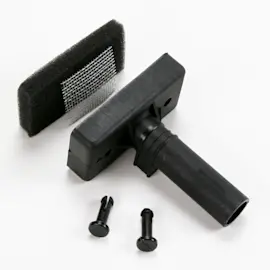
- Restricted intake airflow (dirty filter, blocked ventilation) leading to overheating
- Air leaks at fittings, hoses, or the tank system causing constant cycling
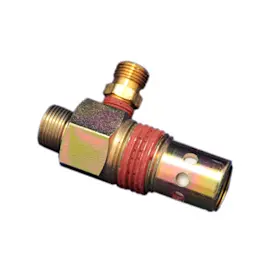
- Defective or dirty check valve causing hard restarts and poor pressure build
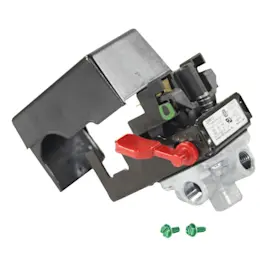
- Pressure switch problems (won’t shut off, stuck contacts) causing overpressure or no-start
- Electrical supply issues (loose connections, wrong extension cord gauge) tripping overload
Quick checks that prevent breakdowns
Follow the safety steps in the 919166600 owner's manual before servicing.
- Unplug the compressor and bleed off tank pressure before inspecting
- Use soapy water to find leaks; tighten fittings gently (do not overtighten)
- Keep the intake area clean and ensure good ventilation around the unit
- If the safety valve pops, move the pressure switch to OFF and address the control issue
- If it will not restart with tank pressure, suspect the check valve or pressure switch
Symptom-to-cause guide
| Symptom | Most likely cause | What it leads to |
|---|---|---|
| Runs long, won’t build pressure | Leak, restricted intake, check valve restriction | Overheating, pump wear |
| Won’t restart with pressure in tank | Check valve stuck open, pressure switch issue | Overload trips, motor stress |
| Safety valve pops off | Pressure switch not shutting off at cut-out | Forced shutdown, unsafe pressure |
Why it matters
Most “failures” start as a small leak or airflow restriction. Fixing those early reduces heat and cycling, which protects high-cost components like the motor, pump, and pressure switch.
Helpful DIY troubleshooting
Use our step-by-step paths: air compressor won't start and air compressor won't build tank pressure. For model-based parts lookup, search by model on Sears PartsDirect.
Last updated: February 2026