 Owner’s manual
 Error Codes



How do I know what water filter my Kenmore refrigerator needs?
To identify the correct water filter for your Kenmore refrigerator model 59672232200, we match the filter to your exact model number and the filter housing style inside the fresh food section. The model and serial tag is typically on the left wall of the refrigerator compartment; use that model number to select the compatible cartridge listed for your unit in the 59672232200 owner's manual.
- Locate the model/serial label inside the refrigerator section (commonly on the left wall).
- Check whether your refrigerator is equipped with a filter system (some versions are not).
- Find the filter location (often in the upper interior, grille area, or a base grille housing).
- Note the cartridge shape and how it locks in (push-in, quarter-turn, or latch).
- Match the filter by model number first; then confirm the housing style.
Most Kenmore bottom-mount refrigerators use a cartridge that installs into a dedicated filter head. When you remove the old filter, compare these details:
| What you see | What it usually means | What to do next |
|---|---|---|
| A twist/turn cartridge | Quarter-turn style filter | Match by model number and confirm the same twist interface |
| A push-in cartridge with a release button | Push-to-lock style filter | Match by model number and confirm the same latch/release design |
| No filter housing inside the refrigerator | Filter may be external or not equipped | Check the water line setup and the how to replace the water filter in a Kenmore refrigerator guide |
Using the correct filter for 59672232200 helps maintain proper water flow to the water dispenser and ice maker, reduces leaks at the filter head, and avoids fit issues that can cause poor sealing or restricted water supply.
Last updated: January 2026
What are the common problems with Kenmore Elite refrigerators?
Common Kenmore Elite refrigerator issues (including Kenmore model 59672232200) usually fall into a few buckets: not cooling well, frost or moisture problems, odors, and unusual noises. Many are caused by airflow restrictions, dirty condenser coils, door sealing issues, or a failing cooling-system component; our 59672232200 owner's manual troubleshooting table is a good starting point.
- Food too warm: condenser coils dirty, rear air grille blocked, controls need adjustment, or the door is not closing properly.
- Water droplets outside: high humidity or a weak door gasket seal.
- Water droplets inside: frequent door openings, high humidity, or control settings.
- Odors: spills, uncovered food, or a compartment that needs cleaning.
- Buzzing/clicking/humming: often normal cycling, but repeated clicking can point to a compressor start issue.
- Confirm doors seal and close: check for torn gaskets and internal obstructions; level the refrigerator so doors self-close.
- Clean condenser coils: dust buildup is a top cause of warm temps and long run times.
- Verify airflow: keep vents and the rear air grille clear; avoid overpacking.
- Adjust temperature controls: wait 24 hours after changes before judging results.
- Listen for patterns: constant clicking or failure to start cooling points to an electrical start problem.
| Symptom | Commonly involved area | Example part for this model |
|---|---|---|
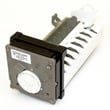
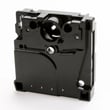
| Ice maker not making ice | Ice maker assembly or ice mechanism | Refrigerator ice maker D7824706Q |
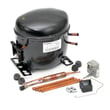
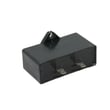
| Clicking near compressor, poor cooling | Start components or compressor circuit | Refrigerator overload WP12555902 |
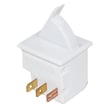
| Lights not working when door opens | Door switch or bulb | Refrigerator switch W11396033 |
Warm temperatures, moisture, and poor door sealing make the compressor run longer, which can shorten component life and increase energy use. Starting with cleaning, leveling, and airflow checks fixes many “not cooling” complaints without replacing parts.
Last updated: January 2026
Where is the drain tube located on a Kenmore refrigerator?
On Kenmore refrigerator model 59672232200, the drain tube is typically routed from the evaporator drain area (inside the freezer, behind the rear panel) down to the drain pan underneath the cabinet near the compressor. You usually access it from the back or bottom front after removing the toe grille.
Most bottom-mount designs like the Kenmore 59672232200 use the same drain path: meltwater leaves the freezer evaporator area, travels through a drain tube, and ends at the drain pan where it evaporates.
- Inside the freezer: behind the rear interior panel, under the evaporator (drain trough and drain hole)
- Under the refrigerator: the tube terminates at the drain pan near the compressor area
- Access points: toe grille area (front bottom) or rear service area (back lower panel)
For the safest, model-correct panel removal and access steps, follow the 59672232200 owner's manual.
- Unplug the refrigerator.
- Pull the unit forward enough to work safely.
- Remove the toe grille (front bottom) to look for the drain pan and tube end.
- If you suspect an internal ice clog, remove freezer drawers and the rear freezer panel to locate the drain trough and drain hole.
| Location | What it looks like | What it does |
|---|---|---|
| Freezer evaporator area | Drain trough/hole under evaporator | Collects defrost water |
| Cabinet drain tube | Rubber or plastic tube | Routes water downward |
| Drain pan | Shallow pan near compressor | Evaporates collected water |
A partially blocked drain tube is a common cause of water pooling, ice buildup on the freezer floor, or leaks at the front of a bottom-mount refrigerator. Finding the tube end at the drain pan helps you confirm whether water is draining properly.
Last updated: January 2026





