Installation guide
 Owner’s manual
 Error Codes



How long does a Whirlpool DU915PWSB0 dishwasher last?
A Whirlpool DU915PWSB0 dishwasher typically lasts 10 years with normal household use. Lifespan depends most on water quality, how often it runs, and routine maintenance such as keeping the filter area clean and using the right detergent.
Typical lifespan and what affects it
Most dishwashers in this class reach about a decade of service; heavy daily use and hard water shorten that, while good loading and cleaning habits extend it.
- Usage frequency: 1 load/day wears parts faster than 3 to 4 loads/week
- Water temperature: best results start with 120°F (49°C) water entering the dishwasher
- Detergent and rinse aid: excess detergent can cause foaming and residue buildup
- Loading habits: blocked spray arms reduce cleaning and strain the pump
- Maintenance: periodic cleaning helps prevent odors and drainage issues
Quick “is it worth repairing?” guide
If the tub is sound and the unit cleans well after basic maintenance, replacing a few common wear parts is often practical.
| What’s happening | Common cause | Typical fix |
|---|---|---|
| Not filling or fills slowly | Inlet valve issue, supply restriction | Check supply; replace inlet valve if needed |
| Not draining | Clog, kinked hose | Clear blockage; replace hose if damaged |
| Not heating or poor drying | Heater circuit or thermostat issue | Test components; replace failed part |
| Door won’t latch | Latch wear/misalignment | Adjust or replace latch |
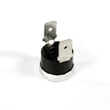
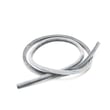
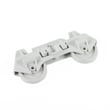
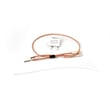
Model-matched parts we commonly see used in these repairs include the valve-inlt W10844024, dishwasher drain hose WP3374077, dishwasher thermostat WP661566, and dishwasher door latch WP3380854.
Maintenance steps that extend life
These steps reduce strain on the pump motor, heater, and spray system.
- Run hot water at the sink until it’s hot before starting a cycle
- Use fresh, lump-free detergent; reduce amount if you see foam or white residue
- Load so the spray arms can spin freely (no tall pans blocking)
- Run a rinse cycle if you only wash every 2 to 3 days to prevent odor buildup
- Follow the cleaning and operating recommendations in the owner's manual
Why it matters
Knowing the expected 10-year lifespan helps you decide whether to invest in maintenance and targeted part replacement now, or plan for replacement if multiple major systems (wash, drain, heat) are failing at once.
Last updated: February 2026
What's the most common problem with a whirlpool dishwasher?
For the Whirlpool DU915PWSB0 dishwasher, the most common problems we see are poor cleaning and drain-related issues caused by loading problems, blocked spray arms, or a drain restriction. The good news is many of these start with simple checks in the owner's manual.
Most common symptoms and what usually causes them
- Dishes not getting clean: spray arm holes blocked, items preventing spray arms from spinning, or heavy soil left on dishes
- Water left in the tub: cycle not completed, drain path restricted, or a drain hose issue
- Won’t start or stops mid-cycle: door not fully closed and latched, wrong cycle selection, or a temporary motor overload
- Runs a long time: incoming water not hot enough; the dishwasher extends time while heating
- Detergent left in the dispenser: cycle interrupted or detergent clumped/lumpy
Quick checks we recommend first (no parts needed)
- Push the door firmly closed so it latches automatically.
- Confirm the cycle selection and press START/RESUME.
- Run hot water at the nearest sink until it is hot before starting a cycle.
- Make sure nothing blocks the spray arms from spinning freely.
- Check the overfill protection float; it must move up and down freely (press down to release).
When a part is the likely fix
If the basic checks do not change anything, these model-matched parts are common solutions:
| Symptom | Part to consider | What it affects |
|---|---|---|
| Won’t start consistently | Dishwasher door latch WP3380854 | Confirms the door is closed so the cycle can run |
| Not filling or filling slowly | Valve-inlt W10844024 | Controls water entering the dishwasher |
| Not draining well | Dishwasher drain hose WP3374077 | Carries water out to the drain loop/disposal |
Why it matters
Poor cleaning and draining problems often trace back to water flow and spray action. If the spray arms cannot spin freely or the unit cannot fill, heat, or drain correctly, you will see longer cycles, leftover detergent, and dirty dishes.
Last updated: February 2026
What is the code for a leak in a Whirlpool dishwasher?
On a Whirlpool dishwasher like model DU915PWSB0, a leak condition is commonly indicated by an F2-type fault (often shown as F2/E2 on some control styles). This points to water detected where it should not be; the fix is to remove the water, then locate and repair the source of the leak.
What to do right away
- Cancel the cycle and turn off power at the breaker.
- If you see standing water in the tub, run a drain or bail it out.
- Pull the toe panel and look for moisture under the tub.
- Check for obvious drips at the inlet valve, drain hose, and door area.
- After correcting the issue, run the shortest cycle and watch for leaks (this is also part of the install checkout in the installation guide).
Most common leak sources on this model
Leaks usually come from a few repeat areas on Whirlpool dishwashers:
- Water inlet and fill system: loose fittings, cracked valve body, or seepage at the supply connection (see valve-inlt W10844024).
- Drain path: loose clamp, split hose, or a poor connection at the sink/disposer (see dishwasher drain hose WP3374077 and clamp WP596669).
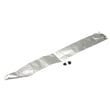
- Door sealing and corners: misaligned door, debris on the sealing surfaces, or splash-out at the tub corners (see dishwasher tub corner baffle WP8528862).
- Overfilling protection: a stuck float can allow overfill and spill (see dishwasher float assembly WP3376397).
Quick checks that narrow it down
| What you notice | Most likely area | What to inspect |
|---|---|---|
| Leak happens during fill | Inlet valve or supply line | Valve body, fittings, slow seepage |
| Leak happens during drain | Drain hose or clamp | Hose cracks, clamp tightness |
| Leak happens mid-wash | Door area or spray pattern | Door alignment, corner baffle, loading |
| Water appears after long idle | Slow seep at valve | Valve and supply connection |
Why it matters
A leak code is the dishwasher protecting your kitchen from ongoing water damage. Fixing the source (not just clearing the water) prevents repeat faults and helps the wash system maintain proper water level and heating performance.
Helpful reference
If your display shows a different letter/number combination, use our Whirlpool dishwasher error codes guide to match the exact code to the symptom.
Last updated: February 2026
Where is the filter in a Whirlpool DU915PWSB0 dishwasher?
In a Whirlpool DU915PWSB0 dishwasher, the filter area is in the bottom of the tub under the lower rack, around the lower spray arm and sump. This model uses a bottom filtration module (listed in the owner's manual) rather than a tall, twist-out cylinder filter.
How to locate it on DU915PWSB0
- Turn the dishwasher off at the controls.
- Pull the lower rack out.
- Look at the bottom center of the tub where the lower spray arm mounts.
- The filter module is in the sump area directly below and around that spray arm base.
- Use the parts and features diagram in the owner's manual to match what you see.
What it looks like on this style of Whirlpool dishwasher
On many DU915-series units, the filter is integrated into the bottom wash system. You typically see a flat screen or cover area and the spray arm assembly, not a removable cup-style filter.
| Filter style | Common location | What you do for maintenance |
|---|---|---|
| Integrated bottom filter module | Bottom of tub at the sump, under lower spray arm | Clear debris from the screen/sump area; keep spray arm ports clear |
| Twist-out cylinder filter (newer styles) | Bottom center, usually locks/unlocks by turning | Remove and rinse regularly |
Why it matters
When the sump and filter area is blocked by labels, glass, or food debris, water flow drops and cleaning suffers; it can also contribute to poor draining. Keeping the bottom area clear helps protect the pump and improves wash performance.
Last updated: February 2026