Installation guide
 Owner’s manual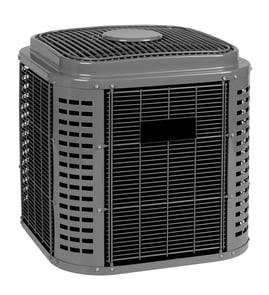
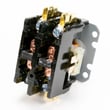


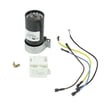

How to buy Carrier parts?
You can buy replacement parts for your Carrier 24ABR348A0031010 central air conditioner directly from our parts list for this model; match parts using the model and serial number from the unit rating plate, then order the exact replacement you need.
How we recommend you identify the right part
Use the model and serial number from the rating plate on the outdoor unit (and the indoor unit if needed). This is the fastest way to ensure the part fits your exact split-system configuration.
- Confirm the model number is 24ABR348A0031010
- Record the serial number from the rating plate
- Compare the part name and identifiers before ordering
- If you are replacing an electrical part, shut off power at the disconnect and breaker first
- Use the wiring diagram and service information in the owner's manual
Common parts customers replace on this model
These are examples of parts available for Carrier 24ABR348A0031010; choose the one that matches your symptom and the part you are replacing.
| Part type | What it does | When it is commonly replaced |
|---|---|---|
| Contactor | Switches high-voltage power to the outdoor unit | Outdoor unit will not start, chattering/buzzing contactor |
| Fan | Moves air through the outdoor coil | Fan not spinning, overheating, poor cooling |
| Compressor hard start kit | Helps the compressor start under load | Hard starting, clicking, intermittent start issues |
If you already know what failed, ordering is straightforward:
Why it matters
Central air conditioners are split systems (indoor and outdoor units connected by refrigerant lines). Using the exact model and serial number helps prevent ordering a part that looks similar but does not match your system’s electrical ratings or mounting style.
Last updated: February 2026
How much does a 3-ton carrier AC cost?
A 3-ton Carrier central air conditioner typically costs about $3,000 to $15,000 installed, with the final price driven by efficiency rating, ductwork and electrical upgrades, refrigerant line work, and local labor rates. For model 24ABR348A0031010, installation requirements in the installation guide help determine the real total.
What drives the installed price most
- Equipment efficiency and features (single-stage vs. two-stage, higher SEER2 ratings)
- Home readiness (duct condition, return air sizing, airflow restrictions)
- Electrical work (disconnect, breaker, wiring, surge protection)
- Refrigerant line set work (length, routing, and whether it must be replaced)
- Indoor coil and refrigerant compatibility (matched components and correct metering device)
- Permits and code requirements (varies by location)
Model-specific install details that affect cost
Your 24ABR348A0031010 is a split system (outdoor unit plus indoor unit connected by refrigerant lines). The install guide calls out items that can add labor and materials, including:
| Cost factor | What it changes | Typical impact |
|---|---|---|
| Refrigerant line set length | More tubing, fittings, insulation, evacuation time | Moderate to high |
| Line diameters and connections | Correct sizing reduces performance issues | Moderate |
| Long-line applications | May require additional accessories | Moderate to high |
| Low-ambient or coastal needs | May require accessory controls or extra maintenance planning | Low to moderate |
Quick budgeting checklist before you get quotes
- Confirm the outdoor unit size and match it to the indoor coil
- Measure approximate refrigerant line set length and routing difficulty
- Note any breaker trips, buzzing, or intermittent starts (can indicate electrical component wear)
- Plan for routine maintenance access and proper drainage around the outdoor unit
- Keep your model and serial information handy (from the rating plate)
Why it matters
A “3-ton” label is only part of the cost story. Correct sizing, airflow, and refrigerant line installation protect comfort, humidity control, and compressor life. If your system has starting issues, parts like a central air conditioner compressor hard start kit KSAHS1501AAA or fan LA01RA329 can be relevant during diagnosis.
Last updated: February 2026
How many sq ft will a 2 ton AC cool?
A 2-ton central AC (about 24,000 BTU/hr) typically cools about 900 to 1,500 sq. ft. in average conditions. For your Carrier 24ABR348A0031010, the right coverage depends on your home’s heat load (insulation, windows, ceiling height, ductwork, and local climate), not just tonnage.
Quick sizing rule of thumb (what 2 tons usually covers)
Use these ranges to sanity-check sizing before you commit to equipment changes:
- 900 to 1,100 sq. ft.: hot climates, lots of sun exposure, older insulation
- 1,100 to 1,300 sq. ft.: average insulation and typical ceiling heights
- 1,300 to 1,500 sq. ft.: cooler climates, good insulation, shaded windows
- Less than 900 sq. ft.: high ceilings, many large windows, poor duct design
- More than 1,500 sq. ft.: usually needs a load calculation; 2 tons is often undersized
Why “sq. ft.” is only a starting point
Two homes with the same square footage can need very different cooling capacity. These factors change the load the most:
- Insulation level and air sealing (attic, walls, rim joists)
- Window size, orientation, and shading
- Ceiling height and open floor plans
- Duct leakage, duct insulation, and airflow balance
- Indoor humidity targets and ventilation/fresh air
Typical load ranges (helpful comparison)
| Home efficiency and climate | Typical cooling load | 2-ton fit |
|---|---|---|
| Efficient home, mild climate | 15 to 20 BTU/sq. ft. | Often 1,200 to 1,600 sq. ft. |
| Average home, mixed climate | 20 to 25 BTU/sq. ft. | Often 960 to 1,200 sq. ft. |
| Older/leaky home, hot climate | 25 to 35 BTU/sq. ft. | Often 685 to 960 sq. ft. |
Why it matters
Oversizing can cause short cycling and poor humidity control; undersizing can run constantly and still miss the thermostat setpoint. Getting the load right improves comfort, efficiency, and compressor life.
Model-specific installation details that affect real-world performance
Even with the correct tonnage, installation details matter. For this outdoor unit, we follow the clearance and operating limits in the installation guide, including:
- Maintain required clearances for airflow and service access
- Keep the unit level within the specified tolerance
- Avoid operating in cooling mode below the stated minimum outdoor ambient
Last updated: February 2026
How to tell the tonnage of a carrier AC unit?
For your Carrier central air conditioner model 24ABR348A0031010, we tell tonnage by finding the unit size code on the outdoor unit rating plate (often 018, 024, 030, 036, 042, 048, 060) and converting it to tons: tons = BTU/hr ÷ 12,000. The rating plate is the most reliable source.
Quick tonnage conversion (size code to tons)
Use this when the rating plate shows a size code (or when the model number includes one of these codes).
| Size code | Approx. BTU/hr | Approx. tons |
|---|---|---|
| 018 | 18,000 | 1.5 |
| 024 | 24,000 | 2.0 |
| 030 | 30,000 | 2.5 |
| 036 | 36,000 | 3.0 |
| 042 | 42,000 | 3.5 |
| 048 | 48,000 | 4.0 |
| 060 | 60,000 | 5.0 |
Where to find the size on the unit
We recommend checking the outdoor condenser’s rating plate first.
- Look on the outdoor unit cabinet for a label that lists model and serial.
- Find a size code (commonly 018 through 060) or a cooling capacity value.
- If the label lists BTU/hr, divide by 12,000 to get tons.
- If the label lists kBTU (thousands of BTU), divide that number by 12.
- Record the model and serial for future parts lookup and service history (the manual recommends doing this).
Why it matters
Correct tonnage helps us match the right components and accessories (for example, refrigerant line sizing and long-line accessories are selected by unit size). It also prevents installing mismatched parts that can cause poor cooling, long run times, or compressor stress.
Related parts that often come up during sizing or performance checks
Tonnage itself is not set by a single replaceable part, but these parts commonly affect whether the system starts and runs correctly:
For model-specific identification tips and label locations, use the owner's manual.
Last updated: February 2026
What is the life expectancy of a carrier air conditioner?
A Carrier central air conditioner like model 24ABR348A0031010 lasts 15 to 20 years. Hitting the high end of that range comes from correct installation, steady airflow (clean filters and open vents), and an annual inspection that keeps coils, drains, and electrical connections in good shape.
What affects lifespan the most
Long run times and higher heat load increase wear on the compressor, fan motor, and electrical controls. The manual also notes the system may run longer during extreme heat and heavy indoor loads.
- Hot climates and long cooling seasons (more compressor run time)
- Dirty or restrictive air filters and blocked supply or return vents
- Dirty indoor or outdoor coils (reduced heat transfer)
- Electrical wear (loose connections, pitted contactor points)
- Refrigerant or airflow issues from the original installation
- Short cycling from sizing or thermostat setup problems
Maintenance that extends service life
Your Carrier documentation emphasizes routine homeowner checks plus regular professional maintenance. Use the safety notes and maintenance guidance in the owner's manual.
- Replace or clean air filter(s) on schedule
- Keep the outdoor unit clear of leaves, grass, and lint
- Verify thermostat is set to Cooling and the set temperature is below room temperature
- Expect occasional built-in time delays; they protect the equipment
- Schedule an annual inspection: coils, blower components, drain pan and lines, wiring, and an operational check
Quick “repair vs replace” guide
| System condition | Best next step |
|---|---|
| Under ~10 years old with one failed component | Repair is usually cost-effective |
| 15 to 20 years old with frequent breakdowns | Plan for replacement |
| Weak cooling and maintenance is overdue | Service and clean first |
| Intermittent no-cool tied to electrical control issues | Diagnose controls and wiring |
Why it matters
After about 15 years, efficiency drops and repair frequency rises. Keeping airflow strong and doing annual inspections helps protect high-cost components like the compressor and condenser fan.
Last updated: February 2026