Installation guide
 Owner’s manual
 Error Codes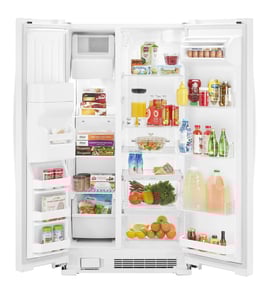


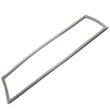
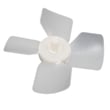
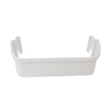
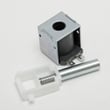
How can I tell how many cubic feet my Kenmore refrigerator is?
To tell the cubic feet of your Kenmore refrigerator model 25356953601, check the model’s rating label (usually inside the fresh food compartment on a side wall or ceiling) or look up the capacity in the 25356953601 owner's manual. The label and manual list the official total capacity.
Fast ways to find the capacity
- Look for the rating label inside the refrigerator section (common locations: upper side wall, near crisper area, or ceiling).
- Check the manual specifications section for “capacity” or “total volume.”
- Measure and estimate only if you cannot access the label or manual (see the formula below).
- Use the model number exactly (25356953601) when searching specs or ordering parts.
How to estimate cubic feet (if you need a quick approximation)
If you cannot find the label, you can estimate interior volume:
- Measure usable interior height, width, and depth (in inches) for:
- Fresh food compartment
- Freezer compartment
- Multiply each compartment’s measurements.
- Add the two results.
- Convert to cubic feet.
| What you measure | Formula | Convert to cubic feet |
|---|---|---|
| Fresh food volume (cu in) | H × W × D | divide by 1,728 |
| Freezer volume (cu in) | H × W × D | divide by 1,728 |
| Total capacity (cu ft) | (Fresh food + Freezer) ÷ 1,728 | result is cu ft |
Why it matters
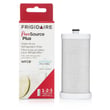
Knowing cubic feet helps you compare refrigerator sizes accurately, confirm fit for your kitchen space, and choose compatible accessories and maintenance items like the genuine Kenmore refrigerator water filter WFCB when your model uses a filter system.
Last updated: January 2026
How wide is a Kenmore side-by-side refrigerator?
Most Kenmore side-by-side refrigerators, including model 25356953601, are typically about 32 to 36 inches wide. For the exact cabinet width (and required clearance for doors and the toe grille), use the measurements listed in the 25356953601 installation guide.
Typical width ranges (what you can expect)
Side-by-side refrigerators are commonly built in a few standard widths. Use this as a planning guide for cabinetry and door swing.
- 32 to 33 inches: space-saving side-by-side models
- 35 to 36 inches: most common full-size side-by-side width
- 42 inches: built-in style (less common for Kenmore 253-series)
| Refrigerator type | Common width | Best use case |
|---|---|---|
| Side-by-side (standard) | 35 to 36 in. | Most kitchens, full capacity |
| Side-by-side (narrow) | 32 to 33 in. | Tight openings, smaller kitchens |
| Built-in style | ~42 in. | Custom cabinetry installations |
How to measure width the right way
Measure before you buy parts, move the refrigerator, or plan a new opening.
- Measure the cabinet width (main box), not just the doors
- Include any hinge or handle protrusion if your opening is tight
- Confirm you have room for the door swing and pulling out bins
- Leave space for airflow clearance at the sides and top
- Verify the unit can pass through doorways and hallways during delivery
Why it matters
A refrigerator that is “close” in width can still be a problem if the doors cannot open fully, the unit cannot be leveled correctly, or airflow is restricted. The installation specs in the 25356953601 installation guide help prevent fit and performance issues.
Last updated: January 2026
What does er if mean on kenmore elite refrigerator?
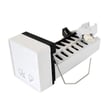
On Kenmore model 25356953601, the ER IF code typically points to an ice maker fan (ice room fan) airflow problem. Most often, the fan is blocked by ice buildup, the fan blade is jammed, or the fan motor is failing, which can reduce ice production and cause dispenser issues.
What to check first (fast, no parts)
- Power reset: unplug the refrigerator (or turn off the breaker) for 5 minutes, then restore power.
- Check the ice bin: remove it and break up clumped ice by shaking the bin (never use sharp tools).
- Look for frost or ice around the ice maker area that could be rubbing the fan.
- Make sure the freezer door closes fully and the gasket seals all the way around.
- Confirm vents are not blocked by food packages.
Likely causes and what they mean
| What you notice | Most likely cause | What to do next |
|---|---|---|
| Loud buzzing or clicking near ice maker | Fan blade hitting ice | Defrost the ice room area and clear obstructions |
| No ice or slow ice production | Poor airflow to ice maker | Check for frost buildup and door seal issues |
| Code returns quickly after reset | Fan motor or wiring issue | Inspect fan area; plan for part replacement if needed |
Parts that can be involved
If you find the fan blade damaged, loose, or rubbing, replacing the blade is a common fix. For this model, the matching part is the refrigerator evaporator fan blade 5308000010.
Why it matters
The ice maker fan moves cold air to keep the ice maker compartment at the right temperature. When airflow drops, ice can melt and refreeze into clumps, jam the dispenser, and trigger error codes.
For model-specific access points and component locations, follow the 25356953601 owner's manual.
Last updated: January 2026