Owner’s manual
 Error Codes


How do I reset my GE side-by-side refrigerator?
To reset your GE GSHS3KGZBCSS side-by-side refrigerator and clear minor glitches, we recommend a simple power reset first: unplug the refrigerator (or switch off the breaker) for 2 to 5 minutes, then restore power and allow 24 hours for temperatures to fully stabilize. See the GSHS3KGZBCSS owner's manual for model-specific control and display behavior.
Quick reset methods (most common)
- Power cycle reset: Unplug for 2 to 5 minutes, then plug back in.
- Breaker reset: Turn the refrigerator circuit breaker OFF for 2 to 5 minutes, then ON.
- Control lock check: If the dispenser or buttons do not respond, make sure the control lock is not enabled.
- Temperature recovery: After any reset, give the compressor time to restart; cooling performance can take several hours to normalize.
- After a water filter change: Dispense water for a few minutes to purge air and help restore steady flow.
What a reset will and won’t fix
A reset helps with temporary control-board hiccups, unresponsive dispenser buttons, or odd display behavior. It will not correct a failed component such as a bad sensor, fan motor, or water valve.
| Symptom after reset | Most likely cause | What we check next |
|---|---|---|
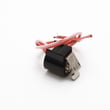
| Display works but temps drift | Temperature sensing or airflow issue | Inspect vents; consider testing the GE profile refrigerator temperature sensor WR55X10025 |
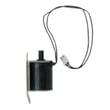
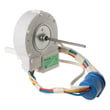
| Warm fridge/freezer, fan noise changes | Evaporator airflow problem | Listen for fan operation; inspect the refrigerator evaporator fan motor WR60X10307 |
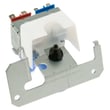
| No water/ice after reset | Water supply or valve issue | Confirm supply is on; consider the refrigerator water valve WR57X33326 |
Why it matters
Resetting is the fastest, safest first step because it clears minor electronic glitches without replacing parts. If symptoms return quickly, the pattern usually points to a specific system (cooling airflow, temperature sensing, or water/ice delivery).
Last updated: February 2026
What is the disadvantage of a side-by-side fridge?
A side-by-side refrigerator like the GE GSHS3KGZBCSS is convenient for narrow kitchens, but its biggest disadvantage is reduced usable width in each compartment. That makes wide items (pizza boxes, party platters, large deli trays) harder to store and can make fresh-food organization feel more cramped.
Common disadvantages (and what you can do)
- Narrow shelves: wide containers may not fit flat; use smaller bins and stackable containers.
- Fresh-food items at eye level can get buried: group foods by zone (deli, drinks, leftovers) and label bins.
- Freezer can feel “tall and tight”: use baskets to prevent items from falling to the back.
- More door storage, less interior flexibility: avoid overloading door bins so doors seal properly.
- Ice maker and dispenser can reduce freezer space: keep bulky frozen items on lower shelves or in baskets.
Side-by-side vs. other styles (quick comparison)
| Feature | Side-by-side | French door | Top freezer |
|---|---|---|---|
| Fits narrow spaces | Good | Fair | Good |
| Stores wide items | Fair | Good | Fair |
| Fresh-food access | Good | Excellent | Fair |
| Freezer organization | Fair | Good | Fair |
Why it matters
If you regularly store wide or oversized items, the side-by-side layout can create daily frustration and lead to overpacking. Overpacking restricts airflow, which can cause warm spots and uneven temperatures. For model-specific storage and airflow guidance, use the GSHS3KGZBCSS owner's manual.
Last updated: February 2026
What is the most common problem with a GE refrigerator?
The most common GE refrigerator complaint is not cooling properly (fresh food warm, freezer soft, or temperatures swinging). On the GE GSHS3KGZBCSS side-by-side, the usual causes are airflow problems, a failing fan, a defrost issue, or a temperature-sensing/control problem; the owner's manual covers the correct temperature settings and basic checks.
Most common issues we see (and what they look like)
- Not cooling or weak cooling: warm refrigerator section, thawing freezer items
- Noisy operation: rattling, buzzing, or a loud fan sound
- Ice maker not making ice: empty ice bin, slow production
- Water dispenser not working: no water flow or weak flow
- Water leaking: puddles under the unit or inside the fresh food section
- Door not sealing: frost buildup, moisture, or warm spots
- Interior light out: dark compartment when door opens
Quick checks you can do first
- Confirm controls are set correctly (typical targets: 0°F freezer, 37°F fresh food).
- Make sure vents inside the refrigerator and freezer are not blocked by food packages.
- Check door gaskets for gaps and make sure doors close fully.
- Listen for the evaporator fan; if it is not running, airflow and cooling drop fast.
- If the unit is frosting up, a defrost failure is likely.
Parts that commonly fix “not cooling” symptoms on this model
| Symptom | Common culprit | Example part on this model |
|---|---|---|
| Temps swing, unit runs too long | Bad temperature sensing | GE profile refrigerator temperature sensor WR55X10025 |
| Freezer cold but fresh food warm | Airflow or fan issue | Refrigerator evaporator fan motor WR60X10307 |
| Heavy frost on evaporator, warm temps | Defrost system problem | Refrigerator defrost bi-metal thermostat WR50X10065 |
| No water to dispenser or ice maker | Water supply valve issue | Refrigerator water valve WR57X33326 |
Why it matters
A refrigerator that is not cooling correctly can spoil food quickly and can also force the compressor to run longer than normal. Catching airflow, defrost, or sensor problems early usually prevents bigger, more expensive failures.
Last updated: February 2026