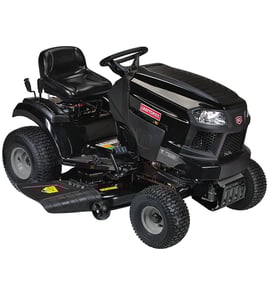

How to find Craftsman parts?
For your Craftsman 917253726 front-engine lawn tractor, we recommend finding parts by matching your exact model number to the illustrated parts list, then selecting the exact replacement part by description and part ID to avoid fit issues.
- Confirm the model number is 917253726 (use the product ID tag on the tractor frame).
- Use the model-based parts list to identify the correct section (fuel system, steering, electrical, wheels).
- Match the part by name and part ID, not just by appearance.
- Compare your old part to the listing (mounting holes, shaft size, connector style).
- Order the exact replacement part for your tractor.
If you already know what area you are repairing, these are examples of parts available for Craftsman 917253726:
| Repair area | Example part to look up | What it helps with |
|---|---|---|
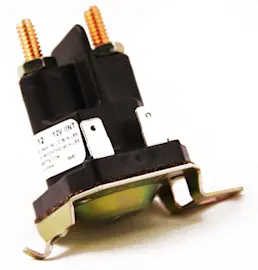
| Starting / electrical | Starter switch 532365402 | No-crank or intermittent starting |
| Fuel system | Tank 532151346 | Leaks, contamination, cracked tank |
| Steering | Joint 532121160 | Loose steering, worn tie rod end |
| Wheels / hubs | Rim 532148736 | Bent rim, bead leaks, wheel damage |
- Do not rely on “looks similar”; small design changes can prevent proper fit.
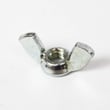
- If a part is hardware (bolt, washer, ring), match size and application carefully.
- For steering and wheel parts, confirm left vs. right side orientation before ordering.
- For electrical parts, match the connector type and mounting pattern.
Using the exact model number and the correct part ID helps ensure proper fit, safe operation, and fewer repeat repairs on your Craftsman riding mower or garden tractor.
Last updated: February 2026
What is the most common small engine problem?
The most common small-engine problem on a Craftsman riding mower or tractor like model 917253726 is a fuel-related issue: old fuel, varnish in the carburetor, or a restricted fuel path that causes hard starting, surging, or stalling. The next most common cause is weak ignition from a worn or fouled spark plug.
- Stale fuel or carburetor varnish: starts then dies, only runs with choke, hunts or surges
- Restricted fuel flow (plugged cap vent, dirty fuel pickup, pinched line): dies after a few minutes, restarts after sitting
- Spark plug wear or fouling: no-start, misfire under load, rough idle
- Dirty air filter: black smoke, loss of power, plug fouling
- Safety interlock or switch issue: cranks but will not start, or intermittent starting
- Drain old fuel and refill with fresh gasoline (especially if it sat more than 30 days).
- Inspect the fuel tank for debris or water; if the tank is cracked or contaminated, replace it with the correct part for this model, such as the tank 532151346.
- Check spark (spark tester is best); replace the plug if it is worn, wet, or carbon-fouled.
- Check the air filter; replace if dirty or oil-soaked.
- If it will not crank or starts inconsistently, test the ignition circuit and key switch; a failed switch is common on riders, and this model uses a starter switch 532365402.
| Symptom | Most likely cause | Fastest first step |
|---|---|---|
| Starts then stalls | Fuel varnish, restricted fuel flow | Fresh fuel; verify fuel flow to carb |
| Only runs on choke | Lean condition from clogged carb | Clean carb; check for air leaks |
| Cranks but will not start | No spark, safety interlock | Test spark; check switch/interlocks |
| Surges at idle | Partially clogged carb | Clean carb jets/passages |
Fuel and ignition problems are the top causes of “no-start” and “runs rough” complaints because small engines depend on a precise air-fuel mix and strong spark. Fixing the root cause prevents repeat stalling and reduces wear on the starter and battery.
Last updated: February 2026
How to look up Craftsman model number?
For your Craftsman riding mower or garden tractor, we look up the correct parts by matching the exact model number from the ID label. On Craftsman model 917253726, that label is typically on the frame under the seat or on the underside of the seat itself.
Check these common locations first:
- On the frame directly under the seat (lift the seat up)
- On the underside of the seat pan
- Near the rear fender area close to the seat mounting points
- On the frame rail near the battery tray (if equipped)
- On a sticker or metal tag that includes both model and serial numbers
Once you have the model number, use it exactly as printed (including all digits). For model 917253726, that ensures you get the correct diagrams and parts list for items like the fuel system, steering, and electrical start circuit.
- Write the model number down exactly (no spaces added)
- Record the serial number too (helps when there are production changes)
- Use the model number to match parts by description and part ID
- Compare the old part to the diagram before ordering
| Label item | What it does | Example for this tractor |
|---|---|---|
| Model number | Identifies the exact tractor design for parts lookup | 917253726 |
| Serial number | Identifies the production run; helps confirm variations | Varies by unit |
Craftsman tractors often have multiple versions that look similar but use different belts, steering joints, or electrical switches. Using the exact model number helps prevent ordering a part that does not fit.
If you are troubleshooting a no-start condition while you are identifying the model, a common related replacement is the starter switch 532365402.
Last updated: February 2026
What year is Craftsman Model 917253726?
Craftsman model 917253726 does not map to one single “model year” the way a car does; it identifies a specific build configuration, and the exact production date is typically confirmed from the tractor’s product label (usually under the seat or on the frame). For parts accuracy, we match by model number and the correct parts diagram, not by year.
Look for a white or silver product label and record the full information exactly as shown.
- Check under the seat pan first (lift the seat and look on the frame)
- Check the rear frame near the hitch plate
- Check the left or right frame rail near the engine
- Write down any serial number and any date code printed on the label
- Use that information to confirm the correct parts list for your exact configuration
Craftsman 917-prefix riding mowers and garden tractors were produced across multiple years with running changes (steering, fuel system, electrical, and drive components). Two tractors that look similar can use different parts depending on the build run.
- Fuel system parts (tank, lines, caps)
- Steering linkage and tie-rod ends
- Electrical start and safety interlock components
- Transaxle/drive hardware and bearings
If your tractor needs one of these common items and it matches what you see on your machine, that is a good sign you are using the correct model breakdown.
| System | Example part on this model | What it affects |
|---|---|---|
| Starting | Starter switch 532365402 | No-crank or intermittent crank |
| Fuel | Tank 532151346 | Fuel leaks, contamination, starvation |
| Steering | Joint 532121160 | Loose steering, wandering, toe issues |
Using the correct Craftsman 917253726 parts list prevents ordering the wrong spindle, steering joint, or electrical switch for a similar-looking tractor from a different production run.
Last updated: February 2026
What are common problems with Craftsman riding mowers?
Common problems on a Craftsman riding mower like model 917253726 include no-crank or intermittent starting, rough running or stalling, poor cutting quality (uneven cut or scalping), drive or steering issues, and fuel leaks. Most of these trace back to normal wear in the starting circuit, fuel system, deck/idler hardware, and front-end steering joints.
- Won’t crank or only clicks: weak battery connections, worn ignition switch, safety switch issues
- Cranks but won’t start: stale fuel, restricted fuel flow, ignition or compression problems
- Runs then dies: fuel tank venting restriction, debris in tank/line, heat-related ignition issues
- Cuts uneven or leaves strips: worn deck components, loose belt, worn idler/pulleys, bent blade(s)
- Steering feels loose or wanders: worn tie rod ends or front axle wear points
- Oil seepage near shafts: worn seals around rotating shafts
- Confirm the basics: fresh fuel, clean battery terminals, tight ground connection.
- Inspect the fuel system: look for wet spots, cracked lines, and a pinched vent in the cap area.
- Check the deck drive: verify belt routing, belt tension, and that idlers spin freely.
- Look at steering play: check for looseness at the tie rod ends and front axle pivot points.
- Scan for leaks: oil around a shaft area often indicates a seal that is no longer holding.
If your symptoms match, these model-compatible parts are common wear items:
- Starting problems: starter switch 532365402
- Fuel leaks or fuel delivery issues: tank 532151346
- Loose steering: joint 532121160 and joint 532109851
- Oil seepage at a shaft: oil seal 532007393
| Symptom | What to inspect first | Part that often helps |
|---|---|---|
| No crank / intermittent crank | Key switch output, safety interlocks, wiring | Starter switch |
| Fuel smell or wetness | Tank seams, grommets, hose routing | Fuel tank |
| Wandering steering | Tie rod end looseness | Tie rod end joint |
| Oil around shaft area | Seal lip wear, shaft wobble | Oil seal |
Catching wear early prevents bigger failures, such as belt damage from a seized idler, hard starting that drains the battery, or steering looseness that accelerates front-end wear. On a front-engine garden tractor, these small issues add up quickly during mowing season.
Last updated: February 2026