Installation guide
 Owner’s manual
 Error Codes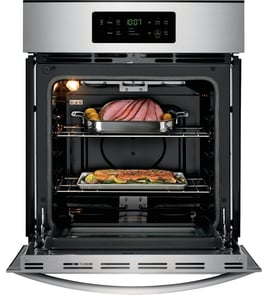



What is the disadvantage of a wall oven?
Wall ovens (including the Dacor ECS127) cost more to buy and install than a typical range, and repairs can take longer because the unit is built into cabinetry. You also need a separate cooktop, which adds cost and requires more planning.
- Higher total cost: wall oven plus a cooktop, plus cabinetry and electrical work.
- More complex installation: the oven is heavy and must be secured with mounting screws; the installation instructions call out safe lifting and proper mounting. See the installation guide.
- Harder access for service: built-in placement can mean extra labor to pull the oven for diagnosis.
- Ergonomics vary: depending on mounting height, you may bend more (under-counter) or reach more (eye-level).
- Ventilation and clearances matter: blocking the oven air exhaust can cause cabinet damage and poor baking performance.
Because the ECS127 is designed to be mounted into a cabinet cutout, the install process includes cabinet cutout sizing, electrical access planning, and physically securing the oven so it cannot shift or tip. That is more involved than sliding in a freestanding range.
| Feature | Wall oven (ECS127 style) | Freestanding range |
|---|---|---|
| Upfront cost | Higher (oven + cooktop) | Usually lower (all-in-one) |
| Installation | Cabinet cutout, mounting, electrical planning | Typically simpler hookup |
| Service access | Often harder (built-in) | Often easier (pull forward) |
| Layout flexibility | More flexible kitchen design | Less flexible |
- You want the oven at a comfortable height for loading and unloading.
- You are remodeling and can plan cabinet cutouts and electrical access up front.
- You prefer a separate cooktop layout for workflow or aesthetics.
Last updated: January 2026
How much does a 27 inch wall oven weigh?
A typical 27-inch single electric wall oven weighs about 120 to 180 lb. For the Dacor ECS127, the installation literature focuses on cutout and product dimensions, so we use this common weight range for planning safe handling and cabinet support; confirm your exact spec in the ECS127 installation guide.
Most 27-inch wall ovens fall into one of these buckets:
- Basic single wall ovens: ~120 to 160 lb
- Heavier single wall ovens (more insulation, larger door glass, convection hardware): ~160 to 180 lb
- Double wall ovens: often 200 lb+ (varies widely)
| Oven type | Typical weight | Handling note |
|---|---|---|
| 27-inch single electric wall oven | 120 to 180 lb | Plan for 2 people minimum |
| 27-inch double wall oven | 200 lb+ | Often needs 2 to 4 people or a lift |
Weight affects more than just lifting. It also impacts cabinet support and how you stage the install.
- Cabinet platform must be solid and level
- Fasteners and mounting points must be secure
- Door removal (when allowed) can reduce lifting weight
- A dolly or lift reduces risk of cabinet damage
- Measure the path (doorways, stairs, turns) before unboxing
- Use gloves and protect finished flooring
- Keep the oven upright unless the instructions allow otherwise
- Follow the electrical and cutout guidance in the ECS127 installation guide
Why it matters: A wall oven is heavy and awkward; planning around weight helps prevent injury and protects the cabinet cutout, trim, and door alignment.
Last updated: January 2026
How long should a Dacor oven last?
A Dacor electric wall oven like model ECS127 typically lasts 15 to 20 years with normal household use and basic maintenance. Keeping the oven properly installed, ventilated, and promptly repairing wear items (like door seals) helps it reach that lifespan.
Most wall ovens fall into a predictable range; Dacor units are built to run on the longer end when they are cared for.
- Typical lifespan: 15 to 20 years
- Shorter lifespan (often 10 to 12 years): heavy daily use, overheating from blocked vents, poor electrical supply
- Longer lifespan (20+ years): light to moderate use, stable power, timely part replacement
| Usage pattern | What we commonly see | What helps most |
|---|---|---|
| Light (a few times/week) | 18 to 22 years | Keep vents clear, clean gently |
| Average (most days) | 15 to 20 years | Replace worn door gasket, avoid slamming door |
| Heavy (multiple cycles/day) | 10 to 15 years | Fast repairs, verify proper voltage and wiring |
Use these habits to reduce heat stress on components like the control area, wiring, and door assembly.
- Keep openings and vents unblocked (never cover or block appliance openings)
- Avoid harsh cleaners on controls and trim; wipe spills after the oven cools
- Confirm the oven is securely mounted and not pinching the electrical conduit during installation
- If preheat seems slow or heat is uneven, address it early instead of continuing to run long cycles
- Replace a worn door seal to prevent heat loss and overheating around the frame (see door gasket 82691)
A wall oven that leaks heat or runs with restricted airflow works harder to maintain temperature. That extra heat load can shorten the life of heating circuits, wiring connections, and control components.
For model-specific care and operating guidance, follow the ECS127 installation guide.
Last updated: January 2026