Owner’s manual
 Error Codes




Where is the model number on a Kenmore side by side refrigerator?
On Kenmore side-by-side refrigerator model 10656179500, the model number is printed on the model and serial number label located on the inside wall of the refrigerator (fresh food) compartment. Open the refrigerator door and look along the interior side wall for the label.
How to find the label quickly
- Open the fresh food (refrigerator) door, not the freezer door
- Look on the inside wall of the refrigerator compartment
- Check the side walls first; the label is typically at about eye level
- Use a flashlight if the label is in a shadowed area
- Wipe dust or residue off the label gently so the numbers are readable
What you should see on the label
The label typically includes both identifiers you may need for parts and service.
| Item on label | What it’s used for | Example for this unit |
|---|---|---|
| Model number | Matching parts to your exact refrigerator | 10656179500 (starts with 106.) |
| Serial number | Identifying production details | Varies by unit |
Why it matters
We use the model number to match the correct Kenmore parts diagrams and compatible replacement parts (such as a refrigerator water filter, ice maker, or door cam). Using the serial number alone can lead to ordering the wrong part.
Tip for recording it
In the owner's manual, we recommend writing down the complete model number, serial number, and purchase date so you have them ready when you need parts or troubleshooting help.
Last updated: February 2026
How to tell if a Kenmore refrigerator compressor is bad?
A bad compressor in your Kenmore 10656179500 side-by-side refrigerator usually shows up as poor cooling with long run times, unusual clicking or repeated start attempts, or a compressor that gets very hot while the refrigerator still will not cool. Use the checks below to rule out airflow and control issues first.
Quick symptoms checklist
- Refrigerator and freezer both warm (not just one section)
- Unit runs a lot but temperatures do not recover
- Clicking or cycling sounds as the compressor tries to start
- Compressor area feels very warm to the touch after running (normal to be warm; abnormal is very hot with no cooling)
- Fans may run but there is little or no cold air movement
Rule out common look-alikes before blaming the compressor
Your model is designed to run efficiently, so longer run times and some higher-pitched or pulsating sounds can be normal. We use these quick checks to separate “normal operation” from a sealed-system or compressor problem:
- Check vents and airflow: Make sure food is not blocking interior vents; blocked vents prevent proper temperature control.
- Clean condenser coils: Dirty coils reduce heat transfer and make the compressor work harder.
- Reset digital controls (if equipped): Turn the unit OFF, then ON to reset.
- Confirm door sealing: A poor door seal can mimic cooling failure by letting warm air in.
For model-specific operating notes and troubleshooting steps, follow the guidance in the owner's manual.
What the symptoms usually mean
| What you observe | Most likely cause | What to do next |
|---|---|---|
| Runs constantly, both sections warm | Airflow restriction, dirty coils, sealed-system issue | Clear vents, clean coils; if no improvement, schedule sealed-system diagnosis |
| Repeated clicking, won’t start | Start device/capacitor issue or compressor locked | Have a technician test start components and compressor amperage |
| Loud or new sounds but temps are normal | Normal high-efficiency compressor/fan operation | Compare to “normal sounds” section in the manual |
Why it matters
The compressor is part of the sealed refrigeration system (compressor, refrigerant, and connecting tubing). When it cannot start or cannot pump effectively, the refrigerator cannot remove heat, so both the fresh food and freezer temperatures rise.
Parts that may be involved in a no-cool diagnosis
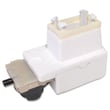
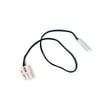
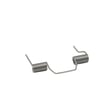
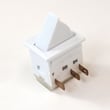
If testing points to a compressor start problem (not a refrigerant issue), these model-listed parts are commonly checked during diagnosis:
Last updated: February 2026
How many cubic feet is my Kenmore refrigerator by model number?
For Kenmore model 10656179500, the exact cubic-foot capacity is listed on the model’s rating information in the refrigerator documentation; use the 10656179500 owner's manual to match your model details and confirm the published capacity (not a calculated estimate from outside dimensions).
How to find the cubic feet for model 10656179500
We recommend using the model-specific documentation because “cubic feet” is the manufacturer’s stated internal volume (fresh food plus freezer), and it does not reliably match a simple height x width x depth calculation.
- Check the specifications section in the 10656179500 owner's manual
- Use the model and serial number label inside the refrigerator compartment to confirm you have 10656179500
- Look for capacity listed as:
- Total capacity (cu. ft.)
- Refrigerator (fresh food) capacity
- Freezer capacity
- If you only see freezer volume referenced, note that the manual may list freezer space separately for storage guidance
Why “measure and multiply” gives the wrong answer
Outside cabinet dimensions include insulation thickness, liners, air channels, and mechanical space, so they overstate usable storage volume. Manufacturer capacity is based on standardized internal measurements.
Quick comparison
| Method | What it measures | Good for | Not good for |
|---|---|---|---|
| Manual spec (cu. ft.) | Internal storage volume | Comparing models, ordering the right size | Estimating from exterior size |
| Exterior dimension math | Cabinet size | Fit planning in a kitchen opening | True storage capacity |
Why it matters
Knowing the correct cubic feet helps when comparing side-by-side refrigerator sizes, planning food storage, and following guidance like dry ice amounts per cubic foot during extended power outages.
Last updated: February 2026
What are the most common problems with Kenmore refrigerators?
The most common problems we see on Kenmore refrigerators like model 10656179500 are cooling issues, ice maker or water dispenser trouble, water leaks, door sealing problems, and unusual noises. Many of these start with airflow restrictions, dirty condenser coils, or a simple control reset described in the 10656179500 owner's manual.
Common problems and what usually causes them
- Not cooling well: dirty condenser coils, blocked air vents, or the unit being in a defrost cycle.
- Ice maker not making ice (or not enough): freezer not cold enough, recent installation (needs time), or shutoff arm in the OFF position.
- Water leaks or puddles: often tied to drain pan or drain system issues; also check door closure and sealing.
- Interior moisture buildup: doors opened frequently, high room humidity, or blocked vents.
- Doors not closing or hard to open: dirty or sticky gaskets, refrigerator not level, or door alignment issues.
- Lights not working: loose or burned-out bulb (common quick fix).
Quick checks we recommend first (fast, no parts)
- Confirm power and controls: plug fully in, check breaker/fuse, make sure controls are not set to OFF.
- Give it time after changes: after a reset or loading warm groceries, temperatures can take several hours to stabilize.
- Check airflow: clear packages away from interior vents.
- Clean condenser coils: dirty coils reduce heat transfer and make the compressor work harder.
- Inspect door gaskets: clean sticky gaskets; make sure doors close firmly.
Parts that commonly relate to these symptoms (for this model)
| Symptom | Common related part | Example from this model |
|---|---|---|
| Bad-tasting water, slow water flow | Water filter | Genuine Kenmore refrigerator water filter EDR3RXD1 |
| No ice or weak water dispensing | Water inlet valve | Refrigerator inlet valve W10822681 |
| Ice clumping or dispenser issues | Ice maker or chute components | Refrigerator ice maker WPW10190961 |
| Door not closing smoothly | Door cam/closer cam | Refrigerator door closer cam WPW10329686 |
Why it matters
Most “big” refrigerator complaints (warm temps, sweating, noisy operation) trace back to basic airflow, sealing, and water supply conditions. Catching those early helps protect food, reduces compressor run time, and prevents repeat ice maker and dispenser problems.
Last updated: February 2026
What causes a side-by-side refrigerator to stop cooling?
When a Kenmore 10656179500 side-by-side refrigerator stops cooling, the most common causes are loss of power, incorrect temperature control settings, blocked air vents that prevent airflow between compartments, or dirty condenser coils that make the system work too hard. Use the checks below before replacing parts; see the owner's manual for control reset steps and airflow guidance.
Quick checks (fastest fixes first)
- Confirm the power cord is fully plugged into a grounded 3-prong outlet.
- Verify the temperature controls were not accidentally changed.
- Make sure food packages are not blocking air vents in the freezer or fresh-food section.
- Clean the condenser coils (dirty coils reduce heat transfer and cooling performance).
- If your model has digital controls, turn the unit OFF then ON to reset.
Airflow and loading issues that stop cooling
Cold air circulates between the freezer and refrigerator sections. If vents are blocked, airflow is restricted and the temperature controls cannot function properly.
What to look for:
- Frosted-over or obstructed vent openings
- Overpacked shelves (especially near the back wall)
- Warm refrigerator section while freezer seems closer to normal
Water and ice symptoms that can point to a cooling problem
Sometimes “not cooling” is noticed first as weak water dispensing or poor ice production.
| Symptom | Common cause | What to do |
|---|---|---|
| Water flow slows at dispenser | Filter clogged or installed incorrectly | Remove and reinstall or replace the refrigerator water filter EDR3RXD1 |
| Ice maker makes little or no ice | Freezer not cold enough yet or airflow issue | Allow 24 hours after changes; recheck vents and settings |
| Buzzing during ice maker fill | Normal water valve operation | No repair needed if cooling is normal |
Why it matters
A refrigerator that is not cooling can spoil food quickly and can also overwork the compressor and fans. Clearing vents, cleaning coils, and resetting controls restores normal operation in many cases without major repair.
Last updated: February 2026