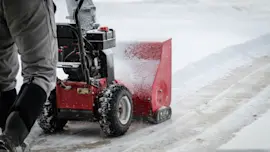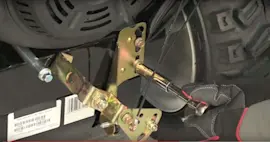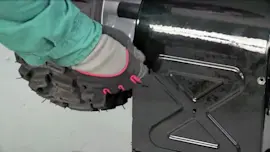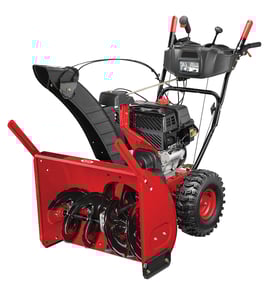



Should I spray my snowblower with WD-40?
Yes; for a Craftsman 536909700 24" snow blower, we use WD-40 mainly as a light protectant and water-displacer on clean, dry metal surfaces, and we use silicone spray when we want a slick, non-stick chute. Avoid spraying any product onto hot engine parts, belts, pulleys, or friction-drive areas.
Use a light coat and wipe off excess; the goal is a thin film, not a drip.
- Inside the discharge chute to reduce snow sticking (silicone spray works best)
- Auger housing and impeller area (light coat, then let it dry)
- Exposed fasteners and linkages to slow surface rust
- After washing off salt and slush, once everything is fully dry
These areas can slip, attract grit, or create a safety hazard.
- Drive system components (belts, pulleys, friction disc area)
- Any rubber contact surfaces (tires, friction wheel rubber)
- Hot muffler, cylinder head, or near the spark plug boot
- Brake or clutch contact points (if equipped)
- With the engine off and cool, brush out packed snow.
- Wipe the chute and auger housing dry.
- Apply a light coat of silicone spray (preferred) or WD-40 to the chute interior.
- Wipe overspray off painted panels and plastic.
- For storage, protect bare metal and hardware, then check that controls move freely.
If you remove covers or adjust linkages, keep hardware tight and replace worn fasteners.
| Common item | What it’s used for | Example part on this model |
|---|---|---|
| Belt drive wear item | Loss of drive or auger performance | V-belt 49581MA or v-belt 49570MA |
| Chute/auger housing wear surface | Scraping height and edge protection | Skid 582905MA |
| General hardware | Securing panels and brackets | Lock nut 703251 |
A slick chute helps prevent clogging in wet snow, and a light protectant film helps reduce corrosion from salt and moisture. Keeping sprays away from friction and belt-drive components prevents slipping and premature wear.
Last updated: February 2026
What is the life expectancy of a snowblower?
A typical gas snowblower like the Craftsman 536909700 24" snow blower lasts 15 to 20 years with normal use and routine maintenance. Heavy use, poor storage, and skipped maintenance shorten lifespan; replacing wear items such as a v-belt 49581MA helps keep performance and reliability up.
- Maintenance consistency: oil changes, lubrication, and fastener checks
- Storage habits: dry storage, fuel stabilized for off-season
- Snow conditions: wet, heavy snow increases load on belts, bearings, and drive components
- Wear parts condition: belts, skid shoes, cables, and seals
- Rust and corrosion: especially on the auger housing and hardware
| Snowblower type | Typical life expectancy | Notes |
|---|---|---|
| Gas, two-stage (most 24-inch units) | 15 to 20 years | Longest life with annual service and proper storage |
| Gas, single-stage | 10 to 15 years | Lighter-duty design, more sensitive to heavy snow |
| Corded electric | 8 to 12 years | Motor can last; switches and cords are common failure points |
| Battery electric | 5 to 10 years | Battery capacity decline is the usual limiter |
- Change engine oil on schedule and check oil level before each season
- Stabilize fuel before storage; run the engine briefly to circulate treated fuel
- Inspect and replace worn drive/auger belts (for example, v-belt 49570MA or v-belt 49581MA when your model uses them)
- Keep skid shoes adjusted so the scraper bar is not grinding into pavement (replace worn skid 582905MA)
- Check control operation and cable tension; replace a stretched or frayed cable 49551MA
A snowblower usually fails early from neglected wear parts, not from the main machine wearing out. Keeping belts, skids, and cables in good shape reduces strain on the drive system and helps your Craftsman 536909700 start, move, and throw snow consistently.
Last updated: February 2026
Who repairs Craftsman snow blowers?
For a Craftsman snow blower like model 536909700, small-engine outdoor power equipment shops typically handle repairs (drive system, auger, belts, cables, and shear hardware). If you prefer DIY, we support repairs by helping you match the right replacement parts for your exact model.
- Local small-engine repair shops (snow blowers, lawn mowers, generators)
- Outdoor power equipment dealers that service multiple brands
- Independent mechanics who work on 2-stage snow blowers and friction-drive systems
- Mobile small-engine technicians (pickup and return varies by area)
Bring the model number 536909700 and note the symptom; it speeds up diagnosis and parts matching.
- Won’t move or slips under load (often drive belt, cable adjustment, friction drive)
- Auger won’t turn or stops in heavy snow (often belt, shear hardware, bearings)
- Poor scraping or uneven clearing (often skid shoes and scraper setup)
- Excess vibration or noise (often loose fasteners, worn bearings, damaged auger components)
If the shop asks you to supply parts, these are frequent wear items we see on 24-inch Craftsman units:
| Symptom | Common part type | Example part on this model |
|---|---|---|
| Unit won’t drive | Drive/auger belt | V-belt 49581MA or v-belt 49570MA |
| Controls feel loose or won’t engage | Control cable | Cable 49551MA |
| Doesn’t glide evenly, digs in | Skid shoe | Skid 582905MA |
Snow blowers rely on belt tension, cable adjustment, and correct skid height to transfer power safely. Using the correct model-specific parts helps prevent repeat failures and protects the auger/drive system from unnecessary wear.
Last updated: February 2026
Is it cheaper to repair or replace a snowblower?
For a Craftsman 536909700 24" snow blower, it’s usually cheaper to repair when the problem is a normal wear item (like a belt, cable, or hardware). Replacement makes more sense when the engine or major drive components are failing and the repair total approaches about half the cost of a comparable new snowblower.
Use this quick checklist before you spend money:
- Repair if the machine starts and runs well, but has a drive/auger issue (belt slipping, cable out of adjustment, worn skid shoes).
- Repair if the fix is one or two parts and you can do the work in under a couple hours.
- Replace if the engine has low compression, heavy smoking, or persistent no-start after basic fuel and ignition checks.
- Replace if the unit has multiple systems failing (drive plus auger plus controls) and you are chasing repeated breakdowns.
- Replace if the housing, auger area, or frame has major structural damage that affects safety or alignment.
These are typical wear items that often make repair the better value on model 536909700:
| Symptom | Likely area | Example part on this model |
|---|---|---|
| Won’t move or slips under load | Drive system | V-belt 49581MA or v-belt 49570MA |
| Auger or drive won’t engage smoothly | Control linkage | Cable 49551MA |
| Scrapes pavement or won’t clear evenly | Skid shoes | Skid 582905MA |
A snowblower that already has a solid engine and gearbox is often worth keeping; replacing a belt, cable, or skid shoes restores performance for far less than buying a new 24-inch machine. On the other hand, major engine work can quickly turn into a high-cost repair with uncertain long-term reliability.
- Confirm the exact symptom (drive, auger, chute control, or starting).
- Inspect belts for glazing, cracking, or stretching before ordering.
- Replace worn fasteners during reassembly (for example, lock nut 703251 or car bolt 711688MA) when threads are damaged.
- If you are troubleshooting electrical issues, use a meter and follow safe testing practices (see how to use a multimeter to test electrical parts video).
Last updated: February 2026
How to tell year of Craftsman snowblower by serial number?
For Craftsman snowblower model 536909700, the year is identified by decoding the serial number format on the equipment ID tag; if that tag is hard to read, the engine’s model/type/code tag provides a reliable build date to use as a cross-check.
Look for an ID sticker or metal tag in these common spots:
- On the frame near the engine or recoil starter
- On the rear of the housing near the handles
- Near the axle area on the chassis plate
- On or near the auger housing
- On the engine tag (often lists model, type, and a code)
If you need help locating identification labels, use how to find your appliance model number (and what it means for parts).
Craftsman serial formats vary by production run, so start by matching the pattern you see:
- All-numeric, date-like string: the year is usually embedded as 2 digits within a YYMMDD or MMDDYY style sequence
- Starts with a letter: the first letter often represents the year; the remaining characters identify month/day or a production sequence
- Engine code available: use the engine’s code date as the build-date reference when the snowblower tag is missing or worn
| Serial number style | What it tells you | Best next step |
|---|---|---|
| Looks like a date | Year is in the first 2 or last 2 digits | Write the full serial and separate it into year, month, day |
| Letter + numbers | Letter maps to a year | Match the letter to the correct year chart for that serial style |
| Engine model/type/code | Engine build date | Use it to confirm the snowblower’s approximate year |
Production changes affect fit for drive and control components. Confirming the year helps you order the correct items, such as the drive v-belt 49581MA, auger/drive v-belt 49570MA, or a control cable 49551MA.
Last updated: February 2026