Installation guide
 Owner’s manual
 Error Codes


What dishwasher brands does Whirlpool make?
Whirlpool Corporation manufactures dishwashers under several major brands, including Whirlpool, KitchenAid, Maytag, JennAir, and Amana. If you are matching parts for your Whirlpool WDF760SADB0 dishwasher, we recommend confirming the exact model and serial number first using the WDF760SADB0 owner’s manual.
Whirlpool dishwasher brands you will commonly see
These are the most common Whirlpool-owned brands that sell dishwashers in the U.S. market:
- Whirlpool
- KitchenAid
- Maytag
- JennAir
- Amana
Why brand names matter for parts and repairs
Even when two dishwashers look similar, parts like a drain pump, door latch, or heating element can vary by model series and platform. For Whirlpool WDF760SADB0, always match by model number (not just the brand on the badge).
Quick check: brand vs. model for ordering parts
| What you have | What to use for parts lookup | Why it matters |
|---|---|---|
| Brand name (example: Maytag) | Model number (example: WDF760SADB0) | Brand alone is not specific enough |
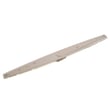
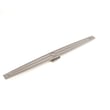
| Model number | Exact part ID (example: WPW10653840) | Ensures correct fit and wiring |
| Symptom (not draining, not heating) | Part category plus model number | Multiple parts can cause the same symptom |
Helpful tip for Whirlpool-built dishwashers
Your model and serial number are typically located near the door on the right-hand or left-hand side of the dishwasher interior. That is the fastest way to confirm you are buying the correct Whirlpool dishwasher parts.
Related repair content we use often
Why it matters: Whirlpool-owned brands share engineering DNA, but parts compatibility is still model-specific. Using the exact model number prevents wrong-part returns and repeat repairs.
Last updated: February 2026
What does F4 mean on a Whirlpool dishwasher?
On a Whirlpool dishwasher, an F4 code commonly points to a drain problem (the dishwasher is not draining properly). On your Whirlpool WDF760SADB0, start by canceling the cycle, removing standing water, and checking the filter and drain path using the steps in the WDF760SADB0 owner’s manual.
What to check first (fast fixes)
- Cancel/Drain the cycle, then wait a minute to see if water starts moving out.
- Check the door latch; if the door is not fully closed and latched, the unit can pause or stop mid-cycle.
- Clean the filter area; a clogged filter can restrict water flow and contribute to poor draining.
- Inspect the drain hose routing; look for kinks, pinches, or a low loop that is missing.
- If you have a drain air gap, remove the cap and clean it (a blocked air gap can stop draining).
Parts that often solve an F4 drain issue
If the drain path is clear but the dishwasher still will not drain, these parts are common suspects on this model:
| Symptom | Most likely cause | Example part for WDF760SADB0 |
|---|---|---|
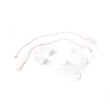
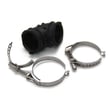
| Hums but water stays in tub | Drain pump not pumping | Dishwasher drain pump WPW10348269 |
| Drains slowly or backs up | Restricted/failed drain hose | Dishwasher drain hose (match your routing and ends) |
| Drains sometimes, then stops | Control sensing issue or intermittent blockage | Clean filter, check hose, then test pump |
Why it matters
A dishwasher that cannot drain leaves dirty water in the sump, which reduces cleaning performance and can cause the cycle to pause or stop. Clearing the filter and drain path first prevents unnecessary part replacement and helps the pump move water efficiently.
When to replace the drain pump
Replace the drain pump when:
- The drain path and air gap are clear, but no water exits during drain.
- You hear the pump motor run, but flow is weak and the tub stays full.
- The dishwasher repeatedly returns to an F4-style drain fault after cleaning.
For model-specific cancel/drain steps and filter removal details, follow the WDF760SADB0 owner’s manual.
Last updated: February 2026
How to troubleshoot common Whirlpool dishwasher problems?
For Whirlpool model WDF760SADB0, we troubleshoot most common dishwasher problems by checking power, door latch, cycle selection, and water supply first; then we move to draining, filtering, and heating checks. Many “problems” are normal pauses and longer 2 to 3 hour cycles on newer, energy-saving designs (see the WDF760SADB0 owner’s manual).
Quick checks that fix the most issues
- Confirm the dishwasher is plugged into a grounded 3-prong outlet (no adapter, no extension cord).
- Reset power at the breaker if the unit is unresponsive.
- Make sure the door is closed tightly and latched (a loose latch can stop a cycle).
- Verify the cycle is actually started and the water supply valve is turned on.
- Expect longer run times; many loads average 2 to 3 hours by design.
Symptom-based troubleshooting
| Symptom | Most likely checks | Common parts involved (if repair is needed) |
|---|---|---|
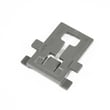
| Won’t start or stops | Power, breaker, door latch, cycle selection | Dishwasher door latch WPW10653840 |
| Not draining | Drain path clogs, air gap (if used), drain hose routing | Dishwasher drain pump WPW10348269, dishwasher drain hose 8269144A |
| Poor cleaning | Filter seating/locking, loading, spray obstruction | Filter cup a W10872845 |
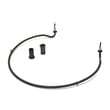
| Not drying | Heated dry settings, rinse aid use, heater circuit | Element assembly W10703867 |
Drain and filter checks (most common for “not draining” and “not cleaning”)
- Look for standing water; clear debris from the sump area.
- If you have a drain air gap, clean it when draining is weak.
- Remove and reinstall the filter so it locks (rotate until it drops and locks; it should not spin freely).
- Inspect the drain hose for kinks or a blocked connection at the disposal or sink drain.
Why it matters
Starting with power, latch, and water supply prevents unnecessary part replacement. Then, focusing on the filter and drain path addresses the most frequent causes of poor cleaning and draining on Whirlpool dishwashers.
Last updated: February 2026
Why is my Whirlpool dishwasher leaking at the bottom of the door?
A bottom-of-door leak on a Whirlpool WDF760SADB0 is usually caused by water being deflected out of the tub (oversudsing, spray arm splash, or a loading issue) or by a sealing problem at the door (dirty or damaged gasket, door not latching evenly). Use the WDF760SADB0 user manual to confirm the correct checks and operating tips for your exact control setup.
Most common causes (and what to check first)
- Oversudsing from the wrong detergent or too much detergent; suds push water past the door seal.
- Dishes blocking the spray path; a tall pan or utensil can redirect spray straight at the door.
- Dirty sealing surfaces; grease and debris on the inner door lip or gasket create a leak path.
- Door not fully latched; a weak latch or misalignment lets water escape at the bottom edge.
- Unit not level; if the dishwasher tilts forward, water can pool toward the door.
Quick diagnostic steps (10 minutes)
- Cancel the cycle and open the door; wipe the inner door edge and gasket with a damp cloth.
- Check loading; keep large items out of the front corners and away from the lower spray arm.
- Run a short cycle and observe; leaks that start only during wash usually point to spray deflection or suds.
- Confirm the door closes firmly; if it takes extra force or pops open, inspect the latch.
- Verify leveling; the installation instructions call for checking level front-to-back and side-to-side in the cabinet opening (see the WDF760SADB0 installation guide).
Parts that commonly relate to door-area leaks
| Symptom | What it often indicates | What to do next |
|---|---|---|
| Leak only during active spraying | Spray deflection or oversudsing | Re-load, reduce detergent, verify spray arm spins freely |
| Leak happens when you bump the door | Latch not holding tight | Inspect/replace the dishwasher door latch WPW10653840 |
| Water appears after the cycle ends | Drain or backflow issue | Check drain hose routing and sink/disposer connection |
Why it matters
A door-area leak can damage flooring and cabinets, and it often gets worse over time as residue builds up or the door latch loosens. Fixing the root cause also improves cleaning performance and reduces cycle interruptions.
Last updated: February 2026