Owner’s manual




How do I tell what model Electrolux washer I have?
Your Electrolux washer’s model number is printed on the model and serial tag; on the EWFLS70JSS1 front-load washer, you’ll typically find that tag when you open the door and look around the door opening area. Use that exact model number when ordering parts or checking instructions in the EWFLS70JSS1 owner’s manual.
Check these common tag locations on Electrolux front-load washers:
- Open the washer door and inspect the door opening (around the door frame/boot area)
- Look along the inside edge of the front panel near the door latch area
- Check the back panel if you do not see a tag at the door opening
- Wipe the area with a damp cloth; detergent residue can hide the print
Record both numbers exactly as shown:
- Model number (example for this page: EWFLS70JSS1)
- Serial number (unique to your washer)
- Purchase date (helpful for service history and reference)
The model number identifies the exact configuration of your washer (controls, door lock style, and water system). That ensures you get the right repair instructions and the correct replacement parts.
| Item | What it tells us | Used for |
|---|---|---|
| Model number | The washer’s exact design/version | Parts lookup, manuals, compatibility |
| Serial number | Your specific unit’s production ID | Service records, warranty paperwork |
Last updated: February 2026
What is the life expectancy of an Electrolux washing machine?
Most Electrolux washing machines, including the Electrolux EWFLS70JSS1 front-load washer, typically last about 10 years with normal household use and routine maintenance. Consistent cleaning, correct loading, and quick attention to leaks or draining issues help key parts like the drain pump and motor last longer.
- Load size and balance: frequent overloading increases stress on the tub, shocks, and bearings.
- Moisture and residue: detergent buildup and standing water shorten the life of seals and hoses.
- Water quality: hard water can accelerate scale buildup in valves and internal passages.
- Drain health: clogs force the pump to work harder and can cause slow-drain problems.
- Vibration control: excessive shaking speeds up wear on suspension and tub components.
Use these habits to reduce wear on your EWFLS70JSS1:
- Leave the door slightly open between loads to dry the door boot area.
- Run a monthly cleaning cycle (or hot wash) to reduce odor and residue.
- Check pockets to prevent coins, screws, and debris from reaching the pump.
- Clean the pump filter if you notice slow draining or water left in the tub.
- Confirm the drain setup is correct; the standpipe should be at least 23.6 inches (60 cm) high to help prevent siphoning.
| Symptom | What it often points to | Example part for this model |
|---|---|---|
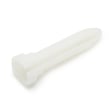
| Won’t drain, water left in tub | Clogged filter or failing pump | Washer drain pump filter 134640200 |
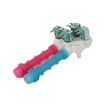
| Won’t fill or fills slowly | Restricted screens or failing inlet valve | Washer water inlet valve 134637810 |
| Loud banging or heavy vibration | Worn suspension components | Shock absorber 5304491701 |
Knowing the typical 10-year lifespan helps you decide whether to maintain and repair (often cost-effective for a mid-life washer) or plan for replacement when multiple major components (pump, control, motor) start failing close together.
For model-specific care and operating guidance, follow the EWFLS70JSS1 owner’s manual.
Last updated: February 2026
Why is my Electrolux front load washer leaking at the door?
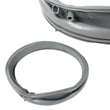
A door-area leak on an Electrolux EWFLS70JSS1 is usually caused by residue or damage on the door boot (bellows) sealing surface, or by the door not closing and latching evenly. Cleaning the bellows lip and door glass often stops minor leaks; torn rubber or a loose clamp needs repair.
- Unplug the washer before inspecting the door seal closely.
- Wipe the door glass and the front lip of the bellows with warm water and mild soap; residue can prevent a tight seal.
- Check for small tears, pinholes, or a folded-over section of the bellows at the bottom where water sits.
- Look for items caught between the glass and seal (socks, pet hair, detergent buildup).
- Confirm the door closes fully and the washer recognizes it as latched (the washer will not run with the door unlatched per the EWFLS70JSS1 owner's manual).
| What you see | Likely cause | What we do next |
|---|---|---|
| Slow drip from bottom of door | Dirty bellows lip or debris on glass | Clean and dry the sealing surfaces; run a rinse cycle |
| Water streams during tumble | Torn or deformed bellows | Replace the door boot (bellows) and re-seat clamps |
| Leak only on certain loads | Overloading or bulky items pushing on door | Reduce load size; redistribute items |
| Door feels loose or misaligned | Latch not pulling door in evenly | Inspect latch strike and lock alignment; replace worn parts if needed |
If the seal is intact but the door is not pulling in evenly, the latch system can be involved.
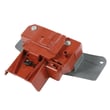
- Washer door lock 134629900 (helps secure the door during the cycle)
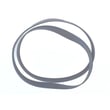
- Washer door boot spring clamp 134616300 (holds the boot tight to the front panel opening)
A small door leak can quickly lead to water under the washer, odors, and repeated residue buildup on the bellows. Fixing the seal surface or clamp tension early helps protect the tub area, drain pump, and flooring.
Last updated: February 2026