Error Codes


What is the average lifespan of a Kenmore washer?
A Kenmore washer typically lasts 10 to 15 years. For your Kenmore 11020952994 washer, lifespan depends most on load size, how often it runs, and whether wear items (like the drive coupling, lid switch, and drain pump) are replaced when symptoms first show up.
Typical lifespan and what affects it
Most washers land in the same general range, but these factors move the needle the most:
- Weekly usage: more cycles per week shortens overall life
- Overloading: strains the drive system, clutch, and gear case
- Water quality: sediment can shorten inlet valve and pump life
- Drain performance: slow draining makes the motor work harder
- Vibration and balance: constant shaking accelerates suspension wear
Common “end-of-life” symptoms (and the parts that often fix them)
If the washer is otherwise in good shape, these issues are often repairable:
- Won’t spin or stops mid-cycle: washer lid switch WP8054980
- Won’t drain or leaves water in the tub: washer drain pump WP3363394
- Agitates poorly or makes a ratcheting sound: agitator dog 80040
- Loud grinding in spin or poor basket engagement: washer drive block WP389140
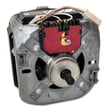
- No agitation and no spin (motor runs): coupling 285753A
Quick decision guide: repair vs replace
Use this as a practical rule-of-thumb for a Kenmore top-load washer like model 11020952994.
| Washer age | Condition | Best next step |
|---|---|---|
| 0 to 7 years | Any minor failure | Repair is usually the best value |
| 8 to 12 years | One major symptom | Repair if the tub and cabinet are solid |
| 13 to 15 years | Multiple symptoms | Compare repair cost to replacement |
| 16+ years | Frequent breakdowns | Replacement is usually the better long-term choice |
Why it matters
Knowing the typical 10 to 15 year lifespan helps you plan: if your washer is near that range, replacing a few common wear parts can still buy meaningful time, but repeated failures often point to larger drive or suspension wear.
Last updated: February 2026
What does F9E1 check that the drain is clear?
On Kenmore washer model 11020952994, the F9E1 code means the washer is taking too long to drain (a long-drain condition). Clearing the drain path usually fixes it: check the drain hose for kinks or clogs and inspect the drain pump area for debris; the most common failed part is the washer drain pump WP3363394.
What to check to make sure the drain is clear
- Drain hose routing: straighten kinks; avoid crushing the hose behind the washer.
- Standpipe or laundry tub: confirm the household drain is not backing up.
- Hose height and seal: the hose should not be shoved too far down the standpipe (it can siphon or restrict flow).
- Pump inlet area: coins, socks, or lint can block the pump inlet.
- Load and suds: too many suds can slow draining; use the correct amount of HE detergent.
Quick troubleshooting steps (safe, practical)
- Unplug the washer.
- Bail out water if needed (a shallow pan and towels help).
- Check the drain hose end for blockage and verify strong flow at the standpipe.
- If draining is still slow, inspect the pump for obstruction or a damaged impeller; replace the pump if it hums but does not move water.
Parts that commonly solve an F9E1 long-drain problem
| Symptom | Most likely cause | Part to consider |
|---|---|---|
| Hums but won’t drain | Jammed or failed pump | Washer drain pump WP3363394 |
| Drains sometimes, then stops | Partial blockage in hose or pump | Hose-wl WP353244 |
| Won’t advance/spin after drain issue | Lid switch not sensing closed lid | Washer lid switch WP8054980 |
Why it matters
A restricted drain can prevent the washer from spinning out water, leaving clothes wet and putting extra strain on the motor coupling, clutch, and gear case over time.
Last updated: February 2026
How to read Kenmore model numbers?
Kenmore model numbers tell you who built the appliance and which design series it is. For Kenmore washer model 11020952994, the first three digits (110) identify the manufacturer family (commonly Whirlpool-built), and the remaining digits narrow down the exact configuration used to match the correct replacement parts.
How to break down a Kenmore model number
Use this quick checklist when you read the tag on your washer:
- Prefix (first 3 digits): manufacturer code (example: 110)
- Middle digits: platform or series identifier (design family)
- Last digits: feature set, revision, or production variation
- Full number matters: parts can change between close-looking models
- Always match exactly: use every digit when searching parts
Where to find the model number on a Kenmore washer
Most Kenmore top-load washers place the model/serial tag in one of these spots:
- Under the lid, around the opening
- On the rear panel
- On the cabinet rim near the lid hinge area
- Occasionally inside the control console area (behind the panel)
Why the prefix matters (and what it does for parts)
The prefix helps us align your Kenmore washer to the correct parts design. That is important because components like the lid switch, drain pump, and drive system vary by platform.
| What you’re doing | Use this part of the model number | Why it helps |
|---|---|---|
| Identifying the build family | First 3 digits (example: 110) | Points to the correct design platform |
| Ordering parts | Full model number | Prevents wrong-fit parts |
| Troubleshooting symptoms | Full model number plus symptom | Narrows likely failure parts |
Common parts that depend on the exact model
Even within the same prefix, these parts often differ by series and revision:
- Lid switch assembly (washer will not spin or drain)
- Drain pump (won’t drain, humming, leaks)
- Motor coupling (agitate/spin failure)
- Gear case (grinding noise, no agitation)
- Inlet valve (won’t fill, slow fill)
If you’re diagnosing a specific symptom on model 11020952994, a frequent first check is the washer lid switch WP8054980 because a failed lid switch can stop spin and drain on many Kenmore top-load designs.
Why it matters
Reading the model number correctly is the fastest way to avoid ordering the wrong Kenmore washer parts and to target the most likely repair (for example, drive, drain, or fill problems).
Last updated: February 2026
How many cubic feet is a Kenmore washer 11020952994 series?
The exact cubic-foot capacity for Kenmore washer model 11020952994 isn’t published in the model’s parts information; the reliable way to answer this is to measure the inside of the wash basket and calculate volume. That gives you a practical capacity number for load sizing.
How to calculate capacity (simple DIY method)
Measure the inside of the basket (not the outer tub):
- Measure the inside diameter of the basket in inches
- Measure the usable depth from the bottom to the top rim in inches
- Use the cylinder formula: Volume (cu in) = π × (diameter/2)² × depth
- Convert to cubic feet: cu ft = cu in ÷ 1,728
Quick reference table
| What you measure | What to do | Result you get |
|---|---|---|
| Inside diameter (in.) | Divide by 2 to get radius | Needed for the formula |
| Usable depth (in.) | Measure straight down inside basket | Needed for the formula |
| Calculated cubic inches | Divide by 1,728 | Capacity in cubic feet |
Why it matters
Capacity affects how full you can load the washer without poor agitation, off-balance spinning, or extra wear on the drive system and suspension.
Parts that help you confirm you’re measuring the right component
If you’re comparing basket size or replacing tub-related parts on model 11020952994, these model-matched parts are commonly involved:
- Basket W10389328 (wash basket)
- Drive basket W10820043 (spin basket component)
- Washer suspension spring WP63907 (helps control tub movement)
Last updated: February 2026