Error Codes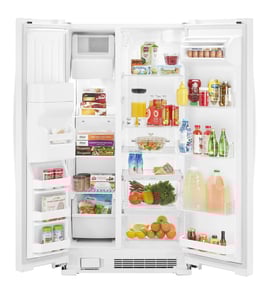


How big is the Whirlpool model ED5FHEXNS02?
The Whirlpool ED5FHEXNS02 is a full-size side-by-side refrigerator with a typical total capacity around 25 cu. ft. For exact exterior height, width, and depth, we recommend measuring your unit in place (handles and door swing can change the real footprint).
What “big” usually means for this model
Most customers mean one of these:
- Capacity (cu. ft.): how much food it holds
- Exterior dimensions: whether it fits the opening
- Door clearance: whether doors and handles clear walls/cabinets
- Space for airflow: clearance behind and above the cabinet
Typical size range for a Whirlpool side-by-side like ED5FHEXNS02
Because no model-specific documentation is available here, we use the common size range for Whirlpool 25 cu. ft. side-by-sides.
| Measurement | Typical range (approx.) | What to measure on yours |
|---|---|---|
| Width | 32 3/4 to 36 in. | Cabinet width and widest point with doors closed |
| Height | 66 to 71 in. | Floor to top of hinge cover (if present) |
| Depth | 30 to 35 in. | With and without handles (two measurements) |
| Capacity | 24 to 26 cu. ft. | Use the model’s published spec when available |
How we recommend measuring your refrigerator
- Measure width at the widest point with doors closed.
- Measure height from floor to the highest point (often the hinge area).
- Measure depth two ways: cabinet only and with handles.
- Check door swing clearance: open the doors to your normal use angle and confirm it clears nearby walls.
- Confirm your opening allows a little air space behind and above for proper cooling.
Why it matters
Correct sizing prevents delivery surprises, door-interference issues, and airflow problems that can lead to warm temperatures or heavy frost. If you are troubleshooting cooling or icing issues while checking fit and airflow, our Whirlpool refrigerator error codes guide can help you narrow down what the refrigerator is reporting.
Last updated: January 2026
What is the most common problem with a Whirlpool refrigerator?
The most common Whirlpool refrigerator problem is a cooling complaint (warm fridge or freezer, temperature swings, or the unit running constantly). On the Whirlpool ED5FHEXNS02 side-by-side refrigerator, the next most common issues are ice maker and water dispenser problems tied to water supply, freezing, or failed water components.
Most common symptoms we see
- Refrigerator section too warm but freezer seems OK
- Freezer too warm or soft ice cream
- Unit runs a lot, loud fan noise, or clicking
- Ice maker stops making ice or makes small/hollow cubes
- Water dispenser is slow, sputters, or stops
Quick checks that fix many “not cooling” calls
- Clean the condenser coils (dust buildup reduces cooling and makes the compressor run longer).
- Confirm airflow: do not block vents with food packages.
- Check door sealing: a poor seal causes warm air leaks and frost.
- Set temps to typical targets: 37°F fresh food, 0°F freezer.
- Listen for the evaporator fan: if it is not running, cooling performance drops fast.
Parts that commonly solve the underlying problem
If basic checks do not help, these model-relevant parts often come into play:
| Problem area | What fails | What you may notice |
|---|---|---|
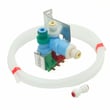
| Water to ice maker/dispenser | Refrigerator inlet valve W10408179 | No ice, no water, weak flow |
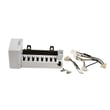
| Ice production | Ice maker assembly - refrigerator ice maker by Whirlpool 4317943 | No ice, intermittent harvest |
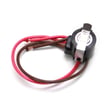
| Defrost system | Refrigerator defrost bi-metal WPW10225581 | Frost buildup, warm temps |
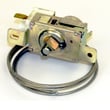
| Temperature control | Refrigerator thermostat WP2198202 | Temps drift, short cycling |
Why it matters
Cooling and ice maker symptoms often share the same root causes: restricted airflow, dirty coils, or a failing defrost or water component. Fixing the cause early helps prevent food spoilage and reduces compressor run time.
Helpful DIY guides
Last updated: January 2026
What's the average lifespan of a Whirlpool refrigerator?
Whirlpool refrigerators typically last 10 to 20 years; for a Whirlpool ED5FHEXNS02 side-by-side refrigerator, 10 to 15 years is a common real-world average with normal use and basic maintenance. Lifespan depends most on compressor health, airflow, and how hard features like the ice maker work.
Typical lifespan ranges (what to expect)
Most Whirlpool refrigerators fall into these practical ranges:
- 10 to 15 years: common for many households
- 15 to 20 years: achievable with consistent maintenance and stable temperatures
- Under 10 years: more likely with poor airflow, dirty condenser coils, frequent power issues, or heavy ice maker/dispenser use
| Refrigerator type | Typical lifespan | What most often shortens life |
|---|---|---|
| Basic top-freezer | 15 to 20 years | Dirty coils, door seal leaks |
| Side-by-side (like ED5FHEXNS02) | 10 to 15 years | Ice maker/dispenser wear, airflow restrictions |
| Feature-heavy models | 10 to 15 years | More components that can fail |
What matters most for longevity
These are the highest-impact ways we see customers extend refrigerator life:
- Keep condenser airflow clear (don’t block vents; allow space behind the unit)
- Clean dust from the condenser area regularly
- Keep doors sealing tightly; warm air intrusion makes the compressor run longer
- Avoid overpacking; it restricts airflow and causes temperature swings
- Replace failed cooling or defrost parts promptly to prevent compressor strain
Parts that commonly affect lifespan on side-by-side models
On side-by-side refrigerators, a few systems do a lot of the work. If they fail and go unaddressed, the refrigerator runs hotter and longer, which shortens overall life:
- Ice maker system (motor modules, mold, bin)
- Water system components (valves, filter housing)
- Defrost system (heater, defrost bi-metal)
- Temperature control components (thermostat)
If your ice maker is leaking, not filling, or overfilling, checking the refrigerator inlet valve W10408179 is a common first step.
Why it matters
A refrigerator that runs longer than it should (from dirty coils, air leaks, or defrost problems) uses more energy and puts extra wear on the compressor and sealed system. Catching airflow, ice maker, and defrost issues early is the simplest way to protect the most expensive components.
Last updated: January 2026