Owner’s manual
 Error Codes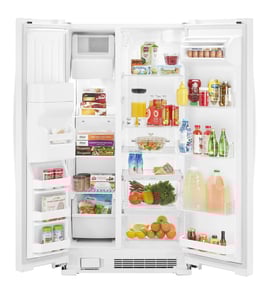

How many cubic feet is my Kenmore refrigerator by model number?
Your Kenmore side-by-side refrigerator model 10656566400 has its exact cubic-foot capacity listed on the model and serial number label inside the fresh food compartment and in the specifications section of the 10656566400 owner's manual. Use those two sources to get the precise number for your specific unit.
- Check the model and serial number label on the inside wall of the refrigerator compartment.
- Look in the specifications section of the 10656566400 owner's manual.
- If the label is hard to read, clean it gently and use a flashlight to improve contrast.
- Record the model and serial number for future parts lookups and service.
Cubic feet is the refrigerator’s interior storage volume. On many side-by-side designs, the published capacity is the total of both compartments (refrigerator plus freezer). Usable space can feel smaller because shelves, bins, and the ice maker take up room.
| Method | What you need | Accuracy |
|---|---|---|
| Rating plate/label inside fridge | Flashlight, model/serial label | Highest |
| Owner’s manual specs | Manual PDF | Highest |
| Measure and calculate (L x W x H) | Tape measure | Medium (estimates only) |
Knowing the exact cubic-foot capacity helps us match the right shelves, crisper pans, door bins, and ice maker components for your 10656566400, and it also helps when comparing replacement refrigerators or planning kitchen fit and ventilation clearances.
Last updated: February 2026
How wide is a Kenmore side-by-side refrigerator?
Most Kenmore side-by-side refrigerators are about 32 to 36 inches wide; for your Kenmore 10656566400, the exact cabinet width is listed in the 10656566400 owner's manual. Use that measurement (not the door width) when planning a fit between cabinets.
Side-by-side refrigerators are commonly built in a few standard width classes:
- 32 to 33 inches: space-saving models
- 35 to 36 inches: most common full-size width
- 42 inches: built-in style (less common)
If you are measuring an opening, we recommend allowing extra clearance for airflow and door swing.
Use a tape measure and record these numbers:
- Cabinet width: left cabinet side to right cabinet side (main “official” width)
- Door width: can be wider than the cabinet because of handles and door curvature
- Clearance to walls: needed so doors open fully and drawers slide out
- Back clearance: needed for the water line if you have an ice maker
The manual for this model also calls out ventilation and door-swing spacing; for example, it notes allowing space on each side and extra room at the back for water line connections. See the 10656566400 owner's manual.
| What you are planning for | What to use | What to add |
|---|---|---|
| Cabinet opening width | Cabinet width | 1/2 inch to 1 inch total wiggle room |
| Door swing next to a wall | Cabinet width | About 2 inches on the hinge side |
| Water line/ice maker | Depth behind unit | Extra space for tubing and fittings |
Using the cabinet width (plus clearance) prevents common fit problems like doors that cannot open fully, bins that hit a wall, or a refrigerator that runs warmer because it cannot vent heat properly.
Last updated: February 2026
What are the most common problems with Kenmore refrigerators?
The most common problems we see on Kenmore refrigerators like model 10656566400 are not cooling well (airflow or defrost issues), water leaks, ice maker or dispenser trouble, and unusual noises. Many fixes start with restoring airflow, cleaning, and checking key components listed in the 10656566400 owner's manual.
- Not cooling or warm temperatures: blocked air vents, doors opened often, controls set incorrectly, dirty condenser coils, failed fans, or defrost system problems.
- Interior moisture buildup: blocked vents, frequent door openings, humid room conditions.
- Water leaks or puddles: clogged defrost drain, loose water line connections, cracked tubing.
- Ice maker not making ice: water supply issue, inlet valve problem, ice maker assembly failure.
- Noises that seem “too loud”: normal compressor and fan sounds, water valve buzzing during ice maker fill, sizzling during defrost, gurgling at cycle end.
- Confirm the unit has power and the controls are not set to OFF.
- Make sure air vents are not blocked by food packages (airflow problems cause many cooling complaints).
- If your model has digital controls, turn the unit OFF then ON to reset.
- Listen for normal operating sounds (fan airflow, refrigerant gurgle, defrost sizzling).
- Check door gaskets for dirt or stickiness; clean them so the doors seal and open correctly.
| Symptom | Common part to check | Example part for this model |
|---|---|---|
| No ice or slow ice | Water inlet valve | Refrigerator inlet valve W10408179 |
| Ice maker dead or inconsistent | Ice maker assembly | Refrigerator ice maker 2198597 |
| Poor water taste/flow | Water filter | Genuine Kenmore refrigerator water filter EDR3RXD1 |
| Frost buildup, warm freezer | Defrost heater or thermostat | Refrigerator heater WP2323198, refrigerator defrost bi-metal WPW10225581 |
Cooling, ice, and leak complaints often share the same root causes: restricted airflow, a weak door seal, or a water supply/defrost issue. Catching those early helps protect food temperatures and prevents repeat service calls.
Last updated: February 2026
What is the ER if code on a Kenmore Elite?
The ER IF (or Er IF) code on a Kenmore Elite, including Kenmore model 10656566400, points to an ice fan problem in the freezer. That fan pushes cold air through the door air duct to keep the ice maker area cold, so ice production and dispensing can be affected.
- Ice maker slows down or stops making ice
- Ice in the bin melts, clumps, or looks wet
- Little to no cold air flow to the ice maker area
- Freezer temperature may be warmer than normal
- You may hear unusual fan noise (rubbing, buzzing, or no fan sound)
- Power reset: Unplug the refrigerator (or turn off the breaker) for 2 minutes, then restore power.
- Check for ice buildup: Look for frost or ice blocking the air passages in the freezer and door chute area.
- Confirm freezer temp: Set the freezer to about 0°F and allow 24 hours to stabilize.
- Inspect the door seal: A leaking gasket can cause frost that interferes with airflow.
- Listen for the fan: When the freezer door switch is held closed, you should typically hear the fan running.
For model-specific access points and component locations, follow the troubleshooting and disassembly guidance in the 10656566400 owner's manual.
| Symptom | Most likely cause | What to do next |
|---|---|---|
| Fan is silent, no airflow | Fan motor not running or wiring issue | Check connections; test/replace failed component |
| Loud rubbing or ticking | Fan blade hitting ice or shroud | Defrost ice; verify blade spins freely |
| Ice maker area warm but freezer cold | Air duct blocked or fan weak | Clear blockage; verify fan operation |
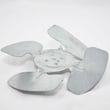
If you find the fan blade damaged or obstructed, the refrigerator evaporator fan blade WP2169142 is a common related part for airflow problems on this platform.
The ice fan is what delivers freezer air to the ice maker compartment. When it fails or airflow is blocked, the ice maker cannot stay cold enough to cycle normally, and you can get melting, clumping, or no ice.
Last updated: February 2026
What's the average lifespan of a Kenmore refrigerator?
Most Kenmore refrigerators average 10 to 15 years of service life; a well maintained Kenmore 10656566400 side-by-side refrigerator often reaches the upper end of that range when airflow, door sealing, and temperatures are kept in check. For model-specific care and cleaning steps, follow the 10656566400 owner's manual.
- 10 to 15 years: common for most Kenmore refrigerators
- 15 to 20 years: achievable with consistent maintenance and timely part replacement
- Under 10 years: usually tied to poor ventilation, dirty condenser coils, door seal leaks, or water/ice system issues
| Refrigerator type | Typical lifespan | What most affects it |
|---|---|---|
| Side-by-side (like 10656566400) | 10 to 15 years | Door gasket condition, condenser cleanliness, fan airflow |
| Top freezer | 12 to 18 years | Simple design, steady temperatures |
| French door | 10 to 15 years | Higher use of ice/water features, more door openings |
We recommend these habits because they reduce compressor run time and prevent moisture and frost problems:
- Clean condenser area regularly (dust buildup raises operating temperatures)
- Keep door gaskets clean so doors close easily and seal tightly (the manual notes sticky or dirty gaskets can make doors hard to open)
- Level the refrigerator so doors self-close and don’t shift out of alignment
- Keep vents inside the fresh food and freezer sections unblocked
- Replace the water filter on schedule if your unit is equipped with filtration
A refrigerator that runs hotter or leaks air works harder; that extra run time accelerates wear on the sealed refrigeration system (compressor and tubing) and can also lead to temperature swings that spoil food faster.
Last updated: February 2026