Installation guide
 Owner’s manual




Can too much detergent cause an E3 error?
Yes. On the Whirlpool WFW97HEDBD0 washer, using too much (or non-HE) detergent can create excessive suds that interfere with normal draining and spinning; that can trigger a drain-related fault or “suds” routine that customers often describe as an E3-type error. See the WFW97HEDBD0 owner's manual for the exact display messages and reset steps.
- “Sud” or “dEt” appears and the washer runs a suds-reduction routine
- The cycle pauses longer than normal, then may stop with a drain-related error
- Water or suds may leak from the door or rear of the cabinet
- Loads finish too wet because suds slow or stop draining and spinning
- Cancel the cycle.
- Run DRAIN & SPIN with Extra Rinse.
- Do not add more detergent.
- After the issue is corrected, press POWER once to clear the code, then reselect and restart the cycle.
Use this quick checklist for HE front-load washers like this Whirlpool:
- Use HE detergent only
- Measure detergent every load (do not “free-pour”)
- Reduce detergent for small loads and lightly soiled loads
- If you have hard water, adjust dosing and set the washer’s water hardness option if available
- Avoid extra sudsing boosters unless the product is labeled HE-compatible
| Situation | What to do | Why it helps |
|---|---|---|
| Too many suds | DRAIN & SPIN + Extra Rinse | Flushes suds so the pressure sensing and drain system can recover |
| Regular (non-HE) detergent used | Switch to HE and reduce amount | Non-HE suds can cause leaks and drain/spin problems |
| Repeated drain faults after suds events | Check drain hose install and pump area | Suds can push lint/debris into the drain path |
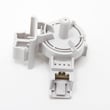
If you’ve corrected detergent use and the washer still won’t drain or repeatedly faults, the drain system may be restricted or failing. For this model, a common drain component is the washer drain pump WPW10605427.
Excess suds can make the washer “think” it has a water-level or drain problem, which protects the machine by slowing or stopping the cycle. Correct detergent type and dose restores normal draining, spinning, and door unlocking.
Last updated: February 2026
How do I know what model my Whirlpool washer is?
Your Whirlpool washer’s model number is printed on the appliance’s rating label; for the WFW97HEDBD0, you’ll use that exact model number (plus the serial number) to match the correct parts, Use and Care information, and installation requirements in the WFW97HEDBD0 owner’s manual.
On Whirlpool front-load washers like model WFW97HEDBD0, the rating label is most commonly located:
- Around the door opening on the cabinet frame (open the door and look along the rim)
- On the inside edge of the door itself
- Behind or near the lower front access area (if equipped)
- On the rear panel (less common, but worth checking)
Write down the full model number and serial number exactly as shown.
Use the model number to ensure you get the right documentation and parts for your exact washer configuration.
- Confirm the model reads WFW97HEDBD0 (letters and numbers matter)
- Use the model number to identify compatible replacement parts (for example, a drain issue often points to the washer drain pump WPW10605427)
- Use the serial number to help date the unit and confirm production details when ordering parts
- Keep a photo of the label for future service calls
| Item | What it tells you | Example format |
|---|---|---|
| Model number | Exact design and parts fit | WFW97HEDBD0 |
| Serial number | Production identifier and build info | Varies by unit |
Whirlpool makes many similar-looking washers, and small model-number differences can change the correct door lock, water inlet valve assembly, or control board. Matching the exact model number helps prevent wrong-part returns and speeds up troubleshooting.
Last updated: February 2026
How to fix unbalanced load in Whirlpool?
On the Whirlpool WFW97HEDBD0 washer, an unbalanced load is usually fixed by redistributing the items in the drum and making sure the washer is level with all feet firmly on the floor. The washer may pause and try to rebalance automatically, which can extend cycle time.
- Pause the cycle, open the door, and spread items loosely around the drum.
- Avoid single-item loads (one rug, one jacket, one pair of jeans); add a few similar items to balance.
- Reduce load size if the drum is tightly packed.
- Confirm the washer is level and the leveling legs are locked (jam nuts tight).
- Check the floor; if it flexes, place a 3/4 in (19 mm) plywood panel under the washer to reduce rocking.
Use the steps in the installation guide to level the washer correctly.
| What you see | What it usually means | What to do |
|---|---|---|
| Washer “walks” or bangs in spin | Feet not firmly planted, washer not level | Re-level and lock the legs |
| Repeated rebalancing, longer cycle | Load too small or uneven | Add items, redistribute |
| Vibration on certain spots | Floor flexing/sagging | Add plywood support |
If the washer is level and loads are balanced but it still shakes hard, worn suspension can contribute to excessive movement. On this model, inspect the washer shock absorber W11415987 for leakage, cracking, or looseness.
An out-of-balance condition can prevent proper spinning, leave clothes wetter than normal, and increase vibration that stresses the tub, cabinet, and door lock over time. Correct loading and leveling protect the washer and improve wash results.
Last updated: February 2026
What is a common problem for a Whirlpool washer front loader?
A very common problem on a Whirlpool front-load washer like model WFW97HEDBD0 is not draining or not spinning with clothes still wet, usually tied to a drain restriction (hose/standpipe setup, clogs) or excess suds from non-HE detergent. Odors, leaks at the door, and vibration from leveling or load balance are also frequent.
- Washer won’t drain or won’t spin; load still wet: drain hose issue, clog, or pump problem; also excess suds can interfere with draining/spinning.
- Door won’t unlock at end of cycle: often happens when the washer senses water still in the tub.
- Water or suds leaking from door/rear: commonly caused by using non-HE detergent or too much HE detergent.
- Vibration, rocking, or “walking”: leveling feet not locked, washer not level, shipping bolts left in, or an unbalanced load.
- Low water level looks “too low”: normal for HE front-load washers; the washer senses load size and adds the correct amount.
Use the troubleshooting and setup steps in the WFW97HEDBD0 owner's manual and WFW97HEDBD0 installation guide.
- Confirm you are using HE detergent only and measuring correctly.
- Check the drain hose: not kinked, not clogged, not pushed too far into the standpipe (typical limit is about 4.5 in.).
- Verify the drain outlet height is not excessive (many installs limit to about 96 in. above the floor).
- Make sure the washer is level and the leveling leg jam nuts are tight.
- Avoid tightly packing; balance single heavy items with a few extra items.
| Symptom | Common suspect | Example part for this model |
|---|---|---|
| Won’t drain / slow drain | Drain pump or blockage | Washer drain pump WPW10605427 |
| Door won’t lock/unlock | Door lock mechanism | Washer door lock WPW10443885 |
| Excessive shaking | Worn suspension | Washer shock absorber W11415987 |
Drain, leak, and vibration issues can trigger error codes, leave loads wet, and cause repeat cycle interruptions. Correct detergent (HE), correct drain hose installation, and proper leveling prevent many “common problems” before parts replacement is needed.
Last updated: February 2026
Where is the drain filter on a whirlpool washing machine?
On the Whirlpool WFW97HEDBD0 front-load washer, the drain filter is part of the drain pump cleanout and is typically accessed at the lower front of the cabinet, behind the lower access (kick) panel. Opening it lets you clear coins, lint, and small items that block draining; follow the steps in the WFW97HEDBD0 owner’s manual.
- Unplug the washer (or switch off the breaker).
- Put towels and a shallow pan under the lower front edge; water will come out.
- Remove the lower access panel to reach the drain pump cleanout.
- Turn the cleanout cap counterclockwise slowly to control the water flow.
- Remove debris from the filter and pump cavity; reinstall the cap snugly.
- Run a Drain/Spin cycle to confirm normal draining.
| Symptom | What it usually means | What to check first |
|---|---|---|
| Won’t drain or drains slowly | Restriction at pump/filter | Filter cleanout and pump cavity |
| Loads still wet after spin | Drain issue or oversudsing | Filter, drain hose, HE detergent |
| Rattling during drain | Small item in pump | Filter and pump cavity |
- Keep the drain hose installation correct; the standpipe depth and routing details are in the WFW97HEDBD0 installation guide.
- Use only HE detergent and measure carefully; oversudsing can slow or stop draining.
- Check the drain hose for kinks, clogs, or an airtight fit in the standpipe.
If the cleanout is clear but the washer still won’t drain, the drain pump is a common next suspect.
A clear drain filter helps the washer drain and spin correctly, prevents standing-water odors, and reduces strain on the drain pump.
Last updated: February 2026