Owner’s manual
 Error Codes

What are the disadvantages of a bottom freezer?
Bottom-freezer refrigerators like the GE PYE22KSKKSS make fresh food easier to reach, but the tradeoffs are mostly cost and ergonomics: the freezer is lower (more bending), drawers can hide items, and the freezer door and slide hardware are heavier and more complex than a basic top-freezer design.
Common disadvantages (what you’ll notice day to day)
- More bending for frozen foods: you reach down for everyday freezer items.
- Heavier drawers and door: large freezer baskets can get heavy when fully loaded.
- Deep drawer organization challenges: items can stack and get buried.
- Less convenient for frequent freezer access: if you use the freezer constantly, the lower position can feel slower.
- Potential for more service points: drawer slides, door alignment, and ice maker features add moving parts.
Practical ways to reduce the downsides
- Keep “daily grab” items in the top freezer basket; store bulk items below.
- Use bins or dividers so packages do not slide to the back of deep drawers.
- Avoid overloading the freezer baskets; it reduces strain on slides and makes closing easier.
- If the refrigerator must pass through a tight doorway, follow the removal steps in the PYE22KSKKSS owner's manual to remove the freezer door and, if needed, the basket slides for extra clearance.
Bottom freezer vs. top freezer (quick comparison)
| Feature | Bottom freezer | Top freezer |
|---|---|---|
| Fresh food access | Easier (eye level) | Requires more bending |
| Freezer access | More bending | Easier (higher) |
| Organization | Deep drawers can hide items | Shelves are often simpler |
| Complexity | More moving parts (drawers/slides) | Typically simpler |
Why it matters
Most “disadvantages” come down to how your household uses frozen food. If you cook from the freezer daily, the lower drawer design can feel less convenient. If you use fresh food more often, the bottom-freezer layout usually feels more comfortable overall.
You can also search by model number to compare diagrams and find compatible replacement parts through Sears PartsDirect.
Last updated: February 2026
What is the most common problem with GE profile refrigerators?
The most common issues we see with GE Profile refrigerators like model PYE22KSKKSS are ice maker and water dispenser problems (no ice, slow fill, leaks) and cooling complaints caused by airflow or heat-transfer issues (dirty condenser coils, fan problems, or frost buildup). For model-specific features and maintenance intervals, use the owner's manual.
Most common problem areas (and what you’ll notice)
- Ice maker not making ice: empty bin, small cubes, or slow production
- Water dispenser issues: slow flow, odd taste, or dripping at the dispenser
- Cooling problems: fresh food section warm, freezer OK (or both warm)
- Noisy operation: fan noise, buzzing, or rattling that changes with door open/close
- Leaks: water under crisper drawers or on the floor near the front
Quick checks that fix a lot of complaints
- Clean the condenser coils (a top cause of weak cooling and long run times). Unplug power first.
- Confirm doors seal tightly: check for torn gaskets, gaps, or bins preventing closure.
- Check airflow: do not block vents with food packages; keep space around the back wall.
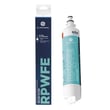
- If water is slow: replace the water filter on schedule and verify the supply valve is fully open.
- If ice is slow: make sure the freezer is cold enough and the ice bin is seated correctly.
Symptom-to-likely-cause guide
| Symptom | Most common cause | What to do first |
|---|---|---|
| No ice, but dispenser water works | Ice maker off, freezer temp too warm, ice maker jam | Verify ice maker is ON; set freezer colder; clear jam |
| Slow water at dispenser | Clogged filter, low house water pressure, kinked line | Replace filter; check line routing |
| Fresh food warm, freezer cold | Evaporator fan/air damper issue, blocked vents | Listen for fan; clear vents |
| Both sections warm | Dirty coils, condenser fan issue, control/defrost problem | Clean coils; check for fan airflow |
Why it matters
Ice and water issues are often maintenance-related (filter, supply, alignment), while cooling issues usually trace back to airflow and coil cleanliness. Catching these early helps prevent food spoilage and reduces compressor run time.
Parts and documentation
We use your model number to match the correct replacement parts and diagrams for PYE22KSKKSS. If you need to look up parts by model or explore diagrams, start with the model parts list, or search by model on Sears PartsDirect.
Last updated: February 2026
How to remove bottom grille on GE refrigerator?
On the GE PYE22KSKKSS bottom-mount refrigerator, the bottom grille (base grille or toe grille) is typically held in place by a few screws and/or retaining tabs. We remove it by taking out the fasteners first, then pulling the grille straight out to release it without cracking the plastic.
Before you start
- Unplug the refrigerator (or switch off power at the breaker) to avoid accidental fan or electrical contact.
- Protect the floor with cardboard or a towel so the grille does not scratch tile or hardwood.
- Use a flashlight; the fasteners are often low and recessed.
- Keep screws in a cup so they do not roll under the appliance.
Steps to remove the bottom grille
- Open the fresh food doors for better access and light.
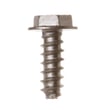
- Look along the top edge of the grille for screws (often Phillips-head) or small hex-head screws.
- Remove the screws and set them aside.
- Grasp the grille near both ends and pull it straight toward you.
- If it feels stuck, check for hidden tabs near the corners; press the tabs gently while pulling forward.
If the grille will not come off
- Confirm every screw is removed; some models use more than two.
- Pull straight out, not upward; twisting can snap the mounting clips.
- If the refrigerator is tight to the floor, raise the front leveling legs slightly to create clearance.
Reinstalling the grille
Reinstall is the reverse: align the tabs/clips, push the grille into place until it seats evenly, then reinstall the screws snugly (do not overtighten).
| What you see | What it usually means | What to do |
|---|---|---|
| Screws visible along top edge | Grille is screw-secured | Remove screws first, then pull forward |
| No screws, grille feels clipped | Grille uses retaining tabs | Press tabs at corners and pull straight out |
| Grille rubs the floor | Leveling legs set low | Raise leveling legs slightly, then remove |
Why it matters
Removing the bottom grille correctly prevents broken tabs and helps you safely access the condenser area for cleaning, inspection, or service.
For model-specific diagrams and handling notes, use the PYE22KSKKSS owner's manual. You can also search by model number on Sears PartsDirect if you need replacement grille-related hardware.
Last updated: February 2026