Owner’s manual
 Error Codes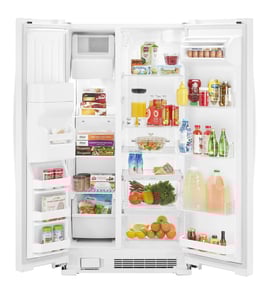


Are GE side by side refrigerators good?
GE side-by-side refrigerators like model GSE22ESHDSS are a solid choice for most homes because they’re designed for everyday reliability and serviceability, with common wear items (water filter, dispenser parts, fans, sensors) that are straightforward to maintain and replace using the GSE22ESHDSS owner’s manual.
A refrigerator is “good” when it holds steady temperatures, makes ice consistently, and is easy to keep running. For the GE GSE22ESHDSS, we focus on these practical strengths:
- Routine maintenance is clear (filter replacement intervals and basic care are spelled out in the manual).
- Common parts are available for typical issues like dispenser problems, airflow problems, and temperature sensing.
- Troubleshooting guidance exists (normal operating sounds, “before you call for service” checks).
Staying ahead of a few basics is what makes most side-by-sides feel “good” long-term.
- Replace the water filter about every 6 months, or sooner if water flow slows.
- Keep doors closing and sealing well to prevent temperature swings and frost.
- Avoid kinking the water line when moving the refrigerator.
- Clean spills and odors early to prevent lingering smells.
- Watch for changes in fan noise, cooling performance, or ice production.
| What you notice | Usually means | What to check first |
|---|---|---|
| Warm fridge, freezer OK | Airflow issue | Damper, vents, frost buildup |
| Ice maker slow or no ice | Water supply or fill issue | Filter, valve, fill tube |
| Water dispenser flow is weak | Restriction in water path | Filter, supply pressure |
| Clicking or buzzing near back | Start/cooling components cycling | Condenser fan area, airflow |
If performance drops, these are frequent fixes on side-by-sides:
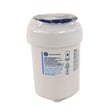
- Water quality or low flow: GE refrigerator water filter MWFP
- No water to dispenser or ice maker: refrigerator water valve WR57X33326
- Temperature swings or odd readings: refrigerator temperature sensor WR55X10025
- Warm temps with fan noise changes: evaporator fan motor, condenser fan motor
Side-by-side refrigerators depend on airflow and consistent water supply. When the filter, valve, fans, or sensors start acting up, the refrigerator can seem “bad” even though the sealed system is fine. Keeping up with maintenance and addressing early symptoms is what protects food quality and ice and water performance.
Last updated: January 2026
How to reset an ice maker on a GE side by side?
On the GE GSE22ESHDSS side-by-side refrigerator, “resetting” the ice maker is typically done by power-cycling it: slide the ice maker power switch to OFF, clear any jammed cubes, then slide it back to ON and allow the freezer to reach 15°F or colder so ice production can restart. See the GSE22ESHDSS owner's manual.
- Slide the ice maker power switch to OFF.
- Remove the ice bin and check for clumped ice or cubes stuck in the ice maker.
- If cubes are stuck, remove them; then reinstall the bin.
- Slide the power switch back to ON.
- Wait for the freezer to cool; the ice maker starts cycling once it reaches about 15°F (-9°C).
- Discard the first few batches of ice after restarting (helps clear the water line).
These checks solve most “no ice” complaints on GE side-by-side models:
- Confirm the household water shutoff valve is fully open.
- Make sure the freezer is cold enough; allow 24 hours after temperature changes.
- Level “piled up” cubes in the bin by hand; a full bin can stop production.
- Purge air from the water line by dispensing water for a couple of minutes.
- Replace a clogged water filter; restricted flow can cause small or hollow cubes.
| Symptom | Likely cause | What to do |
|---|---|---|
| No ice at all | Ice maker switch OFF | Switch ON and wait for 15°F or colder |
| Small or hollow cubes | Water filter clogged | Replace the filter |
| Ice maker stops with bin not full | Cubes piled up | Level cubes by hand |
| Buzzing but no ice | Water supply issue | Verify water is on and line is connected |
If the reset steps do not restore normal ice making, these parts are common suspects:
- GE refrigerator water filter MWFP (clogged filter reduces water flow)
- Refrigerator water valve WR57X33326 (controls water fill to the ice maker)
- Refrigerator grommet and tube assembly WR17X11168 (fill tube issues can restrict water)
A simple OFF/ON reset clears minor control hiccups and lets you address the most common mechanical causes (bin overfill, stuck cubes, low water flow). Keeping the freezer at the correct temperature and maintaining the water filter prevents repeat ice maker problems.
Last updated: January 2026
What is the most common problem with GE refrigerators ice maker?
The most common ice maker problem on a GE refrigerator like model GSE22ESHDSS is restricted water flow, usually from a clogged water filter or a supply issue. When water flow drops, the ice maker can make small cubes, hollow cubes, or stop producing ice altogether. See the ice maker and water supply details in the GSE22ESHDSS owner's manual.
- Confirm the ice maker power switch is ON.
- Make sure the freezer is cold enough for ice production (ice output drops fast if temps rise).
- Replace the water filter if it is older than 6 months or water flow is slow.
- Throw away the first few batches of ice after restoring water flow to clear the water line.
- Listen for the brief buzzing sound when the ice maker fills; no buzz often points to a water supply problem.
If basic checks do not restore ice production, these parts are common suspects on this model:
| Symptom | Most likely cause | Part to consider |
|---|---|---|
| Slow water at dispenser and little or no ice | Clogged filter | GE refrigerator water filter MWFP |
| No fill sound (no buzz), no ice, dispenser may also be weak | Water inlet valve not opening | Refrigerator water valve WR57X33326 |
| Ice maker fills slowly or inconsistently | Filter head issue or restriction | Refrigerator water filter head WR02X45209 |
The ice maker depends on steady water pressure and flow. When flow is restricted, the mold does not fill correctly, cubes can come out hollow, and the ice maker may pause between cycles, reducing daily production.
- Follow the step-by-step filter and flushing tips in how to replace the water filter in a GE refrigerator.
- If you suspect the valve is failing, use how to diagnose a faulty refrigerator water inlet valve to confirm before replacing parts.
Last updated: January 2026