Error Codes


Where is the model number on a Kenmore side by side refrigerator?
On Kenmore side-by-side refrigerator model 36359572991, the model number is printed on the appliance identification label. You will typically find that label inside the fresh food compartment on a side wall, near the top, or around the door opening where the door gasket seals.
Most common places to check
Look for a white or silver sticker or plate that lists MODEL and SERIAL.
- Inside the refrigerator section on the left or right wall (often upper area)
- On the ceiling of the fresh food compartment (near the light housing)
- Around the door frame (visible when you open the refrigerator door)
- Behind the crisper drawers (on the side wall above the drawer rails)
- On the back exterior panel (less common, but worth checking)
What the label looks like (and what to write down)
The label usually includes both a model number and a serial number.
| Item on label | What it’s used for | Example format |
|---|---|---|
| Model number | Matching parts to your exact refrigerator | 36359572991 |
| Serial number | Identifying production run and date info | Letters + numbers |
Why it matters
We use the model number to match the correct Kenmore parts and diagrams for your exact side-by-side refrigerator. Even small model changes can affect fit for items like a refrigerator water filter, door hinge, or light switch.
If you’re checking the model number to buy a part
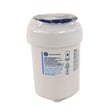
Once you confirm the model number, you can confidently order common maintenance parts like the refrigerator water filter MWFP for this refrigerator.
Last updated: February 2026
What causes a side-by-side refrigerator to stop cooling?
A Kenmore 36359572991 side-by-side refrigerator usually stops cooling because airflow is blocked, the condenser area is dirty, a fan is not running, or the defrost system is failing and icing over the evaporator. Start with power, temperature settings, and simple airflow checks before testing parts.
Quick checks we recommend first
- Confirm the refrigerator is plugged in and the outlet has power.
- Make sure the temperature controls were not bumped warmer.
- Check that food packages are not blocking interior air vents.
- Verify both doors close fully and the gaskets seal all the way around.
- Listen for fans: you should typically hear a fan running when the compressor is on.
- Clean dust from the condenser area (unplug first).
Most common causes (and what you’ll notice)
| Likely cause | Typical symptoms | What to check next |
|---|---|---|
| Dirty condenser coils or blocked condenser airflow | Warm fridge and freezer, compressor runs a lot | Clean coils and confirm the condenser fan runs |
| Evaporator fan problem | Freezer cold but fridge warm, weak airflow | Check for strong airflow from vents; inspect for ice buildup |
| Defrost system failure | Frost blanket on freezer back wall, gradually warms | Look for heavy frost; defrost components may be involved |
| Door not sealing | Moisture, frost, temperature swings | Inspect gasket contact and door alignment |
Parts that commonly relate to “not cooling” symptoms
If you find heavy frost buildup (a classic defrost failure sign), these model-compatible parts are often involved:
- Refrigerator defrost bi-metal thermostat WR50X122 (opens/closes based on evaporator temperature)
- Refrigerator defrost timer WR9X489 (controls defrost cycles on many side-by-side designs)
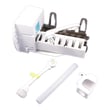
If the unit cools but water or ice performance is poor after temperatures recover, a clogged filter can also reduce dispenser flow:
Why it matters
A “no cool” complaint is often an airflow or defrost issue, not a sealed-system failure. Catching a blocked vent, dirty condenser, or defrost icing early helps prevent food loss and reduces compressor run time.
For step-by-step prevention tips that reduce cooling and ice maker issues, use how to prevent water dispenser and ice maker problems.
Last updated: February 2026
What are the most common problems with Kenmore refrigerators?
The most common problems we see on Kenmore refrigerators like model 36359572991 are cooling issues, ice maker and dispenser failures, water leaks, frost buildup, and unusual noises. Many of these trace back to airflow restrictions, dirty condenser coils, door sealing problems, or a failing defrost system.
Most common symptoms and what usually causes them
- Not cooling or warm temperatures: dirty condenser coils, failed condenser fan, evaporator fan issues, or sealed system problems
- Freezer cold but fresh food warm: blocked air vents, frost-clogged evaporator area, weak evaporator fan
- Ice maker not making ice: low water supply, frozen fill tube, dispenser/ice bucket issues, or inlet valve problems
- Water leaking: clogged/iced defrost drain, loose water line, filter housing leaks
- Heavy frost on back wall or in freezer: defrost heater/thermostat/timer problems
- Noisy operation: fan motor noise, ice buildup hitting the fan, or rattling panels
Quick checks we recommend before replacing parts
- Confirm temperatures: set freezer near 0°F and refrigerator near 37°F; allow 24 hours to stabilize.
- Check airflow: make sure vents are not blocked by food packages.
- Clean condenser coils: dust buildup commonly causes poor cooling and long run times.
- Inspect door sealing: look for gaps, torn gasket areas, or doors not closing squarely.
- Look for frost patterns: a solid frost sheet often points to a defrost problem.
Parts that commonly solve these problems (when symptoms match)
| Symptom | Common suspect part | Example part for this model |
|---|---|---|
| Frost buildup, warming, poor airflow | Defrost control components | Refrigerator defrost timer WR9X489 |
| Frost buildup, defrost not terminating correctly | Defrost thermostat | Refrigerator defrost bi-metal thermostat WR50X122 |
| Water tastes/odor, slow dispensing | Water filter restriction | Refrigerator water filter MWFP |
| Ice not dispensing or dispenser issues | Dispenser mechanical/electrical parts | Refrigerator ice container assembly WR17X4312 |
Why it matters
Catching the symptom pattern early helps prevent food spoilage, reduces compressor run time, and avoids secondary damage like fan blades hitting ice or water leaks spreading under flooring.
Helpful DIY guidance
- For filter-related taste, flow, or replacement questions, use how to replace the water filter in a Kenmore refrigerator.
- For dispenser access and common dispenser failures, use how to disassemble a Kenmore refrigerator dispenser.
Last updated: February 2026