
Can I use a spray gun without a compressor?
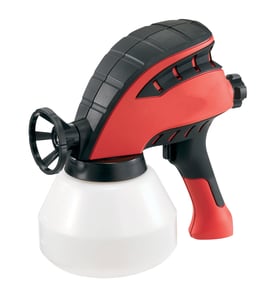
It depends on the type of spray gun. A traditional pneumatic (air) spray gun needs a compressor to atomize paint, but an airless sprayer like the Wagner DSP1700 uses an internal pump and does not use a compressor.
- Air (HVLP/conventional) spray gun: needs compressed air from a compressor.
- Airless sprayer: uses a pump to pressurize paint; no compressor.
- Air-assisted airless: uses a pump plus a small air supply; typically needs a compressor.
- Cup gun marketed as “HVLP”: still needs air, even if it uses lower pressure.
- Look for an air inlet fitting (often 1/4-inch) where an air hose would connect.
- Check whether the tool has a paint hose rated for high pressure (common on airless units).
- If it has a regulator/gauge for air pressure, it is an air gun setup.
- If it has a prime/spray valve and a pump housing, it is typically airless.
- Paint will not atomize; it will spit or dribble.
- Pattern control and finish quality will be poor.
- You can clog the nozzle and waste material.
| Setup | Needs compressor? | Typical use |
|---|---|---|
| Conventional/HVLP air spray gun | Yes | Fine finish, cabinets, trim |
| Airless sprayer (like DSP1700) | No | Walls, fences, exterior surfaces |
| Air-assisted airless | Usually | Higher-end finishing with faster coverage |
Using the correct air source (or no air source) is what creates proper atomization and a consistent spray pattern. Matching the sprayer type to your project also helps prevent clogs, overspray, and uneven coverage.
For help identifying your exact unit and matching parts by model number, use how to find your appliance model number (and what it means for parts).
Last updated: February 2026
Can you use a stain sprayer with paint?
Yes, you can spray paint with a stain sprayer, but it only works well with thinner coatings. With a Wagner DSP1700 sprayer, full-thickness wall paint usually needs thinning and careful straining, or the sprayer can sputter, clog, or spray unevenly.
Stain sprayers are designed for low-viscosity materials (stain, sealer, thin lacquer). Paint is thicker, so performance depends on paint type and how well you prep it.
- Best results: thin paints (some enamels, thinned latex, primers labeled “sprayable”)
- Common problems: pulsing spray, spitting, orange peel texture, frequent clogs
- Big risk: over-thinning can reduce coverage and durability
Use this workflow to reduce clogs and get a more consistent fan pattern.
- Stir thoroughly (do not just shake) to fully mix solids.
- Strain the paint through a fine paint strainer to remove lumps.
- Thin in small steps and test spray after each adjustment.
- Start with 10% thinning (water for water-based paint; the paint label tells you what’s allowed).
- Do not exceed about 20% thinning for most interior latex paints; beyond that, coverage drops fast.
- Test on cardboard and adjust until the spray is even with minimal spitting.
These are practical starting ranges; always follow the coating label first.
| Coating type | Typical sprayer friendliness | Typical thinning range |
|---|---|---|
| Wood stain / sealer | High | 0% |
| Water-based polyurethane (thin) | Medium | 0% to 10% |
| Primer labeled for spraying | Medium | 5% to 15% |
| Interior latex wall paint | Low to medium | 10% to 20% |
If paint is too thick, the Wagner DSP1700 can’t atomize it consistently, which causes poor finish quality and repeated clogs. Proper straining, small-step thinning, and test spraying prevent wasted paint and rework.
If the sprayer won’t run or you suspect an electrical issue (switch, cord, internal wiring), use our guide: how to use a multimeter to test electrical parts video.
Last updated: February 2026
What is the best inexpensive paint sprayer?
If you want the best inexpensive paint sprayer, we recommend choosing based on the job size: an entry-level HVLP sprayer is best for furniture and trim, while a basic airless sprayer is best for walls, fences, and larger surfaces. For a Wagner sprayer owner, matching the sprayer type to your coating and project size delivers the best value.
- Small projects (chairs, cabinets, doors): handheld HVLP sprayer for control and a smoother finish
- Medium projects (rooms, sheds): larger HVLP or entry-level airless if you need speed
- Large projects (fences, exterior siding): entry-level airless sprayer for fast coverage
- Stains and sealers: HVLP or airless can work; choose based on how thin the product is
- Latex paint: usually needs thinning for HVLP; airless handles thicker coatings better
Most budget sprayers trade off one or more of these: speed, ability to spray thicker paint, and long-term durability. The best value comes from buying the least-expensive sprayer that still matches your coating (latex vs. stain) and your surface area.
| Sprayer type | Best for | Typical budget range | Common tradeoff |
|---|---|---|---|
| HVLP (handheld) | Trim, furniture, cabinets | $50 to $200 | Slower; may require thinning |
| Airless (entry-level) | Walls, fences, exteriors | $200 to $400 | More overspray; more cleanup |
- Pick HVLP if finish quality and control matter most (less overspray, slower pace).
- Pick airless if speed and coverage matter most (more masking, faster spraying).
- Check the material list: latex, primer, stain, enamel, and whether thinning is recommended.
- Plan for consumables: strainers, filters, tips/nozzles, and cleaning solution.
- Budget for prep: masking paper, plastic, and a respirator often matter more than the sprayer price.
A low-cost sprayer feels “bad” when it is used outside its sweet spot (for example, trying to push unthinned latex through a small HVLP). When the sprayer type matches the coating and project size, you get better atomization, fewer clogs, and less rework.
- Use our guide on how to find your appliance model number (and what it means for parts) when you are confirming you have DSP1700 parts and diagrams matched to your Wagner sprayer.
Last updated: February 2026
What paint sprayer do professional painters use?
Professional painters most often use airless paint sprayers for speed on large surfaces, commonly from brands like Graco and Titan. For finer finish work (cabinets, trim, doors), many pros switch to HVLP or fine-finish setups; a Wagner sprayer like model DSP1700 is typically better aligned with detail and controlled finishing than high-output airless production.
- Big walls, ceilings, fences, siding: airless sprayer (fast coverage)
- Cabinets, trim, furniture: HVLP or fine-finish sprayer (more control, less overspray)
- Interior repaints with lots of masking: airless with the right tip and pressure control
- Stains and clears: HVLP or low-pressure setups to reduce bounce-back
- Touch-ups and small jobs: smaller electric sprayers or handheld units
| Feature | Airless sprayer | HVLP sprayer |
|---|---|---|
| Best for | Large areas, production work | Fine finish, detail work |
| Speed | Faster | Slower |
| Overspray | Higher | Lower |
| Finish control | Good with skill and tip choice | Excellent for smooth finishes |
| Typical materials | Latex, primers, exterior coatings | Enamels, lacquers, thinner coatings |
- Match the sprayer type to the surface size (airless for big areas, HVLP for detail).
- Choose the right tip/nozzle size for the coating (too small causes restriction, too large causes runs).
- Plan for prep time (masking and back-rolling can matter as much as the sprayer).
- Prioritize serviceability (filters, seals, hoses, and tips are wear items).
Using the wrong sprayer type usually shows up as wasted paint, heavy overspray, orange peel texture, or slow progress. Pros get consistent results by matching sprayer style, tip size, and coating viscosity to the job.
For general repair readiness and the tools pros keep on hand, we recommend reviewing must have tools for appliance repair.
Last updated: February 2026