Error Codes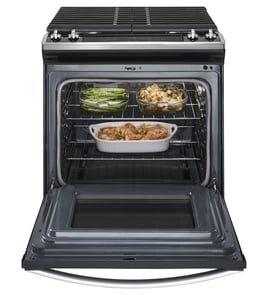


Where is the thermostat on a GE gas oven?
On the GE JGBP30WEA8WW gas range, the oven thermostat (temperature-sensing control) is typically mounted behind the oven temperature knob on the control panel, with its sensing bulb or capillary routed into the oven cavity. Access usually requires removing the backguard or control panel cover.
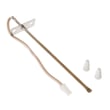
Most GE freestanding gas ranges place the thermostat body in the console area, then run a thin capillary tube to a sensor bulb clipped inside the oven.
- Thermostat body: behind the oven temperature knob in the control panel
- Capillary tube: a thin metal tube running from the thermostat into the oven
- Sensor bulb: clipped or bracketed along an oven wall (often upper side or rear area)
- Mounting: held by screws from the front or inside the control panel
- Wiring: a small harness connected to thermostat terminals
- Turn off power at the breaker (clock and igniter circuits can still be energized)
- Shut off the gas supply valve before opening panels
- Pull the range forward carefully to avoid stressing the gas connector
- Remove the control knob(s) and the rear control panel cover to locate the thermostat body
- Look inside the oven for the sensor bulb and its retaining clip
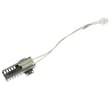
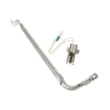
- If the oven is not heating correctly, also inspect the ignition system because a weak igniter can mimic thermostat problems (see bake burner ignition WB13X40208)
Some versions use a mechanical thermostat; others use an electronic oven control with a separate sensor circuit.
| What you see on the control panel | What it usually means | Common location of the temperature sensing part |
|---|---|---|
| A temperature knob with a long shaft | Mechanical thermostat | Sensor bulb inside oven, capillary to knob area |
| A keypad/clock controlling bake temp | Electronic control | Sensor circuit feeding the control board |
Finding the thermostat location helps you diagnose temperature issues correctly. If the oven runs too hot, too cool, or cycles oddly, the cause can be the thermostat/sensor placement, a loose capillary clip, or an ignition problem that prevents stable burner operation.
For fault codes or display-related temperature problems, use our GE freestanding range error codes guide to narrow down the failure.
Last updated: February 2026
How do I find the model number on my JGBP30WEA8WW?
On a GE range like JGBP30WEA8WW, the model number is printed on a rating label on the appliance frame. Check the oven door area first; the label is usually visible when you open the oven door.
Check these spots in order (most common first):
- Oven door frame: open the oven door and look along the front frame
- Drawer frame: pull out the storage drawer and look on the frame or side rail area
- Behind the control panel area: sometimes on the backguard or near the rear panel
- Back of the range: rating plate on the rear panel (easiest to see if the range is pulled forward)
The rating label usually includes:
- Model number (example: JGBP30WEA8WW)
- Serial number
- Gas type and electrical ratings
Even small model-number differences can change which parts fit. Use the full model number when selecting items like a burner igniter, burner, or knob.
| If you need to replace | Example part on this model |
|---|---|
| Oven won’t ignite | Bake burner ignition WB13X40208 |
| Surface burner knob is cracked or missing | Range surface burner knob WB03K10099 |
Last updated: March 2026
What is the average lifespan of JGBP30WEA8WW?
A GE gas range like model JGBP30WEA8WW typically lasts 15 years with normal household use and basic maintenance. Keeping burners clean, ensuring steady ignition, and addressing heating issues early helps you reach that expected service life.
Most freestanding gas ranges fall into a consistent lifespan range; the biggest variables are heat exposure, cleaning habits, and how quickly small problems are fixed.
- Heavy daily cooking shortens lifespan
- Spills and boil-overs accelerate corrosion and clog burner ports
- Weak ignition can stress gas components over time
- Overheating from poor airflow can damage controls
- Using the correct replacement parts helps prevent repeat failures
When these parts fail repeatedly or multiple items fail at once, many owners choose repair vs. replace based on total cost.
| Area | Common symptom | Example part for this model |
|---|---|---|
| Oven ignition | Oven will not heat or heats slowly | Bake burner ignition WB13X40208 |
| Oven burner | Uneven bake, weak flame | Bake burner WB16K10035 |
| Controls | Temperature or functions act erratic | Control (WB27K10143) |
- Clean burner caps, grates, and drip pans regularly
- Keep the oven bottom free of heavy grease buildup
- If the oven takes too long to ignite, troubleshoot and repair promptly
- Avoid slamming the oven door; it stresses hinges and glass
Knowing the expected 15-year lifespan helps you decide whether a repair (like replacing an igniter) is a smart investment for your JGBP30WEA8WW or whether it is time to plan for replacement.
Last updated: March 2026