Installation guide
 Owner’s manual
 Error Codes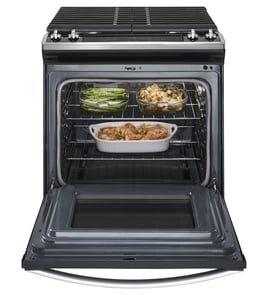





How long should a Frigidaire gas stove last?
A Frigidaire gas range like model FFGF3023LWC typically lasts 15 years with normal household use and basic maintenance (keeping burners clean, addressing ignition issues early, and avoiding overheating). Using the care and cleaning steps in the owner's manual helps you reach that expected lifespan.
What affects lifespan the most
- Burner and igniter condition (weak ignition causes delayed lighting and extra wear)
- Oven temperature accuracy (running too hot strains components)
- Cleaning habits (grease buildup can clog ports and affect combustion)
- Ventilation and heat exposure (excess heat can shorten control and wiring life)
- Gas supply stability (low pressure or debris can cause poor burner performance)
Quick maintenance checklist (monthly or as needed)
- Clean surface burner caps and ports; make sure flames are steady and mostly blue.
- Wipe spills promptly to prevent baked-on residue and corrosion.
- Check that oven preheat times are consistent; investigate sudden changes.
- Confirm the oven light works and replace it when it fails to avoid working in the dark.
- Inspect grates and burner heads for warping or heavy rust.
Common “wear-out” symptoms and likely fixes
| Symptom | What it often points to | Example part for this model |
|---|---|---|
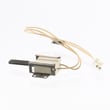
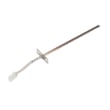
| Oven won’t heat or heats slowly | Weak igniter | Tappan range oven burner igniter 316489403 |
| Oven temperature swings | Failing sensor | Frigidaire range oven temperature sensor 316490000 |
| Oven light out | Burned-out bulb | Appliance light bulb, 40-watt 316538904 |
Why it matters
A gas range usually fails gradually, not all at once. Catching early signs (slow bake ignition, uneven flames, inaccurate oven temps) prevents secondary damage to the gas valve, wiring, and controls, and it keeps cooking performance consistent.
Last updated: February 2026
What does FFGF3023LWC mean on a stove?
FFGF3023LWC is the model number for a Frigidaire gas range, not an error code. If you see “FFGF3023LWC” on the stove or in a parts list, it identifies the exact appliance version so you can match the correct igniter, temperature sensor, burner parts, and other replacement components using the owner's manual.
Where you’ll see the model number
- On the rating/serial tag (often behind the storage drawer or on the frame)
- In the installation guide paperwork
- On parts diagrams and parts lists
- On your purchase or service paperwork
- Sometimes on a sticker inside the oven door area
Model number vs. error code (quick comparison)
| What you see | What it means | What to do |
|---|---|---|
| FFGF3023LWC | Model identifier for your Frigidaire range | Use it to select correct parts and instructions |
| F-codes (example: Fxx) | A fault detected by the electronic oven control | Follow the troubleshooting steps in the manual for that specific code |
| No code, but symptoms | A performance issue (heat, ignition, temperature) | Troubleshoot by symptom and test likely parts |
Why it matters for parts and troubleshooting
Using the exact model number FFGF3023LWC prevents ordering the wrong part when symptoms overlap. For example, “oven won’t heat” can point to different components depending on the failure.
Common parts tied to heating and ignition issues on this model include:
- Tappan range oven burner igniter 316489403 (bake ignition)
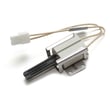
- Range oven igniter 5304506545 (often used for broil ignition)
- Frigidaire range oven temperature sensor 316490000 (temperature accuracy)
If you’re trying to solve a problem (not identify the model)
Use these fast checks first:
- Confirm whether the issue is bake, broil, or a surface burner
- Watch for delayed ignition (common igniter symptom)
- Verify the oven temperature with an oven thermometer (sensor symptom)
- Check for a gas smell; stop and shut off gas if you suspect a leak
- Restore power by turning the breaker off and back on if the control is unresponsive
Last updated: February 2026
Is the Frigidaire low-end?
Frigidaire is not a “low-end” brand; it is generally positioned as a reliable, value-focused mainstream brand. For the Frigidaire FFGF3023LWC gas range, you can expect practical features, widely available replacement parts, and straightforward maintenance outlined in the owner's manual.
What “low-end” usually means (and where Frigidaire fits)
When people say “low-end,” they often mean fewer premium features, simpler finishes, and a lower price point. Frigidaire typically fits the mid-range/value category rather than premium.
Common Frigidaire strengths:
- Solid everyday cooking performance for bake and broil
- Practical designs that are easy to use and service
- Good parts availability for normal wear items (igniters, sensors, racks)
- Straightforward care and cleaning routines
What to expect from the FFGF3023LWC specifically
Your FFGF3023LWC is designed for dependable daily use. The manual emphasizes routine ownership items like oven light operation, rack positioning, cleaning, and “Before you call” troubleshooting, which is typical of a serviceable, mainstream range. See the owner's manual for model-specific operating and care details.
Typical “mainstream range” ownership checklist
- Keep burner caps and heads seated correctly after cleaning
- Use the correct rack positions for baking and broiling
- Replace the oven light with the correct wattage bulb when it burns out
- Watch for slow ignition or weak flame, which can point to an igniter or gas flow issue
Parts availability matters more than brand tier
A big advantage of mainstream brands is that common repair parts are easy to source. For example, if the oven stops heating or takes too long to ignite, an igniter is a frequent fix on gas ranges.
| Common symptom | Often involved part | Example part for this model |
|---|---|---|
| Oven won’t heat or heats slowly | Oven burner igniter | Tappan range oven burner igniter 316489403 |
| Oven temperature seems off | Oven temperature sensor | Frigidaire range oven temperature sensor 316490000 |
| Oven light out | Appliance light bulb | Appliance light bulb, 40-watt 316538904 |
Why it matters
Choosing “value-focused” does not mean you are stuck with disposable performance. It usually means you are getting a simpler feature set with easier serviceability; that can lower long-term ownership cost when normal wear parts need replacement.
Last updated: February 2026