Error Codes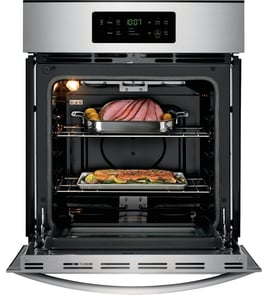



How much does it cost to replace a GE oven control panel?
For a GE JKP26GT1BB electric wall oven, replacing the oven control panel (control board and/or touch panel) typically runs $200 to $600 total. The part itself is usually the biggest cost; professional labor commonly adds $150 to $300 depending on access, diagnostics, and whether the oven must be pulled from the cabinet.
What you are paying for
Control panel replacement costs usually break down into these buckets:
- Diagnostic/service call (if you hire service)
- Control board or touch panel (varies widely by model and revision)
- Labor time (wall ovens often take longer because they may need to be removed)
- Any related parts (connectors, screws, trim, or a fuse if it failed from overheating)
Typical cost ranges (parts vs. labor)
These are common ranges we see for electric wall ovens like the GE JKP26GT1BB:
| Cost item | Typical range | Notes |
|---|---|---|
| Control panel part(s) | $150 to $450 | Some models use separate board and keypad; others are integrated |
| Labor (installed) | $150 to $300 | Higher if the oven must be pulled and reinstalled |
| Total installed | $200 to $600 | Depends on what failed and local labor rates |
Before you replace the control panel
A “dead” or glitchy panel is sometimes caused by a simpler electrical failure. We recommend checking these common culprits first:
- Confirm the oven has full power (a wall oven typically needs 240V; a tripped breaker can cause partial power)
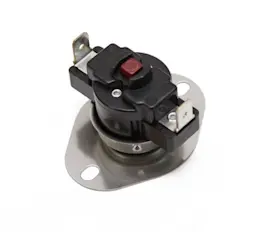
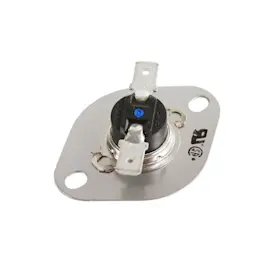
- Look for signs of overheating or a blown safety device such as the wall oven thermal fuse WB24K5085
- If the display works but heating is wrong, test the oven temperature sensor; the sensorasm WB21X5301 can cause erratic temps and error codes
- If the oven will not heat, inspect the heating elements such as the GE range bake element WB44K5013 and GE range broil element WB44K5009
Why it matters
Control panels are expensive, and wall-oven access adds labor. Verifying power, sensor, fuse, and heating elements first helps avoid replacing an electronic control when the real issue is a failed thermal fuse, sensor, or element.
Last updated: February 2026
How to install GE oven racks?
Installing oven racks in your GE JKP26GT1BB electric wall oven is a tool-free job: you align the rack with the side supports and slide it straight in until it seats evenly. If the rack binds or sits crooked, it is usually not centered on the support rails.
Steps to install (or reinstall) an oven rack
- Turn the oven off and let it cool completely.
- Pull the rack out of the cavity (if it is partially installed).
- Hold the rack level with both hands.
- Line up the rack’s side wires with the same rack position on both sides.
- Slide the rack straight back until it stops; confirm it sits flat and does not rock.
- For multiple racks, install the lower rack first so you have more room to work.
If the rack will not slide in smoothly
- Check for bent rack wires or a twisted frame.
- Look for food debris or heavy grease on the side supports; clean and dry the contact points.
- Make sure you are using matching height positions on the left and right sides.
- If the oven door is removable on your setup, opening it fully can improve access.
Common rack issues and what they point to
| Symptom | Most common cause | What to do |
|---|---|---|
| Rack scrapes loudly | Grease buildup or misalignment | Clean supports; reinstall level |
| Rack rocks | Not seated on both rails | Pull out and re-seat evenly |
| Rack is hard to move | Bent rack or warped supports | Inspect rack; replace if bent |
Why it matters
A properly seated rack helps cookware sit level, improves airflow for even baking, and prevents damage to the oven cavity and rack supports over time.
If you need a replacement rack for this model, match it to the correct GE JKP26GT1BB rack part listing, such as the oven rack WB48T10093.
Last updated: February 2026
What are the parts of an electric oven?
An electric oven like the GE JKP26GT1BB is built around heating, temperature sensing, airflow, and door sealing parts. The core components include the bake and broil elements, temperature sensor, oven racks, door seal, and safety devices that protect the oven from overheating.
Main parts you will find in an electric wall oven
- Bake element (primary heat source for baking and roasting)
- Broil element (high, top heat for broiling and browning)
- Oven temperature sensor (tells the control how hot the oven is)
- Oven racks (support cookware at different rack positions)
- Door seal or gasket (keeps heat inside the oven cavity)
- Thermal fuse or limit switch (opens the circuit if temperatures get unsafe)
Common GE JKP26GT1BB parts that match those functions
| Oven function | What it does | Example part for this model |
|---|---|---|
| Baking heat | Heats from the bottom | GE range bake element WB44K5013 |
| Broiling heat | Heats from the top | GE range broil element WB44K5009 |
| Temperature feedback | Helps regulate oven temperature | Sensorasm WB21X5301 |
| Heat containment | Reduces heat loss around the door | Wall oven door seal WB32K5038 |
| Overheat protection | Helps prevent damage from overheating | Wall oven thermal fuse WB24K5085 |
Why it matters
Knowing the major oven parts helps you troubleshoot faster. For example, uneven baking often points to a bake element issue, while temperature swings can point to a sensor problem. Heat leaking around the door can make preheat slow and cooking inconsistent.
Quick troubleshooting clues (part-related)
- No bake but broil works: bake element is the first part we check.
- No broil but bake works: broil element is the first part we check.
- Oven won’t reach set temperature or overshoots: temperature sensor is a common cause.
- Excess heat escaping at the door edge: door seal is often worn or damaged.
- Oven completely dead after an overheat event: thermal fuse is a common failure point.
Last updated: February 2026
Why is my electric wall oven not heating up?
If your GE JKP26GT1BB electric wall oven isn’t heating, the most common causes are a failed bake or broil element, an out-of-range oven temperature sensor, or an open safety device such as a thermal fuse. Start with power checks, then test the heating circuit parts.
Quick checks first (no parts needed)
- Reset the double breaker fully OFF, then ON (most wall ovens require 240 volts).
- Confirm you selected Bake or Broil and pressed Start (not Delay Start or timed cooking).
- If the display works but there’s no heat, listen for a relay click after pressing Start.
- If it stopped heating after an overheat event, a safety device may have opened.
Parts that commonly stop heating on JKP26GT1BB
- Bake not heating: GE range bake element WB44K5013
- Broil not heating: GE range broil element WB44K5009
- Temperature regulation issues: sensorasm WB21X5301
- No heat due to safety shutoff: wall oven thermal fuse WB24K5085
Diagnosis order we recommend
- Cut power at the breaker before removing panels or testing.
- Check elements for visible damage; then ohm-test for continuity.
- Test the sensor; a bad reading can prevent normal heating.
- Test the thermal fuse for continuity; if it’s open, the oven won’t heat.
- Inspect wiring at element terminals and sensor connector for heat damage.
Helpful DIY: how to tell if a fuse is blown, how to use a multimeter to test electrical parts video.
Symptom guide
| Symptom | Most likely causes | Best first test |
|---|---|---|
| No bake, broil works | Bake element, wiring | Bake element continuity |
| No broil, bake works | Broil element, wiring | Broil element continuity |
| Neither heats | Power, thermal fuse, control | Breaker, thermal fuse |
| Heats but temp is off | Sensor, airflow | Sensor resistance |
Why it matters
A no-heat condition is usually an electrical open in the heating circuit. Testing in a set order prevents unnecessary part replacement and restores safe, consistent cooking.
Last updated: February 2026