Owner’s manual
 View engine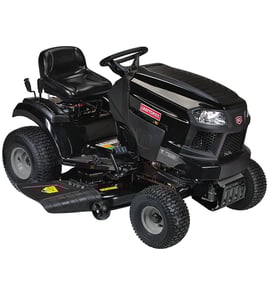


What engine does Craftsman riding mower use?
The Craftsman riding mower model 917255581 uses a Briggs & Stratton 12.5 HP single-cylinder engine; the parts list identifies it as Briggs & Stratton engine model 286707 (type 0437-01). For the exact engine labeling and service details, use the 917255581 owner's manual.
How to confirm the engine on your tractor
We recommend matching what you see on the engine shroud to the manual and parts list so you order the right tune-up and fuel system parts.
- Locate the Briggs & Stratton ID label on the engine (usually on the blower housing or valve cover area)
- Write down model, type, and code from the label
- Compare your numbers to the manual listing (model 286707, type 0437-01)
- Use your tractor model number 917255581 when looking up mower deck, belts, and chassis parts
- If the engine has been replaced, always order engine-specific parts by the engine label, not by the tractor model
Common engine-related parts you may replace
These parts are frequently replaced when the tractor runs rough, loses power, or the deck load bogs the engine.
| Symptom | Common maintenance item | What it affects |
|---|---|---|
| Hard starting | Spark plug, air filter | Ignition and airflow |
| Surging or hunting | Carburetor cleaning, fresh fuel | Fuel delivery |
| Loud exhaust | Muffler | Exhaust noise and backpressure |
| Poor cut under load | Deck belt condition | Blade speed and load on engine |
If you’re chasing a loud exhaust or damaged exhaust body, the model’s muffler is listed as muffler 582799401.
Why it matters
Craftsman tractors often share deck and chassis designs across model families, but engine parts are matched to the Briggs & Stratton model and type. Using the correct engine ID prevents wrong spark plugs, carburetor kits, and exhaust parts.
Last updated: February 2026
How much does it cost to replace a riding lawn mower engine?
Replacing the engine on a Craftsman riding tractor model 917255581 typically costs $260 to $1,800 installed, depending on the exact engine, labor rates, and whether related items (battery, belts, wiring) also need service. This model uses a Briggs & Stratton engine family; confirm the exact engine identification in the 917255581 owner's manual.
What drives the total price
- Engine type and availability (new, remanufactured, or used)
- Labor time (riding mower engine swaps are commonly a half-day job)
- Extra parts discovered during removal (worn pulleys, belts, mounts)
- Fuel system cleanup (old fuel, clogged carburetor, dirty tank)
- Electrical starting issues (starter, solenoid, cables, safety switches)
Typical cost breakdown (what you are paying for)
| Cost item | Typical range | Notes |
|---|---|---|
| Engine (part only) | $200 to $1,400 | Biggest variable; depends on horsepower and crankshaft specs |
| Labor | $150 to $600 | Shop rate and time on a riding tractor |
| Fluids, tune-up items, shop supplies | $25 to $150 | Oil, filter, spark plug, clamps, fuel line |
| Optional add-ons | $0 to $400 | Battery, belts, blades, deck service |
Quick checks before replacing the engine
Sometimes the engine is fine and the problem is starting or fuel related:
- If it clicks but will not crank, check battery charge, cable connections, and starter circuit
- If it cranks but will not start, check fresh fuel, spark, and air filter condition
- If it turns slowly, load-test the battery and inspect ground cable corrosion
- If it runs but smokes or knocks, check oil level and compression before committing to an engine
A good first step is our riding lawn mower engine clicks but doesnt turn over video if you are diagnosing a no-crank condition.
Why it matters
An engine replacement only makes sense when the rest of the tractor (deck, transmission, steering, frame) is in solid shape. On model 917255581, matching the correct engine setup (mounting pattern, crankshaft dimensions, and PTO/deck drive alignment) prevents belt wear, vibration, and premature failures.
Last updated: February 2026
Is it worth replacing a lawn mower engine?
Yes, replacing the engine on your Craftsman 917255581 front-engine lawn tractor is worth it when the tractor’s deck, transmission, and steering are still solid and you want more years of reliable mowing; it is usually not worth it when the deck is badly rusted, the drive system is failing, or multiple major repairs are stacking up.
Quick decision checklist
- Worth it if the mower deck is structurally sound (no major cracks or severe rust-through).
- Worth it if the tractor still cuts well after basic maintenance (blade, belt, deck cleaning).
- Worth it if you can do the swap yourself and already have the tools.
- Not worth it if it also needs a transmission/drive overhaul, major wiring repairs, and a deck rebuild.
- Not worth it if you cannot keep the engine cooling areas clean (overheating risk).
What to inspect on model 917255581 before you buy an engine
Use the 917255581 owner's manual to confirm maintenance points and safe shutdown habits, then check these items:
| Area to check | What “good” looks like | What pushes you toward replacement instead |
|---|---|---|
| Mower deck underside | Minimal rust, cleans up well | Heavy rust-through, bent shell, chronic clogging |
| Cut quality | Even cut at normal height | Scalping, uneven cut even after leveling |
| Blade/mandrel area | Spins smoothly, no wobble | Wobble, grinding, repeated failures |
| Drive system | Moves smoothly, belt grips | Slipping, squealing, frequent belt issues |
Parts that often restore performance without an engine swap
If the tractor runs but cuts poorly or the deck struggles, these common wear items can be a better first step:
- Blade 532134149 (dull or bent blades cause poor cut quality)
- Lawn tractor ground drive or blade drive belt, 1/2 x 92-2/5-in 592855201 (worn belt can reduce deck performance)
- Husqvarna lawn tractor mandrel assembly 532130794 (wobble or seizure can mimic “engine strain”)
Why it matters
A new engine only pays off if the rest of the tractor can use that power effectively. The manual’s mowing guidance (full throttle while mowing, clean deck housing, and keeping cooling areas clear) helps prevent repeat failures and protects your investment.
Last updated: February 2026