Installation guide
 Owner’s manual


What is the average lifespan of a KitchenAid dishwasher?
A KitchenAid dishwasher typically lasts 10 to 14 years. For your KitchenAid KDTE204DSS1, consistent maintenance, correct detergent and rinse aid use, and proper installation have the biggest impact on reaching that lifespan; heavy daily use and hard water shorten it.
What affects lifespan the most
- Water quality: hard water speeds up mineral buildup and wear
- Maintenance: cleaning filters and spray arms prevents strain on the pump and motor
- Detergent and suds control: using the correct dishwasher detergent helps avoid foaming issues
- Rinse aid use: improves drying and helps control hard-water deposits
- Incoming water temperature: best results start with water at 120°F (49°C) or higher
What “normal” operation looks like on this model
Your KDTE204DSS1 is designed for efficiency, so longer cycles are normal.
| What you notice | What it usually means | What to do |
|---|---|---|
| 2 to 3 hour average cycle | Energy-efficient wash design | Use the right cycle and options for the load |
| Up to about 3.5 hours with options | Added heat, drying, or sensor-driven adjustments | Avoid extra options unless needed |
| Drying not great without rinse aid | Unit relies on rinse aid for water sheeting | Keep rinse aid filled |
Maintenance checklist to help it reach 10 to 14 years
- Run a dishwasher cleaner periodically to reduce odor and buildup
- Keep rinse aid filled and cap secured
- Scrape food off dishes (do not pre-rinse) to reduce redepositing
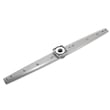
- Check and clean spray arms if you see poor cleaning
- Inspect the drain path if you notice standing water after a cycle
Why it matters
A dishwasher usually fails early from avoidable stress: restricted water flow, chronic suds, mineral scale, or overheating. Keeping wash conditions stable helps protect high-wear components like the circulation system, drain pump, and heating element.
For model-specific care and operating guidance, follow the KDTE204DSS1 owner’s manual.
Last updated: January 2026
What is the most common problem with a KitchenAid dishwasher?
For the KitchenAid KDTE204DSS1 dishwasher, the most common customer-reported issue is poor cleaning performance (dishes still dirty) caused by restricted water flow or wash action, often tied to loading, water temperature, detergent, suds, or a drain-related restriction. See the KDTE204DSS1 owner's manual for model-specific checks.
What to check first (fast, no-tools)
- Confirm incoming water is at least 120°F (49°C).
- Use fresh automatic dishwasher detergent (not hand soap or laundry detergent).
- Check for suds/foam; suds can prevent proper filling or operation.
- Scrape food off dishes before loading (do not pre-rinse).
- Load so spray arms can rotate freely; avoid blocking the detergent cup.
Common causes and what they look like
| Symptom | Most likely cause | What to do next |
|---|---|---|
| Grit or food left on dishes | Low water temp, weak wash action, poor loading | Verify 120°F water, reload, run a hot cycle |
| Dishwasher stops or acts “confused” | Excess suds detected | Stop cycle, remove suds, switch to correct detergent |
| Clean light flashing | Float stuck, water supply off, suds | Free the float, turn water on, clear suds |
| Not drying well | No rinse aid, plastics, option not selected | Add rinse aid, use Heat Dry/ProDry, improve loading |
Parts that commonly relate to cleaning or water movement
If basic checks do not improve cleaning, these model-compatible parts are often involved in wash performance or water delivery:
- Dishwasher water inlet valve W11175771 (controls water entering the dishwasher)
- Element assembly W10703867 (supports heating for wash temperature and drying)
- Dishwasher drain pump WPW10531320 (helps clear dirty water so it does not redeposit)
Why it matters
Dishwashers clean by combining correct water temperature, detergent chemistry, and spray pressure. If any one of those is off (especially water temp or suds), the KDTE204DSS1 can leave residue behind even when it completes a cycle.
Last updated: January 2026
Is it worth fixing a KitchenAid dishwasher?
Yes. Repairing a KitchenAid dishwasher like model KDTE204DSS1 is worth it when the issue is isolated (fill, drain, heat, or door latch) and the repair cost is well under the price of a comparable replacement. Many performance complaints are solved with correct detergent use and 120°F incoming water.
Quick decision checklist
- Repair when there is one clear symptom (won’t drain, won’t fill, not drying, won’t start).
- Repair when the tub and inner door liner are solid and there is no ongoing leak.
- Repair when the fix is a single part or a simple restriction (hose kink, clogged drain path).
- Replace when multiple major systems fail together (wash action plus heat plus repeated electronic faults).
- Replace when breakdowns keep repeating within a short time.
Typical repair vs. replace guide
| Symptom | Usually best choice | Common cause |
|---|---|---|
| Won’t drain | Repair | Drain pump or drain hose restriction |
| Won’t fill | Repair | Water inlet valve or supply issue |
| Not drying | Repair or maintenance | Heater, rinse aid use, water temp |
| Won’t start | Repair | Door latch not sensing closed |
Parts that often make repair worthwhile
If your symptom matches, these KDTE204DSS1 parts are common targeted fixes:
- Dishwasher water inlet valve W11175771 for filling problems
- Dishwasher drain pump WPW10531320 for draining problems
- Dishwasher door latch WPW10653840 for won’t start or stops mid-cycle
- Element assembly W10703867 for poor drying or no heat
Why it matters
Dishwashers can look “dead” when one system fails. Matching the symptom to the correct system (fill, drain, heat, or door sensing) prevents unnecessary part swaps and keeps the repair cost predictable.
What we recommend before buying parts
- Verify the hot water supply is at least 120°F.
- Use automatic dishwasher detergent only; suds from the wrong soap can stop filling and washing.
- Check the drain path for restrictions (air gap, disposer inlet plug, kinked hose).
- Use the KDTE204DSS1 owner’s manual for operating and care steps.
Last updated: January 2026