Installation guide
 Owner’s manual


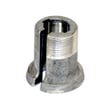
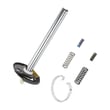
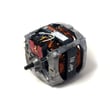
Are Whirlpool washer parts interchangeable?
Whirlpool washer parts are sometimes interchangeable, but only when the replacement part is specified for your exact washer model. For the Whirlpool WTW5300VW1, we recommend using factory specified parts so the part fits right, works right, and the washer operates as designed (especially for safety-related items like switches and pumps).
What “interchangeable” really means
A part is interchangeable only if it is listed as a compatible replacement for the same function on your model. Even within Whirlpool, similar-looking parts can differ in:
- Electrical connectors and wiring length
- Mounting points and shaft sizes
- Timer or switch cam profiles
- Pump inlet and outlet orientation
- Material and durability ratings
Best way to confirm compatibility for WTW5300VW1
Use these checks before ordering:
- Match the model number WTW5300VW1 exactly (not just “Whirlpool top-load washer”).
- Compare the part’s description and function (for example, lid switch vs. timer).
- If you are replacing a wear item, replace the related hardware if it is damaged (bolts, nuts, gaskets).
- Follow the safety and installation steps in the WTW5300VW1 owner's manual.
Common WTW5300VW1 parts people replace (examples)
These are model-specific parts that are commonly involved when symptoms show up:
| Symptom | Common part to check | Example part for this model |
|---|---|---|
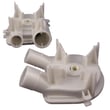
| Won’t drain | Drain pump | Washer drain pump WP3363394 |
| Won’t spin or stops when lid opens | Lid switch | Washer lid switch assembly WP8318084 |
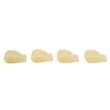
| Agitator slips or won’t “grab” | Agitator dogs | Agitator dog 80040 |
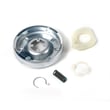
| No agitation or loud grinding | Motor coupling | Coupling 285753A |
Why it matters
Using the correct Whirlpool factory specified part helps prevent repeat failures, leaks, noise, and fitment problems. It also keeps troubleshooting straightforward because you are restoring the washer to its intended configuration.
Last updated: February 2026
What does E01 and F09 mean on a Whirlpool washer?
On Whirlpool washers, E01/F09 is a long-drain fault used on certain Whirlpool front-load platforms (such as Duet). On the Whirlpool WTW5300VW1 top-load washer, you typically won’t see E01/F09; if you’re getting a drain-related failure, we troubleshoot the same root issue: the washer is not pumping water out fast enough.
What to do first on WTW5300VW1 (drain-focused checks)
- Unplug the washer; turn off the water supply.
- Run a Drain/Spin cycle and listen for the drain pump running.
- Check the drain hose for kinks, crushing, or being shoved too far into the standpipe.
- Inspect the standpipe or laundry tub for a slow household drain (backups cause “won’t drain” symptoms).
- If the tub is full, bail out water before opening any hoses.
Common causes and the most likely fix
| Symptom on WTW5300VW1 | Most common cause | What we fix first |
|---|---|---|
| Water left in tub, cycle stops | Clog or restriction | Drain hose and pump inlet/outlet |
| Pump hums but little flow | Jammed or worn pump | Replace the drain pump |
| Drains sometimes, not always | Intermittent pump or wiring | Pump connection and pump condition |
| Won’t advance into spin after draining | Lid switch problem | Test/replace lid switch assembly |
Parts that commonly solve “long drain” symptoms
If the drain hose and household drain are clear, these model-matched parts are the next step:
- Washer drain pump WP3363394 (weak motor, jammed impeller, internal wear)
- Washer lid switch assembly WP8318084 (washer may not complete drain-to-spin sequence)
Why it matters
A slow-drain condition leaves water in the basket, prevents proper spin, and overheats or damages the drain pump. Restoring normal drain flow helps the washer finish cycles and protects the drive system.
Use the model-specific reference
For safety steps, cycle selection, and troubleshooting guidance for this washer, use the WTW5300VW1 owner's manual.
Last updated: February 2026
What is the capacity of the WTW5300VW1?
The Whirlpool WTW5300VW1 washer is a traditional top-load, agitator-style machine; models in this class are typically about 3.2 to 3.6 cu. ft. For the exact rated capacity for your specific unit, confirm it in the WTW5300VW1 owner’s manual.
How to confirm the exact capacity for WTW5300VW1
Use these reliable ways to verify the spec without guessing:
- Check the specifications section in the WTW5300VW1 owner’s manual.
- Look for the model and serial tag (usually under the lid or on the rim) and match it to the manual.
- If you have the installation paperwork, compare it with the WTW5300VW1 installation guide for model identification and setup details.
- If you are comparing washers, use the capacity only as one factor; cycle options and water levels matter too.
Practical load guidance for this size top-load washer
Even when you know the cu. ft. rating, loading correctly improves cleaning and spin performance:
- Load items loosely around the agitator; do not pack clothes down.
- Keep the load below the top of the basket so items can circulate.
- Wash bulky items (blankets, comforters) one at a time when possible.
- Balance heavy items with a few smaller pieces to reduce vibration.
- If the washer struggles to spin or bangs, reduce the load size.
Quick reference: capacity vs. what it means
| Capacity range (cu. ft.) | Typical washer type | Best use |
|---|---|---|
| 3.0 to 3.6 | Standard top-load with agitator | Everyday mixed loads, towels, jeans |
| 3.8 to 4.5 | Larger top-load | Bigger family loads, more bulky items |
Why it matters
Using the correct capacity helps prevent overloading, which reduces off-balance spinning and wear on drive components such as the motor coupling and clutch.
Last updated: February 2026
What is the life expectancy of a Whirlpool washing machine?
Most Whirlpool washers, including the Whirlpool WTW5300VW1, typically last 10 to 14 years with normal household use. Lifespan depends most on proper installation, balanced loading, and routine maintenance like replacing water inlet hoses on schedule (see the WTW5300VW1 owner's manual).
Typical lifespan and what affects it
A washer’s service life is mainly driven by how hard it works and how well it is maintained.
- Load habits: Avoid overloading; keep loads balanced to reduce vibration and drivetrain wear.
- Leveling: A level washer runs quieter and puts less stress on the suspension and drive system.
- Water supply care: Inspect hoses for bulges, kinks, cuts, wear, or leaks.
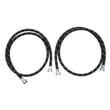
- Hose replacement: Replace inlet hoses every 5 years to reduce the risk of hose failure.
- Correct dispensing: Use dispensers correctly (for example, the fabric softener dispenser is for softener only).
Maintenance schedule (simple checklist)
| Item | What to do | How often |
|---|---|---|
| Water inlet hoses | Inspect for wear and leaks | Every 3 to 6 months |
| Water inlet hoses | Replace and mark the date | Every 5 years |
| Washer leveling | Confirm feet are tight and unit is level | At install, then yearly |
| Cleaning cycle | Run a cleaning cycle with detergent (per instructions) | After storage or as needed |
Why it matters
A washer that is level, not overloaded, and protected from hose failures usually reaches the higher end of the 10 to 14 year range. These basics also help prevent common issues like noisy operation, leaking, and spin problems.
When parts and repairs start to matter
If performance drops (poor agitation, won’t spin, or unusual noises), common wear items on this style of Whirlpool top-load washer include the motor coupling, clutch, lid switch, and drain pump. For example, a failed lid switch can stop spinning; a worn pump can cause draining issues (see washer drain pump WP3363394).
Last updated: February 2026
What is the most common problem with Whirlpool washers?
For Whirlpool washers like model WTW5300VW1, the most common customer complaints are won’t drain or spin, excessive noise or shaking, and won’t start. These issues are often caused by load balance, drain hose setup, water supply restrictions, or a safety interlock such as the lid switch.
Most common symptoms and what they usually mean
- Won’t drain or won’t spin: Drain hose is kinked/clogged, installed too high, or the lid is not fully closed.
- Noisy or banging: Load is unbalanced, washer is not level, or shipping materials were not removed during installation.
- Won’t fill or fills slowly: Inlet valve screens are clogged, hoses are kinked, or a faucet is turned off.
- Stops mid-cycle: Normal cycle pauses can last about 2 minutes on some cycles.
- Agitator clicking: Some clicking during wash can be normal gear or agitator action.
Quick checks we recommend first (WTW5300VW1)
Use these steps before replacing parts; they match common causes called out in the documentation.
- Confirm the lid is closed; this washer will not agitate or spin with the lid open.
- Verify the drain hose height; the end of the drain hose should not be more than 96 in. (244 cm) above the floor.
- Make sure hot and cold faucets are on and inlet hoses are not kinked.
- Check and clean water inlet valve screens (turn off water first).
- Level the washer and balance the load; tighten front feet locknuts and reset rear leveling legs if needed.
Parts that commonly solve these problems
If the basic checks do not fix the issue, these model-matched parts are frequent solutions:
| Symptom | Common suspect | Example model-matched part |
|---|---|---|
| Won’t start, won’t spin with lid shut | Lid switch not sensing closed lid | Washer lid switch assembly WP8318084 |
| Won’t drain or drains poorly | Drain pump jammed or failing | Washer drain pump WP3363394 |
| Agitates poorly, clothes not moving well | Worn agitator dogs | Agitator dog 80040 |
Why it matters
Drain and spin problems can leave clothes soaking wet and can make the washer shake violently if the load is unbalanced. Fixing setup issues (leveling, hose routing, water supply) prevents repeat failures and reduces wear on drive components.
For model-specific operating and troubleshooting steps, follow the WTW5300VW1 owner's manual.
Last updated: February 2026