Installation guide
 Owner’s manual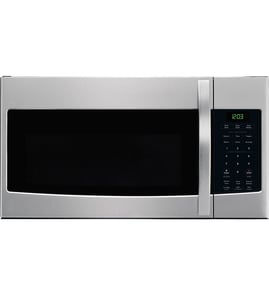



Are all over the range microwaves 30 inches wide?
Most over-the-range microwaves are designed to fit a 30-inch cabinet opening, but not every unit is exactly 30 inches wide. For Kenmore model 40185043010, the installation requirements call for a 30-inch wide space between cabinets and it is intended to install over ranges up to 30 inches wide (see the 40185043010 installation guide).
What “30 inches” usually means
Over-the-range microwaves are typically built to match standard 30-inch ranges and cabinet layouts. The key measurement is the opening between cabinets, not just the microwave’s outer case.
- Measure the clear space between the upper cabinets (left to right)
- Confirm the microwave can mount to at least one wall stud
- Verify the required clearance from cooktop to cabinet bottom (commonly 30 inches)
- Check whether you are venting outside or recirculating (ducting can change the install work)
- Confirm power cord clearance and outlet location per the template
Quick fit check for Kenmore 40185043010
The installation guide for this model specifies the standard 30-inch layout.
| Fit item | What to check | Target for this model |
|---|---|---|
| Cabinet opening width | Inside-to-inside between cabinets | 30 inches wide |
| Range width below | Width of range/cooktop | Up to 30 inches |
| Level mounting | Cabinet bottom and wall plate alignment | Must be level |
Why it matters
If the cabinet opening is not 30 inches, the mounting plate and templates will not line up correctly, the unit may not sit level, and the door can bind or the venting can leak. Getting the opening and clearances right prevents installation problems and vibration noise.
If your space is not 30 inches
- If the opening is wider, you may need filler panels or cabinet modifications
- If the opening is narrower, a standard OTR microwave typically will not fit safely
- If decorative trim interferes, remove or modify it so the microwave mounts level
Last updated: January 2026
What are the requirements for a microwave vent?
For Kenmore model 40185043010, the venting requirements depend on whether you install it as ductless recirculating or ducted to the outside (top or back). Your installation must also meet the electrical and mounting requirements listed in the installation guide.
Venting options for this model
This microwave/hood combo is designed to work in three ventilation setups:
- Recirculating (non-vented/ductless): air is filtered and returned to the kitchen
- Outside top exhaust (vertical duct): vents upward through the cabinet
- Outside back exhaust (horizontal duct): vents through the rear wall
These options are called out in the 40185043010 installation guide.
Core installation requirements (space, power, support)
These requirements matter as much as the duct choice because they affect safety, performance, and fit.
- 30-inch cabinet opening: space between cabinets must be 30 inches wide and unobstructed
- Range width: designed for installation over ranges up to 30 inches wide
- Vertical clearance: bottom of the cabinet needs to be 30 inches or more above the cooking surface
- Dedicated power: use a separate 20-amp branch circuit with a properly grounded 3-prong outlet (typically in the cabinet above)
- Wall support: at least one wood screw must be anchored into a wall stud to support the unit
Ducted vent requirements (outside exhaust)
If you vent to the outside, plan the duct path before mounting the unit.
- Choose vertical (top) or horizontal (back) exhaust based on your home layout
- Keep the duct run as short and straight as possible to reduce airflow restriction
- Seal duct joints with appropriate duct tape to prevent leaks
- Confirm the cabinet cutouts and cord clearance using the templates in the installation guide
Quick comparison
| Vent type | Where air goes | Best for | What you must plan |
|---|---|---|---|
| Recirculating (ductless) | Back into kitchen | No exterior duct available | Filter maintenance and correct setup |
| Outside top exhaust | Up through cabinet | Easy vertical duct route | Cabinet cutout and vertical duct path |
| Outside back exhaust | Through rear wall | Direct wall venting | Rear wall duct opening and alignment |
Why it matters
Correct venting and mounting protect the microwave’s fan performance, reduce cooking odors and grease buildup, and prevent installation issues like poor airflow, vibration, or cabinet damage.
Last updated: January 2026
How do I turn off the sound on my Kenmore microwave?
On Kenmore microwave model 40185043010, the keypad sound (beeps) is controlled through the tone or sound setting on the control panel. Use the steps in the Sound/Tone section of the 40185043010 owner's manual to switch the beeps off, then repeat the same setting to turn them back on.
Steps that work on most Kenmore microwave control panels
- Put the microwave in standby (no cooking time showing).
- Press Stop/Cancel to clear the display.
- Look for a Sound, Options, Settings, or Clock key.
- Open the tone setting (often labeled Sound, Tone, or Beeper).
- Select Off (or 0) to mute keypad beeps.
- Press Start/Enter to save, if your panel requires confirmation.
What to expect after you mute it
| Tone type | Usually affected by “Sound/Tone” setting | Notes |
|---|---|---|
| Keypad beeps | Yes | Button presses become silent. |
| End-of-cook tone | Sometimes | Many models keep safety alerts on. |
| Error/alarm tones | Often stays on | Helps you notice problems. |
If you cannot find a sound setting
- Check the “Control panel features” pages in the 40185043010 owner's manual.
- Try Options/Settings first; that is where Kenmore typically groups tone controls.
- If the display or keys do not respond, unplug the microwave for 1 minute to reset, then try again.
Why it matters
Turning off keypad beeps makes overnight use quieter while still allowing important alerts to get your attention.
Last updated: January 2026