Owner’s manual



What is the average lifespan of an LG dryer?
LG dryers typically last 10 to 15 years. For an LG DLG5002W dryer, reaching the high end of that range usually comes down to airflow maintenance (lint screen and venting), avoiding overloads, and fixing wear items early using guidance in the DLG5002W owner's manual.
What affects dryer lifespan most
- Vent restriction (long dry times, overheating, extra wear on thermostats and motor)
- Load size and cycle choice (overloading strains the drum belt and rollers)
- Lint control (lint buildup reduces airflow and can cause heat-related shutdowns)
- Heat system health (gas ignition and thermostats must cycle correctly)
- Routine cleaning (lint screen every load; vent path regularly)
Quick maintenance checklist (best ROI)
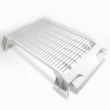
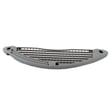
- Clean the lint screen every load; replace a torn or warped screen if needed (example: dryer lint screen by LG 5231EL1001C).
- Inspect and clean the exhaust duct and outside hood; keep the duct short and smooth when possible.
- If drying times increase, check airflow first before replacing parts.
- Keep the dryer level to reduce vibration and drum wear.
- Address squealing, thumping, or slipping early to prevent secondary damage.
Common wear items and what they usually mean
| Symptom | Likely wear area | Example part for DLG5002W |
|---|---|---|
| Squealing or rumbling | Drum support system | Drum support roller, idler pulley |
| Thumping | Flat-spotted roller or drum issue | Drum support roller |
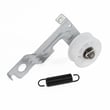
| Drum not turning | Belt or idler problem | Dryer drum belt 4400EL2001F |
| Long dry times | Airflow restriction or blower issue | Lint screen/grille, blower wheel |
Why it matters
A dryer that runs hot or runs long wears out faster. Keeping airflow strong helps the LG DLG5002W dry efficiently, reduces stress on thermostats and the gas ignition system, and extends the life of the drum support components.
For troubleshooting that can prevent unnecessary part replacement, use our LG dryer error codes reference alongside the DLG5002W owner's manual.
Last updated: January 2026
What does le2 mean on an LG dryer?
On the LG DLG5002W dryer, the LE2 code points to a motor-related problem (the drum motor is not turning correctly or the control is sensing a motor overload/lock condition). Start by resetting power and checking for a drum that is hard to turn.
Quick checks we recommend first
- Unplug the dryer (or turn off the breaker) for 5 minutes, then restore power and try a timed dry cycle.
- Make sure the drum turns by hand; it should rotate smoothly with some belt resistance.
- Reduce the load size; an overloaded drum can trigger a motor overload condition.
- Clean the lint screen and confirm airflow is strong at the outside vent.
- If the drum is difficult to turn, inspect the belt and drum support components.
What commonly causes an LE2 motor error
| What you notice | Likely cause | What to check next |
|---|---|---|
| Drum will not turn, motor hums | Jammed drum or seized support | Rollers, idler, rear seal, blower wheel |
| Drum turns sometimes, then stops | Motor overheating from restriction or load | Venting, lint buildup, load size |
| Squealing or thumping before LE2 | Worn moving parts increasing drag | Belt, idler pulley, support rollers |
Parts that often relate to drum drag (DLG5002W)
If the drum is hard to rotate or you hear squealing, these parts are common wear items:
- Dryer drum belt 4400EL2001F (slipping, frayed, or broken belt)
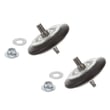
- Dryer drum support roller 4581EL2002H (flat spots or seized roller)
- Dryer idler pulley 4560EL3001A (noisy or binding pulley)
Why it matters
When the motor cannot start or keep the drum moving, the dryer can shut down to protect the motor and control. Fixing the underlying drag or airflow issue helps prevent repeat LE2 errors and improves drying performance.
Model-specific reference
For reset steps, diagnostic mode details, and any model-specific wording of the LE2 code, follow the DLG5002W owner’s manual.
Last updated: January 2026
What is the most common problem with LG dryers?
The most common problem we see with LG dryers (including model DLG5002W) is restricted airflow from lint buildup in the lint screen area or the home vent duct. Poor airflow causes long dry times, overheating, and sometimes automatic shutoff or airflow-related error codes.
What to check first (fast airflow checklist)
- Clean the lint screen before every load; replace it if the mesh is torn or warped (see dryer lint screen 5231EL1001C).
- Inspect the lint screen housing and grille for lint mats that block air (see dryer lint screen grille 3550EL1005C).
- Confirm strong airflow at the outside vent hood while the dryer runs.
- Check the vent duct for kinks, crushed sections, or long runs with too many elbows.
- Clean the entire vent line from the dryer outlet to the exterior hood.
Other common LG dryer issues (after airflow)
If airflow is good and drying is still poor, these are the next most common causes:
- No heat or weak heat (gas models): ignition or burner-related problems (see LG dryer burner igniter 5318EL3001A).
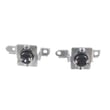
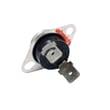
- Overheating or cycling oddly: a thermostat can be opening too early or too often (see dryer blower thermostat 6931EL3002M or dryer high-limit thermostat 6931EL3003C).
- Noisy thumping/squealing: worn drum support parts or belt issues (see dryer drum support roller 4581EL2002H and dryer drum belt 4400EL2001F).
- Auto-dry ends too soon or runs too long: dirty or failing moisture sensor (see dryer moisture sensor 6500EL3001A).
Symptoms and the most likely cause
| Symptom | Most likely cause | What to do next |
|---|---|---|
| Takes too long to dry | Restricted venting | Clean venting; confirm strong outside airflow |
| Shuts off mid-cycle | Overheating from poor airflow | Clean lint and venting; re-test |
| Loud rumble or thump | Roller wear | Inspect rollers and drum support surfaces |
| Runs but no heat (gas) | Igniter/burner issue | Check ignition sequence; inspect igniter |
Why it matters
Airflow problems do more than slow drying; they raise operating temperatures, stress thermostats and sensors, and can lead to repeated shutdowns. Fixing venting first often prevents unnecessary part replacement.
For model-specific operating tips and maintenance intervals, use the DLG5002W owner’s manual.
Last updated: January 2026
How do I reset my LG dryer sensor dry?
On an LG DLG5002W dryer, “Sensor Dry” usually gets back to normal by cleaning the lint filter and moisture sensor bars, then power-cycling the dryer (unplug for 1 minute, plug back in). If Sensor Dry still ends early or runs too long, the issue is typically airflow or a dirty sensor, not a button reset.
Quick reset steps (Sensor Dry)
- Turn the dryer off.
- Clean the lint filter and reinstall it fully; a partially seated filter can affect airflow.
- Wipe the moisture sensor bars inside the drum (usually near the lint filter housing) with rubbing alcohol; remove waxy dryer-sheet residue.
- Unplug the dryer (or switch off the breaker) for 60 seconds.
- Restore power, select Sensor Dry, then start a test load.
For model-specific control and cycle details, use the DLG5002W owner's manual.
If Sensor Dry still acts “wrong”
Sensor cycles depend on moisture sensing and airflow. These checks fix most “won’t dry” or “shuts off too soon” complaints:
- Verify the exhaust vent is not crushed, kinked, or excessively long.
- Clean lint buildup from the lint screen grille and duct connection.
- Avoid dryer sheets for a few loads (they commonly coat the sensor bars).
- Try a Timed Dry cycle to confirm the dryer can heat and tumble normally.
- If loads overdry or underdry consistently, inspect the moisture sensor wiring and sensor.
If you suspect a failed sensor, the correct replacement for this model is the dryer moisture sensor 6500EL3001A.
What “reset” means on this dryer
| Reset type | What you do | What it helps |
|---|---|---|
| Soft reset | Power off, then back on | Clears minor control glitches |
| Hard reset (power cycle) | Unplug 60 seconds, restore power | Clears stuck logic after a fault |
| Sensor reset (cleaning) | Clean sensor bars and airflow path | Fixes false “dry” readings |
Why it matters
When the moisture sensor bars are coated or airflow is restricted, the DLG5002W can misread fabric moisture. That leads to short cycles, long dry times, overheating protection trips, and inconsistent results.
Last updated: January 2026