Owner’s manual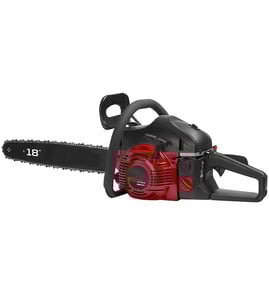









Where can I find the Craftsman chainsaw model number?
On the Craftsman gas chainsaw, the model number is printed on the product identification label; for this unit it appears as 358.352681 in the operator documentation. On the saw itself, that label is typically on the engine housing or near the rear handle area. Use the exact characters when ordering parts.
Where to look on model 358352681
Check these common label locations first:
- Side of the engine/motor housing (starter side or clutch side)
- Near the rear handle or trigger area
- On the bottom of the saw body near the oil and fuel tank area
- Near the bar mount area (behind the clutch cover)
What to write down (so parts match)
Model labels on chainsaws can include punctuation and extra identifiers. When you find the label, record:
- Full model number (including dots, such as 358.352681)
- Any prefix/suffix numbers or letters on the same label
- Serial number (helpful for confirming production version)
- Bar length listed on the label (often shown as 18 in. on this model)
Quick check: model number vs. part number
Use this table to avoid mix-ups when shopping for chainsaw parts.
| You’re looking at | What it identifies | Example on this saw |
|---|---|---|
| Model number | The exact chainsaw version | 358.352681 |
| Part number / part ID | The replacement part | Fuel line 530069247 |
| Bar/chain number | Cutting attachment spec | Bar 180SDEA041, chain 91PX062G |
Why it matters
Craftsman chainsaws in the 358.xxxxxx family can look similar but use different carburetor parts, fuel lines, and ignition components. Using the exact model number helps ensure the correct match for items like the poulan lawn & garden equipment fuel line, small 530069247 and the correct bar and chain.
For diagrams and model identification details, use the owner's manual.
Last updated: February 2026
Should I use 40 1 or 50 1 fuel for a chainsaw?
For the Craftsman 358352681 gas chainsaw, use a 40:1 fuel mix (unleaded gasoline mixed with quality air-cooled 2-cycle oil). That ratio is the model’s specified mix and helps protect the engine from overheating and premature wear; see the owner's manual.
Correct mix ratio (and what it means)
A 40:1 ratio means 40 parts gasoline to 1 part 2-cycle oil.
- Use fresh unleaded gasoline.
- Use 2-cycle air-cooled engine oil (not automotive oil, not marine/boat oil).
- Mix fuel in an approved container, then shake to fully blend.
- Avoid old fuel; stale mix is a top cause of hard starting and rough running.
- If the saw will sit 30 days or longer, run it dry or drain the tank to protect the fuel system.
Quick mixing table
| Gasoline amount | 40:1 oil amount | Notes |
|---|---|---|
| 1 gallon | 3.2 fl oz | Standard mix called out for this model |
| 1/2 gallon | 1.6 fl oz | Good for small batches |
| 1 quart | 0.8 fl oz | Useful for test runs |
Why 50:1 is not the right choice for this model
Many newer 2-cycle engines run 50:1, but the Craftsman 358352681 is designed around 40:1. Running less oil than specified increases friction and heat, which can shorten piston, ring, and crank bearing life.
Related tip: bar and chain oil is separate
Fuel mix lubricates the engine; it does not lubricate the chain. This model uses a separate bar oil tank and typically uses about one tank of bar oil per tank of fuel.
- Fill bar oil whenever you refuel.
- Use chainsaw bar oil when possible.
If your saw is hard to start after mixing correctly
Use this troubleshooting flow:
- Confirm fresh 40:1 mix and correct choke/prime steps.
- Check the air filter; replace if dirty (example: engine air filter 530037793).
- Inspect fuel lines for cracks or leaks (example: fuel line, small 530069247).
- If it still runs rough, carburetor service may be needed.
Why it matters: Correct fuel ratio and clean fuel delivery parts prevent lean running, overheating, and expensive engine damage.
Last updated: February 2026
What is the lifespan of a chainsaw?
A gas chainsaw like the Craftsman 358352681 typically lasts about 10 years with normal homeowner use and routine maintenance (clean air filter, correct chain tension, proper lubrication, and timely tune-ups). Heavy commercial use shortens lifespan; consistent upkeep extends it.
Typical lifespan by use
How long a chainsaw lasts depends more on hours of run time and maintenance than calendar age.
- Occasional homeowner use: ~10 years
- Frequent homeowner use (seasonal firewood): ~7 to 10 years
- Commercial or daily use: ~2 to 5 years
- Poor maintenance or dirty fuel: ~1 to 3 years
Maintenance that most affects lifespan (Craftsman 358352681)
Your owner's manual emphasizes routine care that directly impacts engine life and cutting performance.
- Keep the air filter clean; replace it on a regular schedule (dirty filters shorten engine life)
- Maintain proper chain tension; running loose or overly tight accelerates wear
- Avoid running at full throttle with no cutting load; it causes unnecessary wear
- Keep the chain out of dirt and sand; it dulls quickly and increases strain
- Use fresh, properly mixed fuel and do not store old fuel in the tank between seasons
Quick “wear item” checklist
These parts are designed to wear out before the saw does; replacing them on time helps the saw last longer.
| Wear item | What you’ll notice | Example part for this model |
|---|---|---|
| Air filter | Loss of power, rich running | Engine air filter 530037793 |
| Fuel lines | Hard starting, fuel smell, leaks | Fuel line, small 530069247 and fuel line, large 530069216 |
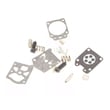
| Carburetor components | Surging, won’t idle, hard start | Carburetor kit 545081885 |
Why it matters
A chainsaw usually “dies early” from fuel system problems, restricted airflow, or running a dull/loose chain. Staying ahead of those issues reduces engine wear, improves safety, and keeps the bar and chain from being damaged.
Last updated: February 2026
What old chainsaws are worth money?
Older chainsaws are worth the most money when they are desirable to collectors and still complete, running, and original. For a Craftsman 358352681 gas chainsaw, value is driven less by age alone and more by condition, rarity, and whether key wear items (bar, chain, air filter, spark plug) are present and correct per the owner's manual.
What makes an old chainsaw valuable
Collectors and buyers typically pay more when the saw checks most of these boxes:
- Runs and idles cleanly (no fuel leaks, no bogging, no hard-start symptoms)
- Original parts and finishes (factory decals, correct covers, unmodified muffler)
- Complete cutting setup (correct guide bar and low-kickback chain type)
- Good compression and ignition (strong spark, consistent starting)
- Clean fuel system (no cracked fuel lines, no varnish in carburetor)
- Documentation and accessories (manuals, bar tool, scabbard, case)
Quick value checklist for a Craftsman 358352681
Use this as a practical way to judge whether it is worth selling as-is, repairing, or parting out.
| Condition | Typical buyer interest | Best next step |
|---|---|---|
| Starts easily, cuts straight, oils bar/chain | High | Clean it, document it, sell complete |
| Starts but runs rough or stalls | Medium | Service fuel/air system, tune, then sell |
| No-start, unknown compression | Low to medium | Diagnose ignition/fuel; consider parts value |
| Missing bar/chain or safety parts | Low | Replace missing items before listing |
Repairs that most improve resale (without over-investing)
On older gas chainsaws, small maintenance items often make the biggest difference:
- Replace a clogged air filter such as the Craftsman lawn & garden equipment engine air filter 530037793
- Replace cracked fuel lines such as the poulan lawn & garden equipment fuel line, small 530069247 or ayp lawn & garden equipment fuel line, large 530069216
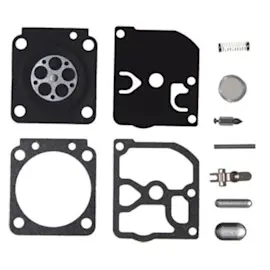
- Refresh the carburetor using the carburetor kit 545081885 if it surges, won’t idle, or only runs on choke
- Verify chain tension and sharpness; a sharp chain makes chips, a dull chain makes powder (per the manual)
Why it matters
Buyers pay for a saw they can use safely and immediately. A clean-running engine, correct bar and chain setup, and basic maintenance (fuel system, air filtration, chain condition) reduce risk for the buyer and raise what they are willing to pay.
Last updated: February 2026
How do I reset a carb on a chainsaw?
On the Craftsman 358352681 gas chainsaw, a true “reset” means returning the carburetor mixture and idle settings to a safe baseline, then fine-tuning with the engine warm. Because the chain can move during adjustment, set the saw on a stable surface and keep the bar and chain clear.
Before you touch the carb screws
Many “carb problems” are fuel or airflow problems. We check these first because the manual notes they can mimic a bad adjustment.
- Drain old fuel and refill with fresh, properly mixed fuel
- Clean or replace the air filter (a clogged filter makes the saw run rich)
- Clean the fuel filter in the tank (the manual describes removing it from the line, washing, rinsing, drying, and reinstalling)
- Inspect fuel lines for cracks, softness, or leaks; replace if questionable
- Make sure the chain is correctly tensioned and the chain brake works
Helpful parts for this model:
| What you’re fixing | Common symptom | Part option on this page |
|---|---|---|
| Restricted airflow | Hard starting, bogging, smoke | Engine air filter 530037793 |
| Cracked/plugged fuel line | Won’t start, surging, fuel leak | Fuel line, small 530069247 or fuel line, large 530069216 |
Baseline “reset” and tuning steps (safe approach)
Use the procedure in the owner's manual for the exact screw locations and sequence. In general, we use this workflow:
- Warm the engine; adjustments are made with the engine running
- Set idle speed so the engine stays running but the chain does not move at idle
- Adjust the low-speed mixture in tiny steps (about 1/16 turn at a time), then recheck idle
- Do a quick acceleration check; if it hesitates or dies, correct the low-speed mixture and recheck idle again
- Adjust the high-speed mixture based on cutting performance (not by sound); avoid long full-throttle runs while adjusting
What “good” looks like
- Chain does not move at idle
- Smooth acceleration without bogging
- Strong power in the cut without dying
Why it matters
The manual warns carburetor adjustment is critical; incorrect settings can damage the engine and can also create a safety hazard if the chain creeps at idle.
Last updated: February 2026