Owner’s manual
 Error Codes


What year did the Kenmore Elite come out?
Kenmore Elite was introduced as a premium Kenmore line in the late 1990s (commonly cited as 1999). For your specific Kenmore Elite refrigerator model 79577579600, the most accurate way to pin down its “year” is to decode the manufacturing date from the serial number using the 79577579600 owner's manual.
How to find the year for your specific 79577579600
We recommend using the serial number because “Kenmore Elite” is a product line, not a single release year for every refrigerator.
- Look for the model and serial label inside the fresh food compartment (often on a side wall) or near the door opening.
- Write down the full serial number exactly as shown.
- Use the serial format guidance in the 79577579600 owner's manual to interpret the date code.
- If the label is worn, take a clear photo and zoom in to confirm characters.
- Keep the purchase receipt if you have it; it helps confirm the in-service date.
What “came out” means for Kenmore Elite
Kenmore Elite is a higher-end tier within the Kenmore brand. That means:
| Term | What it refers to | What it tells you |
|---|---|---|
| Kenmore Elite | Product line/tier | Rough era of introduction (late 1990s) |
| Model number (79577579600) | Specific refrigerator design | Which parts and features fit |
| Serial number | Your exact unit | Actual build date (year and often week) |
Why it matters
Knowing the build year helps us match the right refrigerator parts (like a door switch, evaporator fan motor, or water inlet valve), confirm feature variations, and plan maintenance such as water line checks and icemaker troubleshooting.
If you are tracking a cooling or ice maker issue while you are checking the unit’s age, the Kenmore 795 model bottom freezer refrigerator error codes guide is a fast way to interpret display codes and narrow the failure to a sensor, fan, or defrost circuit.
Last updated: January 2026
What size is Kenmore refrigerator model 79577579600?
Kenmore Elite refrigerator model 79577579600 is a bottom-freezer style unit; most refrigerators in this class are about 33 inches wide, 30 to 34 inches deep, and 67 to 70 inches tall. For the exact dimensions and required clearances for your specific unit, use the 79577579600 owner's manual.
How to confirm the exact dimensions (best method)
We recommend measuring your refrigerator and matching it to the specs in the manual.
- Measure width at the widest point (often the doors or hinges)
- Measure height from floor to top of hinge cover (if present)
- Measure depth in two ways: cabinet only, and to the front of the handles
- Add clearance for door swing and airflow behind the cabinet
- If you are moving it, measure the narrowest doorway and any tight turns
Typical size ranges for this Kenmore 795 bottom-freezer platform
These ranges help with planning when you do not have the unit in front of you.
| Measurement | Typical range | What can change it |
|---|---|---|
| Width | 32 to 34 in. | hinge/door profile |
| Height | 67 to 70 in. | leveling legs, hinge cover |
| Depth | 30 to 34 in. | handles, door curvature |
Why it matters
Correct sizing prevents delivery problems and helps the refrigerator cool properly. Too little clearance can restrict airflow, increase run time, and contribute to temperature swings in the fresh food section and freezer.
Related help for this model family
If you are checking size because of a display issue or control panel message, use the Kenmore 795 model bottom freezer refrigerator error codes reference to interpret what the refrigerator is reporting.
Last updated: January 2026
What is the average lifespan of a Kenmore Elite refrigerator?
A Kenmore Elite refrigerator like model 79577579600 typically lasts 10 to 15 years. With good airflow, clean condenser coils, and tight door seals, many units reach the high end of that range; major sealed-system failures (compressor or refrigerant leaks) are the most common life-limiting repairs.
Typical lifespan and what affects it
Most bottom-mount refrigerators fall into a predictable lifespan range, but day-to-day conditions make a big difference.
- Maintenance: keeping coils clean and doors sealing well reduces compressor run time
- Heat and ventilation: tight cabinets and hot kitchens shorten component life
- Usage: frequent door openings and heavy ice maker use increase wear
- Water quality: mineral buildup can stress the ice maker and water valve
- Defrost performance: frost buildup can force longer run times and warmer temps
Quick expectations by component
| Component | Typical service life | What you notice when it’s failing |
|---|---|---|
| Compressor (sealed system) | 10 to 15 years | Warm fridge/freezer, loud hum, long run times |
| Evaporator fan | 8 to 12 years | Warm temps, weak airflow, unusual fan noise |
| Door gaskets | 5 to 10 years | Moisture, frost, doors not closing firmly |
| Water inlet valve | 5 to 10 years | No ice, slow fill, leaking at rear |
Maintenance that extends life
We recommend these practical steps for Kenmore Elite 79577579600 owners:
- Vacuum condenser coils and the rear/bottom area every 6 to 12 months
- Keep door gaskets clean; confirm the door closes without resistance
- Maintain freezer at 0°F and refrigerator at 37°F to 40°F
- Replace water filters on schedule and purge air after changes (see 79577579600 owner’s manual)
- If you see leaks or puddles, inspect the drain path and drain tube routing
Why it matters
A refrigerator that runs longer to hold temperature uses more electricity and puts extra stress on the compressor and fans. Preventive care helps you avoid the most expensive repairs and keeps food temperatures stable.
Last updated: January 2026
What are the common problems with Kenmore Elite refrigerators?
Common problems on the Kenmore Elite 79577579600 bottom-mount refrigerator include weak or no cooling, frost buildup, water leaks, ice maker or dispenser issues, and unusual noises. Most causes trace back to airflow restrictions, defrost problems, water supply issues, or a failing fan or compressor component.
Most common symptoms and what they usually mean
- Not cooling or warm temperatures: blocked vents, dirty condenser area, or a failed fan motor
- Freezer frosting up: defrost system issue or a door not sealing/closing fully
- Water puddles under the refrigerator: clogged or misrouted drain tube
- Ice maker not making ice: ice room door not closing tightly, low water pressure, or a valve problem
- Buzzing/clicking noises: compressor start components or a fan hitting ice
For model-specific operating and troubleshooting steps, use the 79577579600 owner's manual.
Quick checks we recommend before replacing parts
- Confirm the refrigerator is plugged in and the outlet has power.
- Make sure doors close completely; keep fingers clear of pinch points.
- If the ice room door is used, close it firmly until it latches (an unlatched door can warm the ice area and affect ice production).
- Unplug the refrigerator before cleaning or any repair work.
- Look for ice buildup around the evaporator cover area (a clue of defrost trouble).
Parts that commonly fix these issues on model 79577579600
| Symptom | Common part to check | Example part for this model |
|---|---|---|
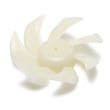
| Warm fridge/freezer, poor airflow | Evaporator fan system | Refrigerator evaporator fan motor 4681JB1027C or refrigerator evaporator fan blade 5901JA1021A |
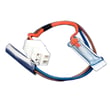
| Frost buildup, defrost failure | Defrost heater | Lg refrigerator defrost heater 5300JK1005D |
| Ice maker not filling with water | Water inlet valve | Refrigerator ice maker water inlet valve 5221JB2006K |
| Water leaking inside/under unit | Drain path components | Refrigerator drain tube 5251JA3003D |
Why it matters
Cooling, defrosting, and water delivery all work together. A small issue like a door not sealing or a clogged drain can quickly turn into spoiled food, ice buildup that blocks airflow, or recurring leaks.
Last updated: January 2026