Error Codes


How do I tell what model Kenmore fridge I have?
To identify your Kenmore refrigerator model, we look for the model and serial tag on the cabinet or door area. For Kenmore model 1069517650, the tag is typically inside the fresh food compartment or freezer, or near the lower front kickplate.
Check these common locations first (use a flashlight and look for a sticker or metal plate):
- Inside the refrigerator compartment on a side wall (often upper right or left)
- Inside the freezer compartment on a side wall or back wall
- On the door frame (visible when you open the refrigerator door)
- Behind the lower crisper drawers on the cabinet wall
- Behind or just above the lower front kickplate (toe grille)
The tag usually includes:
- Model number (example format: 106.9517650 or 1069517650)
- Serial number (needed for date and production info)
- Electrical ratings (volts/amps)
Write the model number exactly as shown. If it includes dots, we still recommend searching parts using the full number without changing any digits.
| Item | What it identifies | Where you’ll use it |
|---|---|---|
| Model number | Your exact refrigerator version | Parts lookup and diagrams |
| Serial number | Production run details | Service history and compatibility checks |
| Part number / part ID | A specific replacement part | Ordering the correct part |
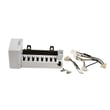
Kenmore refrigerators can look similar across many series, but parts like an ice maker, thermostat, or inlet valve can vary by model. Using the exact model number helps us match the correct components the first time, such as the refrigerator ice maker 4317943.
Last updated: February 2026
What are the most common problems with Kenmore refrigerators?
The most common problems we see on Kenmore refrigerators (including model 1069517650) are cooling issues, water leaks, ice maker and dispenser failures, and unusual noises. These usually trace back to airflow restrictions (dirty coils or a stalled fan), defrost system trouble, or worn water and ice components.
- Not cooling or warm fridge/freezer: dirty condenser coils, failed evaporator fan, or a defrost problem causing ice buildup
- Water under the fridge or inside the fresh food section: clogged defrost drain, cracked water line, or a leaking valve
- Ice maker not making ice: no water supply, frozen fill tube, failed ice maker, or a bad inlet valve
- No ice dispensing or clumping ice: dispenser/auger issue, solenoid problem, or ice container problems
- Buzzing, rattling, or clicking: fan blade hitting ice, loose parts, or compressor start components
- Set temperatures to typical targets: 37°F fresh food and 0°F freezer.
- Clean condenser coils and confirm the unit has good airflow around it.
- Listen for the evaporator fan (freezer) and condenser fan (rear/bottom) running.
- Check door seals for gaps and make sure doors close fully.
- If you have a dispenser, confirm household water supply is on and the line is not kinked.
If troubleshooting points to a failed component, these are common replacements for this model:
| Problem area | What fails most often | Example model-matched part |
|---|---|---|
| Ice production | Ice maker assembly | Refrigerator ice maker 4317943 |
| Water supply to ice maker/dispenser | Dual water inlet valve | Refrigerator inlet valve 4318046 |
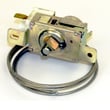
| Temperature control | Cold control thermostat | Refrigerator thermostat WP2198202 |
| Ice dispensing | Dispenser solenoid | Refrigerator ice dispenser solenoid WP2152713 |
Cooling and water/ice problems often start small (restricted airflow, minor seep at a fitting) and then create bigger issues like frost buildup, food spoilage, or recurring leaks. Catching the root cause early helps protect the compressor and keeps temperatures stable.
- Use Kenmore 106 model refrigerator error codes if your display shows an error.
- For dispenser and ice chute issues, follow how to disassemble a Kenmore refrigerator dispenser.
- For recurring ice maker or water dispenser trouble, use how to prevent water dispenser and ice maker problems.
Last updated: February 2026
What's the average lifespan of a Kenmore refrigerator?
Most Kenmore refrigerators, including model 1069517650, typically last 10 to 15 years with normal household use. Reaching the high end of that range depends on steady cooling performance, clean airflow, and keeping the ice and water system leak-free and unclogged.
| Refrigerator type | Typical lifespan | Notes |
|---|---|---|
| Top-freezer | 12 to 18 years | Simplest design; fewer dispenser parts to maintain |
| Side-by-side | 10 to 15 years | More moving parts (ice and water) can add wear points |
| French door | 9 to 14 years | More seals, fans, and controls; maintenance matters more |
- Vacuum condenser coils and the grille area every 6 to 12 months (more often with pets).
- Keep door gaskets clean and sealing tightly; warm air intrusion shortens compressor life.
- Maintain steady temperatures (about 37°F fresh food, 0°F freezer) to reduce run time.
- Replace failed dispenser or ice components promptly to prevent jams and overheating.
- Fix water leaks quickly to avoid corrosion and ice buildup.
When these parts fail, the refrigerator may still run, but it often works harder and wears faster:
- Refrigerator thermostat WP2198202 (temperature control issues can cause long run times)
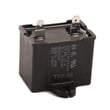
- Run capacitor WPW10662129 (starting problems can stress the compressor)
- Refrigerator inlet valve 4318046 (water flow problems can lead to ice maker issues)
A refrigerator that runs longer than it should (from dirty coils, poor door sealing, or temperature control problems) uses more energy and puts extra strain on the sealed system. Preventive care is usually cheaper than replacing major cooling components.
Last updated: February 2026