Owner’s manual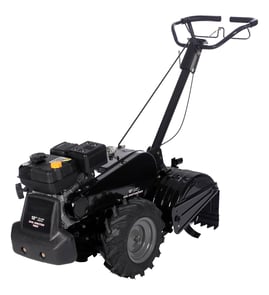




What tiller is made in the USA?
If you’re specifically looking for a tiller made in the USA, Mantis tillers are commonly identified as designed, engineered, and manufactured in the United States. For your Ryobi rear-tine tiller model 21AB454B734, our owner's manual focuses on safe operation, assembly, and maintenance rather than country-of-origin comparisons.
How to confirm where a tiller is made
The most reliable way to confirm U.S. manufacturing for any specific tiller is to check the machine’s identification plate and documentation.
- Look for a model plate on the tiller (often near the rear tine cover area on rear-tine designs)
- Check for wording such as “Made in U.S.A.” or “Printed in U.S.A.” on labels or manuals
- Match the model number exactly when researching parts and documentation
- Keep the model and serial information handy before ordering parts or accessories
What we can confirm for model 21AB454B734
Your Ryobi 21AB454B734 documentation includes U.S. printing and U.S. address information for the manual publisher, which is helpful for documentation tracking but is not the same as confirming the tiller’s manufacturing origin.
| Item | What it tells you | What it does not tell you |
|---|---|---|
| “Printed in U.S.A.” in the manual | Where the manual was printed | Where the tiller was manufactured |
| Model plate on the machine | Exact model and serial identification | Not always the country of manufacture unless stated |
| Parts list for 21AB454B734 | Correct replacement parts fit | Country-of-origin confirmation |
Why it matters
Country of manufacture can affect what you expect for sourcing, labeling, and documentation. For repairs and maintenance, the most important factor is matching the exact model number (21AB454B734) so you get the correct parts and procedures.
Last updated: February 2026
Is the Ryobi rear tine tiller any good?
Yes. The Ryobi rear-tine tiller model 21AB454B734 is a solid choice for homeowners who want strong soil-turning performance and good control; it is designed with multiple drive modes (including reverse tine drive) that help it work effectively in hard or virgin ground when used correctly per the owner's manual.
What “good” looks like on this model
Rear-tine tillers are built for traction and bite, and this model’s operating modes are a big part of that. For tougher conditions, the manual specifically calls out using reverse tine drive for virgin ground, sod, or hard soil.
- Use reverse tine drive for virgin ground, sod, or hard soil
- Use forward tine drive for cultivating or softer soil
- Till the garden twice (lengthwise, then widthwise) for better soil pulverization
- Keep the tine area clean after each use to prevent buildup and rust
- Avoid pressure washing; water can get into tight areas and damage the unit
Quick performance and usability checklist
If you want the tiller to feel “good” in real use, these are the make-or-break items:
- Shifting feels smooth (roll the tiller slightly forward and back to help gears synchronize)
- Clutch control operates freely (lubricate pivot and cable at least once a season)
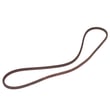
- Tines do not hesitate under load (belt tension may need periodic adjustment)
- No stalling when engaging drive (gear indicator must be fully in position, not between gears)
- Stable handling (do not push down on handles enough to lift wheels during tine drive)
Common “good vs not good” symptoms
| What you notice | Most likely cause | What to do |
|---|---|---|
| Tines or wheels hesitate | Belt tension out of adjustment or belt wear | Check belt tension adjustment steps in the owner's manual |
| Hard to shift into forward/reverse | Gears not synchronized | Nudge tiller slightly forward then backward before shifting |
| Engine stalls when engaging | Gear selector between positions | Reposition selector fully into the desired mode before squeezing clutch |
| Excess vibration or poor tilling | Dirty tine area or worn tine components | Clean after use; inspect tine hardware and tine assemblies |
Why it matters
A rear-tine tiller’s “goodness” is mostly about matching the drive mode to soil conditions and keeping the clutch, cable, and tine area maintained. When those basics are right, you get better traction, fewer stalls, and more consistent tilling depth.
Last updated: February 2026
Can a rear tine tiller cut through roots?
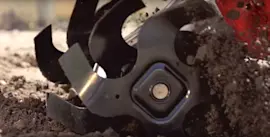
Yes. A Ryobi rear-tine tiller like model 21AB454B734 can cut through small roots while breaking new ground, especially when you use the reverse tine drive for virgin ground, sod, or hard soil. For thick, woody roots, cut them first to prevent sudden kick-forward.
What to expect when you hit roots
Rear-tine tillers are built for tougher soil, but roots can still grab the tines.
- Small feeder roots usually shred and mix into the soil.
- Larger roots can stop the tines and make the tiller lunge forward.
- Rocky, root-filled ground increases vibration and wear on the tine drive.
- If you strike a foreign object, stop the engine and inspect for damage.
- Keep bystanders at least 75 feet away while tilling.
Best settings for rooty or “new ground” soil
Your 21AB454B734 transmission has multiple drive modes. For the hardest conditions, the manual calls out reverse tine drive.
| Soil condition | Recommended mode | Why it helps |
|---|---|---|
| Virgin ground, sod, hard soil, roots | Tines reverse | Bites and breaks ground more aggressively |
| Soft soil, cultivating | Tines forward | Smoother operation, less aggressive bite |
| Moving the tiller without tilling | Wheels forward (no tines) | Safer transport, less strain |
For exact control locations and operating steps, follow the owner's manual.
How to till roots safely (and avoid damage)
- Walk slowly; let the tines do the work.
- Never restrain the machine if the tines catch and the tiller surges forward; release the handlebars.
- Do not shift gears with the wheels or tines engaged; stop completely before changing the gear selection.
- If the engine stalls or the tines hesitate, check belt tension and clutch operation per the manual.
- After any impact, disconnect the spark plug wire before inspecting the tines and drive area.
Why it matters
Roots can turn into a safety hazard and a repair issue fast. Using the correct tine direction and operating technique reduces kick-forward risk and helps protect the tine shaft, gears, and clutch cable.
Last updated: February 2026