Installation guide
 Owner’s manual
 Error Codes
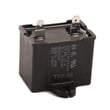


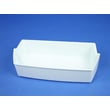
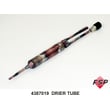

What are the most common problems with Kenmore refrigerators?
The most common problems we see on Kenmore refrigerators like model 10655502400 are cooling issues, ice maker and water dispenser failures, water leaks, moisture buildup, and door sealing problems. Many of these trace back to airflow restrictions, dirty or sticking door gaskets, or a defrost or water-supply component that needs service.
Common problems and what usually causes them
- Not cooling or warming temps: blocked air vents, frequent door openings, controls set incorrectly, or a cooling system component issue.
- Interior moisture buildup: high room humidity, doors opened often, blocked vents, or poorly wrapped food.
- Doors hard to open or not sealing well: dirty or sticky gaskets, misalignment, or the refrigerator not level.
- Ice maker not making ice: water supply issue, inlet valve problem, or ice maker assembly failure.
- Water leaking: water line or valve seepage, or a drain issue (often shows up as puddles).
Quick checks we recommend first (fast, no parts)
- Make sure air vents are not blocked by food packages.
- Reduce long door openings; load and unload quickly.
- Confirm temperature controls are set appropriately for the room conditions.
- Clean door gaskets if they feel sticky or the doors are difficult to open.
- If your model has digital controls and it is not cooling, turn the unit OFF then ON to reset (per the troubleshooting guidance in the manual).
Parts that commonly fix these symptoms on 10655502400
| Symptom | Common suspect | Example part for this model |
|---|---|---|
| No ice, slow ice | Water supply not filling ice maker | Refrigerator inlet valve W10408179 |
| No ice, ice maker dead | Ice maker mechanism failure | Ice maker assembly 4317943 |
| Frost buildup, warm fridge | Defrost system issue | Refrigerator defrost bi-metal WPW10225581 or refrigerator heater WP2323198 |
Why it matters
Cooling and moisture complaints are often airflow and door-seal related. Fixing vents, gasket cleanliness, and defrost performance helps stabilize temperatures, prevents frost buildup, and reduces strain on the compressor.
Helpful references
- Use the 10655502400 owner's manual for troubleshooting steps like checking vents, cleaning guidance, and control reset instructions.
- For water filter questions and maintenance, follow how to replace the water filter in a Kenmore refrigerator.
Last updated: February 2026
What is the cubic foot of my Kenmore refrigerator model 10655502400?
The exact cubic-foot capacity for Kenmore side-by-side refrigerator model 10655502400 is listed in the product specifications section of the 10655502400 owner's manual. Most Kenmore 106 side-by-side refrigerators are in the 21 to 25 cu. ft. range, depending on the exact configuration.
Where to find the official capacity
Check the specifications pages in the 10655502400 owner's manual. Capacity is typically shown as:
- Total capacity (overall cubic feet)
- Refrigerator (fresh-food) compartment capacity
- Freezer compartment capacity
- Sometimes “usable” or “shelf area” notes that explain space taken by bins and the ice system
What affects “usable” space in a side-by-side
Even when two models have the same total cubic feet, they can feel different inside because of:
- Ice maker and ice bin size (takes freezer volume)
- Door bin depth and number of adjustable bins
- Shelf count and whether shelves slide or fold
- Crisper/meat pan layout (for example, the refrigerator meat pan WP2188664)
- Air channels and light housings that reduce shelf width
Quick reference: capacity vs. fit
| Measurement | What it helps with | What it does not tell you |
|---|---|---|
| Cubic feet (capacity) | Food storage volume | Whether it fits your cabinet opening |
| Exterior dimensions | Kitchen fit and door swing | How much food it holds |
| Shelf/bin layout | Day-to-day organization | Official capacity rating |
Why it matters
Cubic feet is the best number for comparing storage volume across Kenmore, Whirlpool, and other brands; layout and features (ice maker, bins, drawers) determine how roomy the refrigerator feels in daily use.
Last updated: February 2026
What's the average lifespan of a Kenmore refrigerator?
Most Kenmore refrigerators average 10 to 15 years of service life; a well-maintained Kenmore 10655502400 side-by-side refrigerator often reaches the upper end of that range when airflow, door sealing, and cleaning are kept up.
Typical lifespan ranges (what we see most often)
| Refrigerator type | Typical lifespan | What usually ends it first |
|---|---|---|
| Side-by-side (like Kenmore 10655502400) | 10 to 15 years | Sealed system wear, cooling airflow issues |
| Top freezer | 12 to 18 years | Thermostat or defrost problems |
| French door | 10 to 15 years | Ice and water system issues, control failures |
What extends the life the most
- Keep condenser and ventilation areas clean so the compressor runs less
- Make sure doors close fully and seals stay clean (sticky gaskets shorten life)
- Fix small cooling issues early (warm spots, frost buildup, noisy fan)
- Replace water system parts when symptoms start (slow fill, no ice, leaking)
- Use correct temperatures: about 37°F fresh food and 0°F freezer
For model-specific care steps and cleaning guidance, follow the 10655502400 owner's manual.
Quick “wear item” checklist for older Kenmore side-by-sides
These parts do not set the lifespan by themselves, but they commonly cause problems that make a refrigerator feel “worn out”:
- Water not dispensing or ice maker not filling: refrigerator inlet valve W10408179
- Ice maker stops producing: ice maker assembly 4317943
- Frost buildup or warm freezer: defrost system components (heater, bi-metal)
- Temperature swings: thermostat and airflow components
Why it matters
A refrigerator that is struggling to cool (dirty coils, weak airflow, leaking door gasket, or a failing inlet valve causing ice issues) runs longer and harder. That extra runtime accelerates compressor and sealed system wear, which is the most expensive type of repair.
Last updated: February 2026