Owner’s manual
 View engine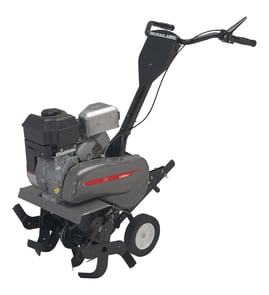



Where is the model number on a Craftsman tiller?
On a Craftsman tiller like model 917296010, the model number is typically printed on a model/serial tag attached to the tiller frame; common spots are under the engine shroud or on nearby sheet metal close to the muffler or spark plug. Confirm the full number exactly as shown.
Where to look first on model 917296010
We recommend checking these areas in order (they are the most common on this Craftsman front-tine design):
- Under the engine shroud (top cover) on the sheet metal near the muffler
- On the engine area near the spark plug wire/boot
- On the main frame near the handle column or control panel area
- Near the tine shield or belt guard area (on the frame, not on the removable guard)
For diagrams and labeling references, use the 917296010 owner's manual.
Tips to make sure you capture the correct number
Model tags can be dirty, faded, or partially hidden by the engine cover. When you find the tag:
- Write down every digit and punctuation mark (for example, 917.296010 may appear with a dot)
- Take a clear photo before cleaning so you do not rub off faded ink
- Clean gently with a damp cloth; avoid harsh solvents
- Record any additional identifiers on the same tag (often a serial number)
Model number vs. engine model number (quick comparison)
On this Craftsman tiller, you may see both a tiller model number and an engine model number. They are not interchangeable.
| What you’re looking at | Example you might see | What it’s used for |
|---|---|---|
| Tiller model number | 917.296010 | Finding correct Craftsman tiller parts and diagrams |
| Engine model/type | Briggs & Stratton 126302 (type 0416-E1) | Finding engine-specific parts and tune-up specs |
Why it matters
Using the exact model number helps us match the correct parts (like tines, belts, and control components) to your specific tiller configuration, which prevents ordering a part that does not fit.
Last updated: January 2026
Which is better, front tine or rear tine tiller?
For Craftsman model 917296010, a front-tine design is a strong choice when you want a capable, mid-range tiller for routine garden prep and maintenance; this model is rated at 5.5 HP with a 24-inch tine width. A rear-tine tiller is usually “better” when you regularly break new ground or need maximum traction and stability. For safe operation and setup details, use the 917296010 owner’s manual.
Quick comparison
| Feature | Front-tine (like 917296010) | Rear-tine |
|---|---|---|
| Typical best use | Routine garden prep, cultivating, previously worked soil | New ground, compacted soil, larger plots |
| Handling | More maneuverable; easier to turn | Tracks straighter; more stable under load |
| Operator effort in hard soil | Can require more effort and multiple passes | Usually less effort due to traction and weight |
| Cost/weight | Often lighter and less expensive | Often heavier and more expensive |
When a front-tine tiller is the better pick
- You want a versatile machine for regular seasonal tilling and cultivating
- You need easier turning in tighter garden layouts
- You can work in passes (shallow first, then deeper)
- You prefer a lighter unit that’s easier to transport and store
When a rear-tine tiller is the better pick
- You frequently break sod or hard, compacted clay
- You want deeper, more consistent tilling with less “wrestling”
- You need better traction on slopes or in challenging soil
- You plan to till larger areas for longer stretches
Why it matters
Choosing the right tine layout affects control, soil finish (tilth), and wear on drive components. In hard ground, a front-tine unit can bounce and strain belts and controls if you try to go too deep too fast.
Tip for 917296010 performance
If your 917296010 feels jumpy or hard to control, start with a shallower setting and make multiple passes; adjust wheel height and the depth stake gradually as the soil loosens.
Last updated: January 2026
What is the average lifespan of 917296010?
A Craftsman front-tine tiller like model 917296010 typically lasts 10 to 15 years with normal homeowner use and routine maintenance. Lifespan is driven most by engine care, belt condition, and keeping the tine and depth-stake hardware tight and adjusted per the 917296010 owner's manual.
What affects lifespan the most
- Engine maintenance: clean air filter, fresh fuel, correct oil level, and seasonal storage practices.
- Drive system wear: belts, idlers, and pulleys wear faster if run loose, misaligned, or contaminated.
- Tine and stake load: rocky soil and aggressive depth settings increase shock loads.
- Fastener tightness: loose bolts and pins accelerate wear in the wheel and depth stake assembly.
- Storage: dry storage prevents corrosion on tines, hardware, and controls.
Quick maintenance schedule (typical)
| Interval | What to do | What it prevents |
|---|---|---|
| Every use | Check for loose hardware, clear debris from tines | Premature wear, vibration damage |
| Seasonally | Inspect belt, idler action, and cable adjustment | Slipping, poor tine engagement |
| Annually | Replace worn tines and worn pins/clips as needed | Poor tilling, unsafe operation |
Parts that commonly limit service life
If you notice slipping, squealing, or tines that do not pull well, these are common wear points on front-tine tillers:
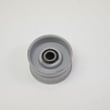
- Belt drive components (belt, idler, pulleys)
- Tine assemblies and tine hardware
- Depth stake and wheel hardware (pins, bolts, lock nuts)
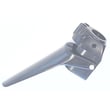
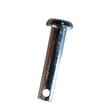
For example, worn or missing hardware in the wheel and depth stake assembly can cause poor control and extra stress; the parts list for 917296010 includes items like the depth stake 532446066 and tiller clevis pin 532443676.
Why it matters
A tiller that is maintained to spec runs cooler, vibrates less, and transfers power efficiently to the tines. That directly extends the life of the Briggs & Stratton engine and the drive components, and it keeps tilling performance consistent.
Last updated: March 2026