Owner’s manual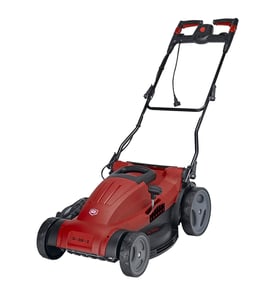


What is the average lifespan of an electric lawn mower?
Most electric walk-behind mowers like the Craftsman 247370160 average about 5 to 10 years of service life. Lifespan depends most on how hard the mower is worked, how it’s stored, and whether key wear items (especially the blade and electrical controls) are kept in good condition using the Craftsman 247370160 owner’s manual.
Typical lifespan ranges (what we see most often)
- Corded electric mowers: 7 to 12 years (fewer battery-related failures)
- Battery electric mowers: 5 to 10 years overall; battery packs commonly need replacement sooner
- High-use mowing (large yards, thick grass): tends toward the lower end of the range
- Light-use mowing (small yards, dry grass): often reaches the upper end
| Mower type | Typical lifespan | Most common “first failure” |
|---|---|---|
| Corded electric | 7 to 12 years | Switch/control, cord strain, blade hub wear |
| Battery electric | 5 to 10 years | Battery pack capacity loss |
What shortens mower life fastest
- Cutting tall, wet grass repeatedly (overloads the motor)
- Using an undersized extension cord on corded models (voltage drop and heat)
- Hitting roots, rocks, or edging (bends blade, stresses the blade adapter)
- Storing the mower outdoors or in damp areas (corrosion and electrical issues)
- Skipping blade maintenance (dull blades increase motor load)
How to get the longest life from your Craftsman 247370160
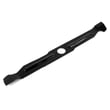
- Keep the blade sharp and replace it when damaged; a correct-fit option is the mtd lawn mower 19-in deck mulching blade 942-04152.
- Use the correct extension cord gauge and length for corded operation (heavier gauge for longer runs).
- If the mower stops under load, let it cool and reset the overload protection switch as described in the manual.
- Clean grass buildup from the deck after mowing (with power disconnected).
- Store indoors and keep the handle hardware tight to prevent vibration damage.
Why it matters
A mower that is overloaded or run with a dull blade draws more current and runs hotter, which shortens the life of electrical components like the motor/blade control and overload protection system.
Last updated: January 2026
What are the drawbacks of electric mowers?
Electric mowers like the Craftsman 247370160 trade gas convenience for corded power and electrical safety requirements. The most common drawbacks are limited range (cord management), reduced power if the extension cord is undersized, and the need to avoid wet grass or wet ground for shock prevention; see the 247370160 owner's manual.
Common drawbacks (what owners notice most)
- Cord management and range limits: You are limited by extension-cord length and must keep the cord routed safely.
- Power drop with the wrong cord: An undersized cord can cause voltage drop, reduced cutting power, and overheating.
- Wet-condition restrictions: Electric mowers should not be exposed to water or operated on wet ground.
- Electrical safety requirements: You must use a polarized extension cord and outlet setup; do not modify plugs.
- Service complexity: Double-insulated designs require careful servicing; use OEM replacement parts and qualified service when needed.
Extension cord sizing (model-relevant guidance)
Your mower’s manual provides a minimum wire size chart for 120V use around 10 to 12 amps. Use this as a quick reference:
| Cord length | Minimum wire size (AWG) | What it affects |
|---|---|---|
| 25 to 50 ft | 16 AWG | Normal operation with less voltage drop |
| 100 ft | 14 AWG | Better power delivery over longer runs |
| 150 ft | 12 AWG | Helps prevent overheating and power loss |
Safety and maintenance downsides to plan for
- Disconnect from power before cleaning, maintenance, or blade work.
- Do not wash the deck with a hose or pressure washer; scrape and wipe dry instead.
- Keep hands and feet away from rotating parts; the blade can cause severe injury.
Why it matters
Most “electric mower problems” are really cord, moisture, or maintenance issues. Using the correct extension cord gauge, keeping the deck clean without water, and following the safety controls helps your Craftsman 247370160 cut consistently and last longer.
Last updated: January 2026
What model number is the Craftsman 247370160?
The model number for this Craftsman electric walk-behind mower is 247.370160 (often written without the dot as 247370160). You can confirm it on the mower’s nameplate and in the 247370160 owner’s manual.
Where to find the model number on the mower
Most Craftsman walk-behind mowers place the model and serial information on a nameplate or label on the deck or rear housing.
- Check the top of the mower deck near the motor shroud
- Look at the rear door or rear skirt area
- Inspect the handle bracket area for a label
- Match the label to the format shown in the manual (model and serial fields)
Why the dot sometimes appears (247.370160 vs 247370160)
Both formats refer to the same mower. The dot is a common way Craftsman prints model numbers in manuals and on labels.
| You might see it as | What it means | When it’s used |
|---|---|---|
| 247.370160 | Same model number | Often in the operator’s manual and on the nameplate |
| 247370160 | Same model number | Often on parts sites and in search fields |
Why it matters when ordering parts
Using the exact model number helps us show the correct parts list and diagrams for your mower, especially for wear items and hardware.
- Mulching blade selection depends on the exact deck design
- Grass bag fit can vary by model series
- Handle and wheel parts can change across similar-looking mowers
- Electrical parts (motor control, rectifier) must match the wiring design
If you are replacing common wear parts, the parts list for model 247370160 includes items such as the mtd lawn mower 19-in deck mulching blade 942-04152.
Last updated: January 2026
Why do Electric lawnmowers stop working?
Electric lawn mowers like the Craftsman 247370160 most often stop working because power is not reaching the motor (bad outlet/GFCI, damaged or undersized extension cord, loose connection), the safety start sequence is not being followed, or the motor overheats and shuts down to protect itself. Use the checks and operating steps in the 247370160 owner's manual first.
Quick checks that fix most “won’t run” problems
- Reset the GFCI at the outlet or on the circuit feeding the mower.
- Inspect the extension cord end-to-end for cuts, crushed spots, or loose blades.
- Use an outdoor-rated, heavy-enough cord; an undersized cord can cause voltage drop, power loss, and overheating.
- Confirm the plug is fully seated; this mower uses a polarized plug, so it only fits one way.
- Make sure the cord restraint is used so the cord does not pull loose while mowing.
Correct starting sequence (common miss)
The motor will not start unless you hold the starter button while lifting/pivoting the motor/blade control handle.
| What you do | What should happen | If it doesn’t |
|---|---|---|
| Hold starter button and raise control handle | Motor starts | Recheck outlet, cord, and plug fit |
| Release starter button (keep holding handle) | Motor keeps running | If it stops, suspect power drop or control issue |
| Release control handle | Motor and blade stop | If it does not stop, service is needed |
If it starts, then stops while mowing
- Overheating from heavy load (tall grass, wet grass, clogged deck) can trigger a shutdown.
- Cord voltage drop from a long or light-gauge cord can mimic a failing motor.
- Abnormal vibration after striking an object can indicate damage; stop, unplug, and inspect before restarting.
Why it matters
Electric mowers rely on steady voltage and working safety controls. A weak outlet/GFCI trip, damaged cord, or incorrect start sequence can look like a “dead mower,” and an undersized cord can overheat the motor.
Last updated: January 2026