





What is the best gas leaf blower for the money?
For the best “gas leaf blower for the money,” we recommend matching power to your yard size and how often you use it. For most homeowners, a mid-range handheld blower delivers the best value; for bigger yards, a backpack blower is usually the best cost-per-performance.
- Air volume (CFM): Higher CFM moves more leaves, especially wet piles.
- Air speed (MPH): Helps lift stuck debris and clear corners.
- Weight and balance: A lighter handheld often “wins” on value because you use it longer.
- Starting and fueling: Easy starting and a stable fuel system save time and frustration.
- Parts support: Long-term value improves when common wear parts are easy to get.
| Use case | Best value type | Why it’s the best value |
|---|---|---|
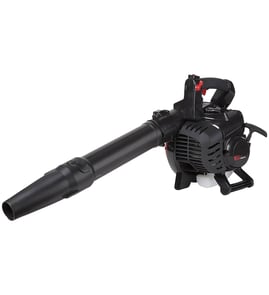
| Small to medium yards | Handheld gas blower | Lower cost, easier handling, plenty of power for routine cleanup |
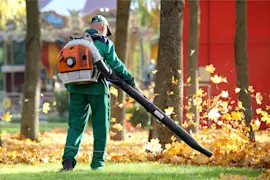
| Large yards, heavy leaf season | Backpack gas blower | More airflow with less arm fatigue; faster cleanup |
| Occasional use | Lighter handheld | Easier to store and maintain; less tiring |
If your Poulan BVM200VS starts hard, won’t stay running, or lacks power, you can often restore performance with basic fuel-system and control checks before replacing the whole blower.
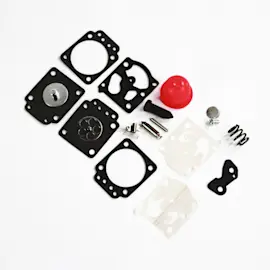
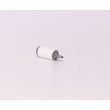
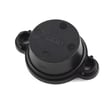
- Replace a cracked or stiff primer bulb: ayp leaf blower primer bulb 530035497
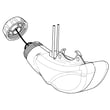
- If it surges or won’t idle, inspect the carb mounting and intake sealing: ayp leaf blower carburetor adapter 545084901
- If it stalls when you move the switch, check the control: craftsman, Poulan leaf blower start/stop switch kit 545081830
“Best for the money” is usually the blower that finishes your typical cleanup fastest with the least fatigue and the fewest repeat repairs. A slightly lighter, easier-starting unit often beats a higher-spec blower in real-world value.
Last updated: January 2026
What is a good CFM for a battery-powered leaf blower?
A good CFM for a battery-powered leaf blower depends on the job: about 200 to 400 CFM handles light cleanup, 400 to 700 CFM covers most yards, and 700+ CFM is best for heavy piles or wet leaves. Even though the Poulan BVM200VS is gas, these ranges help you compare performance.
- 200 to 400 CFM: patios, porches, garage floors, light dry leaves
- 400 to 550 CFM: typical driveway and lawn cleanup, moderate leaf cover
- 550 to 700 CFM: heavier leaf fall, small sticks, damp leaves
- 700+ CFM: large properties, thick piles, wet leaves (usually higher cost and battery demand)
CFM is air volume; MPH is air speed. For most homeowners, a balanced combo clears faster than chasing one big number.
| Task | What matters more | What to look for |
|---|---|---|
| Clearing open areas (driveway, lawn) | Higher CFM | 450 to 650 CFM |
| Moving stuck or wet leaves | Higher MPH plus solid CFM | 550+ CFM with strong MPH |
| Tight corners, mulch beds | Control and nozzle design | Variable speed, focused nozzle |
Choosing the right CFM helps you avoid buying a blower that feels weak (too low CFM) or one that is heavier, louder, and drains batteries quickly (too high CFM for your needs).
If your blower feels weak, the issue is often airflow restriction or a control problem, not the engine “CFM rating.” These model-related parts can matter during troubleshooting:
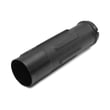
- Leaf blower tube, upper 590606401 (cracks or loose fit reduce airflow)
- Leaf blower tube, lower 545100601 (splits and missing sections reduce velocity)
- Craftsman leaf blower high-speed nozzle-4 in 545151201 (nozzle shape affects focus and reach)
- Leaf blower vacuum door 545100801 (a poor seal can leak air and reduce performance)
- A_y_p leaf blower vacuum bag 530095564 (a clogged bag can choke airflow in vacuum mode)
Last updated: January 2026
What is the gas mixture for a Poulan BVM200VS?
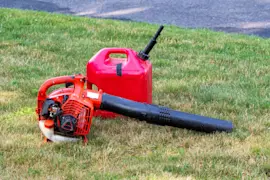
For the Poulan BVM200VS gas leaf blower, use a 40:1 fuel mix: 40 parts fresh unleaded gasoline to 1 part 2-cycle engine oil. That equals 3.2 oz of oil per 1 gallon of gas (or 2.5 oz per 1 liter).
| Gas amount | 2-cycle oil to add |
|---|---|
| 1 gallon (128 oz) | 3.2 oz |
| 2 gallons | 6.4 oz |
| 1 quart (32 oz) | 0.8 oz |
| 1 liter | 25 ml (about 0.85 oz) |
- Use a clean, approved fuel can (not the blower tank) for mixing.
- Add about half the gasoline first.
- Measure and add the correct amount of 2-cycle oil.
- Cap the can and shake to blend.
- Add the remaining gasoline and shake again.
- Mix only what you will use in about 30 days.
- Too little oil (lean mix): overheating, piston scoring, early engine failure
- Too much oil (rich mix): heavy smoke, carbon buildup, fouled spark plug, poor power
- Old fuel: hard starting, surging, stalling at idle
- Wrong oil type: deposits and reduced lubrication (use 2-cycle oil rated for air-cooled engines)
A correct 40:1 mix protects the crankshaft bearings, piston, and cylinder in your 2-cycle Poulan BVM200VS. Most “won’t start” or “runs rough” complaints on gas blowers trace back to stale fuel or an incorrect oil ratio.
If you are troubleshooting fuel delivery issues while you are mixing fresh fuel, a cracked or stiff primer bulb can also make starting difficult; the ayp leaf blower primer bulb 530035497 is a common wear item on this platform.
Last updated: January 2026