Installation guide
 Owner’s manual
 Error Codes



What is the PowerPlus freeze on a Frigidaire?
PowerPlus Freeze is a Frigidaire feature that temporarily boosts freezer cooling so newly added food freezes faster and stays fresher. On the Frigidaire FFHT1817LW3, the exact button name and how long the boost runs depends on the control style; use the FFHT1817LW3 owner’s manual for the specific steps.
What PowerPlus Freeze does (and what to expect)
- Drops freezer temperature faster than normal operation for a short period
- Helps firm up items like meat, ice cream, and bulk groceries after a shopping trip
- Can increase compressor run time and fan noise while active
- Usually returns to normal settings automatically after the boost period
How to use it on FFHT1817LW3
Check the control panel inside the fresh food section or at the top of the cabinet. When you change temperature controls, we recommend waiting a full 24 hours before making additional adjustments so temperatures can stabilize.
Best practice timing
- Turn it on 2 to 4 hours before loading a large amount of unfrozen food
- Leave space around packages for airflow
- Avoid frequent on/off cycling; let the refrigerator complete the boost
Quick comparison: PowerPlus Freeze vs normal cooling
| Mode | Best for | What changes | Tradeoffs |
|---|---|---|---|
| Normal cooling | Everyday use | Steady cycling to maintain set temps | Slow recovery after heavy loading |
| PowerPlus Freeze | Fast freeze after loading | Longer run time, colder freezer air | More noise, higher energy use during boost |
Why it matters
Fast-freeze modes reduce the time food spends in the temperature “danger zone” and help maintain texture and quality, especially after you restock the freezer.
If you are using PowerPlus Freeze and the freezer still will not recover, check door sealing and leveling first; the installation checklist in the FFHT1817LW3 installation guide is a good reference.
Last updated: January 2026
What is the upper part of a fridge called?
On the Frigidaire FFHT1817LW3 top-mount refrigerator, the upper compartment is the freezer compartment (often just called the freezer). It’s designed to keep foods frozen and also commonly houses the ice maker components when equipped.
What you’ll find in the upper (freezer) compartment
Common freezer-area components and features include:
- Freezer shelves or bins for frozen food storage
- An ice maker (on models equipped with one)
- The freezer temperature control setting (depending on design)
- Air vents that circulate cold air to the fresh food section
- The freezer door gasket that seals the compartment
For model-specific feature locations and control details, use the FFHT1817LW3 owner’s manual.
Freezer vs. fresh food section (quick comparison)
| Section | Typical temperature | Main purpose |
|---|---|---|
| Freezer (upper) | 0°F | Long-term frozen storage, ice production |
| Fresh food (lower) | 37°F to 40°F | Everyday refrigerated foods |
Why it matters
Knowing the correct name helps when you’re ordering parts or troubleshooting. For example, “freezer door gasket” and “refrigerator door gasket” are different parts, and using the right term helps match the correct diagram and replacement.
Related tip for top-mount refrigerators
If you notice warm temperatures or heavy frost in the upper compartment, the issue is often airflow or defrost-related. These parts are commonly involved:
- Defrost heater
- Defrost thermostat
- Evaporator fan and fan blade
If you’re troubleshooting cooling or frost problems, the FFHT1817LW3 installation guide also covers setup checks like door sealing and leveling that can affect performance.
Last updated: January 2026
What is the most common problem with a Frigidaire refrigerator?
Cooling performance problems are the most common issue we see with Frigidaire refrigerators like model FFHT1817LW3. Typical causes include restricted airflow (dirty condenser area), a weak evaporator fan, or warm air leaking in through a door gasket, which can lead to temperature swings, frost buildup, and spoiled food.
Most common symptoms customers notice
- Fresh food section is warm but freezer seems OK
- Freezer is warm and ice cream is soft
- Frost or ice buildup on the back wall of the freezer
- Refrigerator runs constantly or cycles too often
- Water puddles from defrost drain issues after heavy frost
Quick checks that solve many “not cooling” complaints
Use these steps first because they address the most frequent root causes.
- Confirm the controls are set correctly; when you change settings, wait 24 hours before making more adjustments (noted in the FFHT1817LW3 installation guide).
- Make sure the doors seal tightly on all sides; the installation checklist calls out full door sealing as a key final check.
- Listen for the evaporator fan in the freezer; if it is noisy or not running, airflow to the refrigerator section drops.
- Clean dust from the condenser area (unplug first); poor heat release can mimic a “weak cooling” problem.
- Avoid overpacking; blocked vents reduce circulation between compartments.
Parts that commonly relate to cooling and frost issues
If basic checks point to airflow or defrost trouble, these parts are often involved on top-mount refrigerators.
| Symptom | Common area | Example part for FFHT1817LW3 |
|---|---|---|
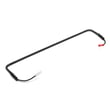
| Frost buildup, warming temps | Defrost system | Refrigerator defrost heater 242044008 |
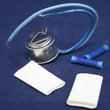
| Frost buildup, erratic defrost | Defrost sensing | Refrigerator defrost bi-metal thermostat 5303918202 |
| Warm refrigerator section, noisy airflow | Evaporator airflow | Refrigerator evaporator fan motor 241854301 |
Why it matters
Cooling issues usually get worse over time: warm air leaks and poor airflow force longer run times, increase frost, and make temperatures unstable. Catching the cause early helps protect food and reduces strain on the compressor.
Related DIY help
- If your model shows an error, use Frigidaire refrigerator error codes to narrow the problem faster.
Last updated: January 2026
Why is my Frigidaire top mount freezer not freezing?
If your Frigidaire FFHT1817LW3 top-mount freezer is not freezing, the most common causes are incorrect control settings, poor airflow from dirty condenser coils, a failed evaporator fan, or a door that is not sealing. Set the freezer colder, restore airflow, and check for frost buildup that points to a defrost problem.
Quick checks first (fastest wins)
- Confirm the freezer control is set colder; after any change, wait 24 hours before adjusting again (this is normal for this model). See the FFHT1817LW3 installation guide.
- Make sure the freezer door closes fully and the gasket seals all the way around.
- Listen for the evaporator fan in the freezer; it should run when the compressor is running.
- Check for heavy frost on the back freezer wall; that often indicates a defrost system issue.
- Clean dust from the condenser coils and make sure the toe grille area is not blocked.
What the symptoms usually mean
| What you notice | Most likely cause | What to do next |
|---|---|---|
| Freezer warm, fridge also warm | Dirty coils, condenser airflow issue, compressor not running | Clean coils; verify condenser fan (if equipped) and airflow |
| Freezer warm, fridge somewhat cool | Evaporator fan not moving air | Inspect fan blade and motor; clear ice obstruction |
| Frost blanket on freezer back wall | Defrost heater/thermostat issue | Check defrost components and wiring |
| Ice cream soft, temps fluctuate | Door leak or frequent openings | Inspect gasket, level cabinet, reduce warm-air entry |
Parts that commonly relate to “not freezing” on this model
If you find a specific failure, these are common repair items for cooling and airflow:
- Refrigerator evaporator fan motor 241854301 (moves cold air through the freezer and into the fresh food section)
- Refrigerator evaporator fan blade 5308000010 (can slip, crack, or ice-bind and stop airflow)
- Refrigerator defrost heater 242044008 (helps clear frost from the evaporator)
- Refrigerator defrost bi-metal thermostat 5303918202 (helps control defrost operation)
Why it matters
A freezer that is not freezing is usually an airflow or frost-management problem. Fixing airflow (fan, coils, vents) and sealing (gasket, leveling) prevents food spoilage and reduces compressor run time and energy use.
Last updated: January 2026