 Installation guide
 Owner’s manual
 Error Codes



Can I replace dishwasher parts myself?
Yes, for the Frigidaire FMB330RGB0 dishwasher, we recommend DIY replacement for many common parts if you have basic mechanical and electrical skills, shut off power and water first, and follow the steps in the FMB330RGB0 installation guide. For wiring-heavy repairs, use extra caution and stop if you find damaged wiring or leaks.
What you can usually replace yourself
These repairs are typically straightforward with basic tools:
- Door latch and door hardware
- Silverware basket and rack accessories
- Spray arm-related hardware (nuts, mounts)
- Tub gaskets and some seals (when accessible)
- Toe panel and outer door panel pieces
Safety steps we follow before any repair
The manual and installation instructions emphasize safe installation and operation practices. Before you start:
- Turn off electrical power at the breaker (dishwasher uses 120 V, 60 Hz)
- Shut off the water supply under the sink
- Confirm the dishwasher is stable and fully supported in the cabinet
- Wear gloves and eye protection when working around sheet metal
- Do not run the dishwasher with enclosure panels removed
Quick “DIY or technician?” guide
| Repair type | Good DIY candidate? | Typical reason |
|---|---|---|
| Door won’t latch/close | Yes | Mechanical alignment or latch wear |
| Leaking at the door/tub edge | Yes | Gasket wear or poor seating |
| Detergent cup not opening | Sometimes | Can be dispenser or control issue |
| Control panel or wiring harness work | No (most cases) | Higher shock/diagnostic risk |
Parts that commonly solve the problem
If your symptom matches, these model-compatible parts are common fixes:
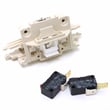
- Door not closing or starting: dishwasher door latch 5304535183
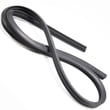
- Water at the tub opening edge: dishwasher tub gasket 5304512895
- Soap not dispensing: dishwasher detergent dispenser assembly 5304460911
Why it matters
DIY repairs can save time and money, but dishwashers combine electricity, water, and sharp metal edges. Following the correct shutoff steps and rechecking for leaks after reassembly helps prevent damage and unsafe operation.
Last updated: February 2026
What is the average lifespan of a Frigidaire dishwasher?
A Frigidaire dishwasher typically lasts 10 years. With consistent cleaning, correct detergent use, and prompt repair of leaks or draining problems, many units reach 12 years before major components (motor, pump, controls) make replacement more practical.
Typical lifespan and what affects it
Most dishwasher life is driven by how hard the unit works and how clean the wash system stays.
- Water hardness: hard water speeds up mineral buildup on spray arms and internal passages
- Usage frequency: multiple loads daily shortens life compared to a few loads per week
- Heating and drying habits: frequent heated dry adds wear to heaters and controls
- Loading and soil level: heavy soil and overloading strain the pump and wash action
- Maintenance: routine cleaning prevents clogs, odors, and poor wash performance
What “end of life” usually looks like
If your Frigidaire FMB330RGB0 is nearing the end of its service life, these are the most common patterns we see:
- Repeated leaks around the door or tub
- Poor cleaning even after cleaning spray arms and using fresh detergent
- Not draining or leaving standing water
- Won’t start or intermittent control response
- Loud grinding or humming from the motor/pump area
Quick symptom-to-next-step guide
| Symptom | Most likely area to check first | Common next step |
|---|---|---|
| Door won’t latch or cycle won’t start | Door latch | Inspect/replace dishwasher door latch 5304535183 |
| Water on floor at the front | Door seal area | Inspect tub gasket and door alignment |
| Dishes not getting clean | Spray system | Clean spray arm holes; verify water is hot |
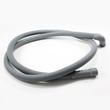
| Standing water after cycle | Drain path | Check drain hose routing and sink/disposer connection |
Maintenance that adds years
These habits do the most to extend dishwasher lifespan:
- Run hot water at the sink until it is hot before starting a cycle
- Clean the tub and check spray arm holes for debris monthly
- Use the correct detergent amount; avoid overfilling the dispenser
- Keep the door sealing surfaces clean and free of grit
- Follow the drain hose and high-loop/air-gap guidance in the FMB330RGB0 installation guide
Why it matters
A dishwasher near the 10-year mark can still be a great candidate for repair if the tub is sound and the leak and drain systems are maintained. Preventing leaks and drain backflow protects the motor, wiring, and controls from damage.
Last updated: February 2026
What are the commonly replaced parts in a dishwasher?
In a Frigidaire dishwasher like model FMB330RGB0, the most commonly replaced parts are the ones that affect starting, sealing, filling, washing, and dispensing: door latch and gaskets, spray-arm components, detergent dispenser parts, and water-level sensing parts. These typically fail from wear, leaks, or clogs.
Most common dishwasher parts customers replace
- Door latch and door hardware when the door will not close or the unit will not start (example: dishwasher door latch 5304535183)
- Tub and door sealing parts when you see leaks at the front or along the tub edge (example: dishwasher tub gasket 5304512895)
- Detergent dispenser parts when the cup will not open or detergent is left behind (example: dishwasher detergent dispenser assembly 5304460911)
- Spray-arm parts when dishes are not getting clean due to poor water spray (example: dishwasher spray arm 5304461012)
- Water-level sensing parts when filling is inconsistent or the cycle acts like it is not getting enough water (examples: pressure switch and hose)
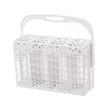
- Wear items inside the tub such as baskets and racks that crack, warp, or break (example: dishwasher silverware basket 5304461023)
Quick symptom-to-part guide
| Symptom | Most likely part area | Example part for FMB330RGB0 |
|---|---|---|
| Won’t start, door won’t latch | Door latch | Door latch 5304535183 |
| Leaks at door/tub edge | Tub gasket | Tub gasket 5304512895 |
| Detergent not dispensing | Dispenser assembly | Dispenser assembly 5304460911 |
| Not cleaning well | Spray arm / spray-arm mounting | Spray arm 5304461012 |
| Overfills or underfills | Water-level pressure switch / hose | Pressure switch 5304460977, hose 5304460976 |
Why it matters (and what to check first)
Your FMB330RGB0 cleans by filling to a set level and pumping water through rotating spray arms; if the unit cannot seal, fill correctly, or spray strongly, cleaning performance drops fast. Before replacing parts, we recommend these quick checks:
- Clean the filter assembly regularly; a clogged filter reduces wash pressure and cleaning results
- Rinse spray-arm holes and remove debris that blocks water jets
- Confirm the door closes firmly and the latch engages consistently
- Look for wetness or mineral tracks around the tub gasket area
- Use the cycle and loading guidance in the FMB330RGB0 owner’s manual to avoid overloading and blocked spray paths
Last updated: February 2026
What is the most common problem with a Frigidaire dishwasher?
For Frigidaire dishwashers like model FMB330RGB0, the most common issue we see is poor cleaning performance caused by restricted water flow (food debris in the filter area, blocked spray arm holes, or loading that prevents spray coverage). The next most common complaints are not draining, leaking at the door, and won’t start due to a door not latching.
Quick checks that fix the most problems
- Clean out large food particles from the filter area after each wash (this is a top cause of “dishes not clean”).
- Inspect spray arms for clogged holes and make sure they spin freely.
- Confirm the door closes firmly and nothing is sticking out to prevent sealing.
- Use fresh automatic dishwasher detergent; old detergent can leave residue and reduce cleaning.
- Use rinse aid and run hot water at the sink first; drying improves when water is at least 120°F.
For model-specific operating and care steps, follow the FMB330RGB0 owner’s manual.
Most common symptoms and what they usually point to
| Symptom | Most common cause | What to do first |
|---|---|---|
| Dishes not clean | Filter area clogged, spray arm blocked, loading issue | Clean filter area; clear spray arm holes; reload for spray clearance |
| Water left in tub | Partial drain restriction or normal small amount | Check for blockage; note a small amount can be normal |
| Leaking at door | Item preventing seal, oversudsing, worn gasket | Remove obstructions; use correct detergent; inspect gasket |
| Won’t start | Door not fully latched | Re-close door; check latch engagement |
When a part is the likely fix
If the dishwasher won’t run unless you push hard on the door, or it stops mid-cycle, the latch can be the culprit. For this model, the correct replacement is the dishwasher door latch 5304535183.
Other common part-related causes by symptom:
- Leaks at the tub opening: inspect the tub seal area and consider the dishwasher tub gasket 5304512895.
- Detergent not dispensing correctly: check the dishwasher detergent dispenser assembly 5304460911.
Why it matters
Restricted wash water flow and poor sealing create a chain reaction: dirty dishes, longer cycles, odors, and leaks. Keeping the filter area clear, loading correctly, and ensuring the door latches tightly prevents most repeat service issues.
Last updated: February 2026





