Installation guide
 Owner’s manual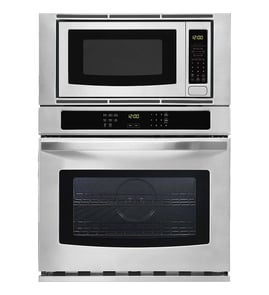


How do I know if my wall oven is 27 or 30?
For Kenmore model 79049613313, you can tell whether it is a 27-inch or 30-inch wall oven by measuring the cabinet cutout opening width (inside edge to inside edge). The installation specs list different cutout widths for 27-inch versus 30-inch units; match your measurement to the chart in the 79049613313 installation guide.
Measure the cutout the right way
Use a tape measure and measure the cabinet opening, not the oven door or trim.
- Measure cutout width: left inside cabinet edge to right inside cabinet edge
- Measure at front and back of the opening (cabinet sides can be out of square)
- Measure cutout height and cutout depth too; depth is critical for trim to sit flush
- Remove any filler strips or spacers that could change the opening size
- If the oven is installed, measure the opening from inside the cabinet if accessible, or compare to the model’s installation dimensions
Typical cutout width targets (what to compare)
The installation guide shows these common cabinet cutout widths:
| Nominal oven size | Typical cabinet cutout width | What that usually means |
|---|---|---|
| 27-inch | About 25 1/4 in | Fits a 27-inch class wall oven cutout |
| 30-inch | About 29 in | Fits a 30-inch class wall oven cutout |
Quick checks if you are between sizes
If your measurement is close, use these tie-breakers:
- Check the model/serial plate on the unit and confirm it matches 79049613313
- Compare your cutout dimensions to the diagrams in the 79049613313 installation guide
- Confirm you have the required front clearance for the door to open fully
- Verify the cabinet base can support the specified load
Why it matters
Wall ovens are sized to the cabinet cutout. Choosing 27-inch vs 30-inch affects fit, trim alignment, airflow clearances, and whether the oven can be secured properly without cabinet modification.
Last updated: January 2026
What are the disadvantages of a microwave oven combo?
A Kenmore wall oven/microwave combo like model 79049613313 saves space, but the main disadvantages are higher purchase and repair costs, more demanding installation requirements, and the fact that one failure can take out both cooking functions. See the 79049613313 installation guide for cabinet, leveling, and electrical requirements.
Common disadvantages to plan for
- Higher upfront cost than buying a separate wall oven and countertop microwave.
- More complex installation: cabinet cutout fit, a solid level support surface, and correct electrical supply all matter.
- More downtime risk: if the shared controls or power feed has an issue, you may lose both the oven and microwave.
- Repair complexity and cost: combo units often have more interlocks, sensors, and control boards.
- Ergonomics: depending on mounting height, the microwave can sit high for shorter users.
- Fewer layout choices: you are committed to the built-in configuration.
Installation and electrical drawbacks (what typically causes headaches)
Combo units are less forgiving than plug-in microwaves. For this model family, the installation guide emphasizes proper cabinet support, leveling, and using a correctly protected, grounded branch circuit sized to the unit’s wattage.
| Topic | Combo unit downside | What to do |
|---|---|---|
| Cabinet fit | Tight cutout tolerances | Verify cutout and support surface before ordering |
| Electrical | May require a dedicated circuit and correct breaker size | Match breaker/fuse to the serial plate wattage |
| Venting/clearance | Blocked openings can cause overheating | Keep ventilation openings clear |
Repair-related disadvantages (real-world examples)
If performance or safety issues show up, repairs can involve multiple systems.
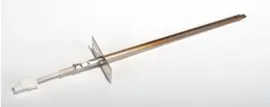
- Oven temperature problems may point to the range oven temperature sensor 5304504897.
- Microwave no-start or door-related issues can involve the microwave door interlock switch 5304493153.
- Overheating protection trips can involve the frigidaire range high-limit thermostat 318578506.
Why it matters
A combo unit is a great space-saver, but it is a higher-commitment appliance: installation accuracy, electrical protection, and timely repairs have a bigger impact on safety, reliability, and total cost of ownership.
Last updated: January 2026
What are the most common issues with 79049613313?
For the Kenmore 79049613313 wall oven/microwave combo, the most common problems are oven temperature issues, oven not heating or overheating, cooling fan noise or no airflow, and microwave door or power-interruption symptoms. Many of these trace to sensors, thermostats, fuses, switches, or control boards listed for this model.
Common symptoms and what they usually point to
- Oven temperature is inaccurate or fluctuates: failed or out-of-range range oven temperature sensor 5304504897
- Oven shuts off, overheats, or trips protection: high-limit thermostat issues such as frigidaire range high-limit thermostat 318578506
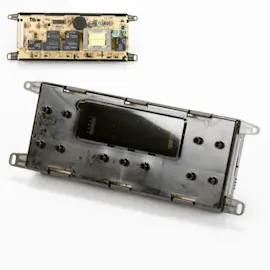
- Oven display dead, erratic, or won’t respond: control or power filtering problems such as wall oven control board 5304503496 or wall oven noise filter 5304492543
- Microwave won’t start or stops when door moves: door switch or latch problems such as microwave door interlock switch 5304493153 or microwave door latch spring 5304440316
- Unit loses power or has burned wiring at supply connection: damaged wiring or terminal block 5304409888
Quick checks we recommend before replacing parts
- Confirm the oven is getting proper power (a wall oven/microwave combo typically uses a dedicated circuit).
- If the oven is off-temperature, run a simple bake test with an oven thermometer and compare results.
- Listen for the cooling fan during and after baking; restricted airflow can cause overheating and shutdowns.
- For microwave door-related symptoms, check that the door closes firmly and the latch feels springy, not loose.
- If you see heat damage, melted insulation, or arcing marks, stop using the unit until repaired.
Symptom-to-part cheat sheet
| Symptom | Most likely area | Example part for this model |
|---|---|---|
| Bakes too hot/cold | Temperature sensing | Range oven temperature sensor |
| Shuts down when hot | Overheat protection | High-limit thermostat |
| No response/display issues | Controls/power filtering | Wall oven control board, noise filter |
| Microwave won’t start | Door safety circuit | Door interlock switch, latch spring |
Why it matters
These issues affect cooking accuracy, safety shutoffs, and microwave door interlocks. Catching a failing sensor, thermostat, or door switch early helps prevent repeated shutdowns, uneven baking, and nuisance power interruptions.
For model-specific diagnostics, wiring diagrams, and access steps, use the 79049613313 owner’s manual and the 79049613313 installation guide.
Last updated: March 2026