Owner’s manual
 View engine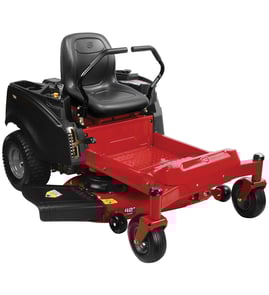



What is the advantage of a rear engine mower?
A rear-engine riding mower like the Craftsman 917277710 gives you a compact, easy-to-handle layout with good visibility of the cutting area and strong maneuverability for typical residential yards. It is a practical choice when you want a riding mower feel without the bulk of a larger lawn tractor.
Key advantages for most homeowners
- Tighter turning and easier trimming around trees, beds, and fence lines.
- Compact footprint for storage in many standard sheds or garages.
- Good operator sightlines to the front of the mower and cutting path.
- Simple, familiar controls for throttle, parking brake, and blade engagement.
- Efficient mowing habits are easy to follow (for example, planning passes so clippings discharge away from driveways and landscaping).
How this affects mowing performance
Rear-engine riders are built for routine lawn maintenance: they are typically lighter and more nimble than many larger tractors, which helps on smaller lots and around obstacles. For best cut quality and charging performance, we follow the operating guidance in the owner's manual and run at full throttle while mowing.
Quick comparison
| Feature | Rear-engine riding mower | Larger lawn tractor |
|---|---|---|
| Best for | Small to mid-size yards | Larger yards, heavier towing |
| Maneuverability | High | Medium |
| Storage space | Less | More |
| Typical attachments | Light-duty | More options, heavier-duty |
Why it matters
Choosing the right mower layout helps you mow faster with fewer missed spots and less backing up. It also supports safer operation, especially on slopes; we follow the manual guidance to avoid operating on slopes greater than 10 degrees.
Last updated: February 2026
What year is a Craftsman 917277710 riding mower?
The model number Craftsman 917277710 identifies the mower’s design and parts family, but the exact build year is determined by the serial number/date code on your machine, not the model number alone. Use the identification label on the mower and confirm the date code using the owner's manual.
How to find the build date on your mower
On Craftsman riding mowers, the most reliable way to determine the year is to read the product identification label (model and serial information) and decode the date information from the serial/date code.
- Look for the model/serial label under the seat, on the frame near the seat pan, or near the rear fender area.
- Write down the full serial number exactly as shown.
- Check for a date code format (often embedded in the serial number).
- Compare what you see to the identification guidance in the owner's manual.
- If the label is dirty or faded, clean it gently and take a clear photo before decoding.
Quick checks that help confirm you have the right identification label
Use these clues to make sure you are reading the correct tag and not an engine label.
| What you’re looking at | What it tells you | Why it matters |
|---|---|---|
| Mower model/serial label | Mower build identification | This is what dates the tractor itself |
| Engine model/type/code label | Engine build date | Engine date can differ from mower date |
| Deck tag/number | Deck assembly info | Helps match deck parts, not the mower year |
Why the year matters for parts and repairs
We use the build information to match the correct diagrams and components because Craftsman can change wiring, safety switches, and deck hardware across production runs even when the model family looks similar.
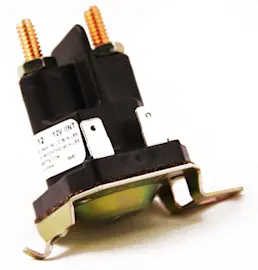
If you are troubleshooting a no-start or intermittent electrical issue while you’re identifying the mower, common wear items to inspect include the battery connections and the starter circuit components such as the lawn tractor starter solenoid 582042802 and harness connections.
Last updated: February 2026
What brand engine does Craftsman use?
Craftsman riding mowers, including model 917277710, are commonly equipped with engines supplied by major small-engine manufacturers such as Briggs & Stratton, Kohler, and Kawasaki; the exact engine brand depends on the specific mower configuration and the engine identification plate.
How to identify the engine brand on model 917277710
Use the engine compartment ID plate to confirm what your mower has. In the owner's manual, Craftsman notes the machine’s manufacturing number information is on a printed plate in the engine compartment.
- Open the engine compartment and locate the printed plate.
- Record the type designation (I.D.), model/type number, and serial number.
- Use those numbers when ordering parts to match the correct engine and mower configuration.
- If you are replacing electrical start components, match by model and wiring layout, not just by appearance.
What you will typically see on Craftsman riding mowers
Craftsman has used multiple engine suppliers across different mower lines and years. Here is a practical way to think about it:
| What you need | Where to find it | Why it helps |
|---|---|---|
| Engine brand (Briggs & Stratton, Kohler, Kawasaki) | Engine shroud or ID plate | Confirms correct tune-up and service parts |
| Engine model and type code | Engine ID plate | Ensures correct carburetor, starter, and ignition parts |
| Mower model number (917277710) | Mower model tag | Ensures chassis and deck parts match |
Why it matters
Engine brand and engine model determine the correct maintenance items (oil type, filter style, spark plug) and starting/charging parts. For example, a no-crank issue may point to a solenoid or wiring problem; using the correct replacement part helps avoid miswiring and repeat failures.
Parts that often relate to engine starting and electrical issues
If you are troubleshooting a starting problem on this mower, these model-linked parts are commonly involved:
Last updated: February 2026
What are common problems with Craftsman riding mowers?
Common problems on a Craftsman riding mower like model 917277710 include no-start or weak-crank issues, rough running or stalling, deck blades that will not engage, vibration, overheating, and drive or hydrostatic performance problems (slow, uneven, or no movement). Many of these trace back to basic maintenance, belt condition, and electrical switch or connection faults; see the owner's manual troubleshooting section for model-specific checks.
Most common symptoms and what usually causes them
- Won’t start or cranks poorly: weak battery, loose/corroded battery cables, blown fuse, or a failed starter circuit component such as the lawn tractor starter solenoid 582042802
- Starts then stalls or runs rough: fouled spark plug, fuel contamination, carburetor issues, or restricted airflow
- Deck won’t engage: loose deck drive belt, loose electromagnetic coupling contact, or a faulty blade/PTO switch such as the switch.pto.8 582107601
- Moves slowly or not at all: park brake left on, bypass linkage engaged, transmission drive belt slack/off, or air trapped in the hydraulic system
- Vibration or poor cut quality: loose or unbalanced blades, bent blades, dull blades, or grass buildup under the deck
- Overheating: clogged air intake/cooling fins, engine overloaded, poor ventilation, or low oil
Quick checks we recommend before replacing parts
- Park safely, remove the key, and let the engine cool.
- Confirm the park brake is released and the bypass linkage is not engaged (a common “won’t move” cause).
- Inspect belts for glazing, cracking, slack, or derailment (deck belt and transmission drive belt).
- Check battery terminals for tight, clean connections; verify the charging lead is connected.
- Look for grass and debris packed under the deck; clean the underside after use as described in the owner's manual.
Symptom-to-system guide
| Symptom | Most likely system | Typical next step |
|---|---|---|
| Clicks but won’t crank | Starting/electrical | Check battery cables, fuse, then solenoid wiring |
| Deck won’t engage | PTO/deck drive | Check belt tension and PTO switch connection |
| Slow or no drive | Hydrostatic/drive | Verify park brake and bypass linkage; inspect drive belt |
| Uneven cut | Deck/blades/tires | Check tire pressure, blade condition, deck leveling |
Why it matters
Catching simple issues early (belt slack, bypass linkage position, dirty cooling fins, loose electrical connections) prevents bigger failures like overheated engines, damaged pulleys, and premature hydrostatic wear.
Last updated: February 2026
How to find Craftsman mower parts?
To find the right parts for your Craftsman 917277710 riding mower, match parts to the mower’s identification information (type designation/model and serial number) and then use that model to select the correct diagrams and replacement parts. The fastest path is to confirm the ID plate details first using the owner's manual.
Step 1: Confirm the mower identification info
Your mower’s identification plate is the key to accurate parts matching.
- Locate the printed plate affixed in the engine compartment (the manual calls this the manufacturing number plate).
- Record the type designation (I.D.), model/type number, and serial number.
- Keep that information handy when ordering parts.
- If the mower has been serviced before, compare the plate info to any service paperwork to avoid mix-ups.
Step 2: Use the model number to choose the correct parts list
Once you have the ID information, use the model number 917277710 to select parts by diagram section (for example: electrical, deck, steering, or hardware).
Common part categories customers replace include:
- Electrical starting parts (starter solenoid, wiring)
- Blade drive and deck parts (idler pulleys, springs)
- Fasteners and hardware (lock nuts, washers, cotter pins)
- Fuel system fittings
- Seat and body parts
Examples of parts available for this model
If you are troubleshooting a no-start or deck engagement issue, these are examples of parts that commonly come up for Craftsman riding mowers and are available for model 917277710.
| Symptom or task | Part to check/replace | Example part on this model page |
|---|---|---|
| Engine will not crank | Starter circuit switching | Lawn tractor starter solenoid 582042802 |
| Blades will not engage | PTO/blade switch | Switch.pto.8 582107601 |
| Deck belt squeal or poor tension | Idler pulley wear | Husqvarna lawn tractor deck idler pulley 532196106 |
Why it matters
Craftsman riding mowers often have multiple similar-looking versions; using the exact ID plate information prevents ordering the wrong deck parts, electrical parts, or hardware that will not fit.
Last updated: February 2026