Owner’s manual
 Error Codes



What is the most common problem with a GE refrigerator?
The most common GE refrigerator problem is a cooling complaint (fresh food too warm, freezer too warm, or both). On the GE DSE25JGHECBB, the fastest wins are checking temperature settings, cleaning condenser coils, and confirming the unit is not in a defrost cycle; our DSE25JGHECBB owner's manual troubleshooting section walks through these basics.
Most common causes behind “not cooling”
- Dirty condenser coils causing poor heat release and longer run times
- Frost buildup from a defrost system issue (heater, thermostat, sensor)
- Evaporator fan problem (weak airflow to the refrigerator section)
- Door gasket not sealing, letting warm air and moisture in
- Temperature sensing or control issue (bad sensor or board)
Quick checks we recommend first (10 to 20 minutes)
- Confirm controls are not set to OFF and adjust to a colder setting.
- If the refrigerator seems “dead,” wait about 30 minutes; it may be in a defrost cycle.
- Listen for normal operating sounds (gurgling, sizzling during defrost, water dripping into the drain pan).
- Clean condenser coils and make sure airflow around the cabinet is not blocked.
- Check doors close fully and seals are clean and making full contact.
Common symptoms and what they usually point to
| Symptom | Most likely area to check | Example part for this model |
|---|---|---|
| Freezer cold, fresh food warm | Evaporator fan or airflow restriction | Refrigerator evaporator fan motor WR60X10318 |
| Frost on back wall of freezer | Defrost system | Refrigerator defrost heater WR51X10055 |
| Temps swing or seem inaccurate | Temperature sensing | GE profile refrigerator temperature sensor WR55X10025 |
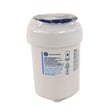
| No ice or weak water flow | Water supply, filter, inlet valve | GE refrigerator water filter MWFP |
Why it matters
Cooling problems usually get worse over time; catching airflow, defrost, or sealing issues early helps protect food, reduce energy use, and prevent heavy frost buildup that can block vents.
Last updated: January 2026
What are signs my GE ice maker is broken?
If your GE DSE25JGHECBB ice maker is broken, you typically see no ice production (after the normal 12 to 24 hour startup window), very slow output, or cubes that do not eject into the bin. You may also notice leaking, repeated buzzing without ice, or the feeler arm not moving freely; check the DSE25JGHECBB owner's manual for model-specific operating details.
Common signs the ice maker has a problem
- No ice after 24 hours of normal operation
- Ice cubes are very small, hollow, or misshapen
- Cubes freeze in a clump or do not drop into the bucket
- Water leaks in the freezer or around the ice maker area
- You hear the fill buzz, but the mold never fills or never ejects
- The feeler arm is stuck, blocked by ice, or cannot sweep freely
Quick checks we recommend first (before replacing parts)
- Confirm freezer temperature: This style of GE ice maker fills when the freezer is cold enough (around 15°F). If the freezer is warmer, ice production slows or stops.
- Check the feeler arm: Make sure nothing interferes with its sweep; a blocked arm can stop ice production.
- Purge and clear the water system: After filter work, run water to clear air and prevent sputtering.
- Discard initial batches: After a new hookup or service, throw away the first few batches to clear the water line.
What the symptoms usually point to
| Symptom | Most likely area to check | Example part for this model |
|---|---|---|
| No ice, no fill sound | Water supply, inlet valve, ice maker power switch | Refrigerator water valve WR57X33326 |
| Slow ice or small cubes | Restricted water flow, filter, low water pressure | GE refrigerator water filter MWFP |
| Ice maker cycles but jams or won’t drop cubes | Ice maker module, bin/door issues, ice path obstruction | GE refrigerator ice maker kit WR30X10093 |
Why it matters
An ice maker that is starved for water (clogged filter, weak inlet valve, air in the line) can make tiny cubes, jam, or stop completely. Catching the cause early helps prevent leaks, ice buildup, and inconsistent freezer temperatures.
Last updated: January 2026
Why is my GE side by side refrigerator not dispensing ice?
If our GE DSE25JGHECBB makes ice but will not dispense it, the most common causes are a jammed ice chute, clumped ice in the bin, the dispenser being locked, or the ice bin not seated correctly. We recommend clearing the chute and resetting normal ice flow steps in the DSE25JGHECBB owner's manual.
Quick checks that fix most “no ice dispense” problems
- Make sure the dispenser is not locked; press and hold the Lock pad for 3 seconds to unlock.
- Pull the ice bin out, break up clumps, discard old ice, and reinstall the bin fully.
- Check the ice chute in the freezer door for a cube stuck in the opening; remove any blockage.
- Confirm the icemaker is turned on and the freezer is cold enough to prevent soft, clumping ice.
- If the bin recently ran empty, restore the ice level by dispensing a few cubes after the first batch drops.
Step-by-step: clear a jam and restore dispensing
- Remove the ice bin and inspect the auger area for packed ice.
- Clear the door chute from the bin side (never put fingers into the crusher opening).
- Reinstall the bin so it seats squarely and the door closes normally.
- Dispense a small amount of cubed ice to confirm the auger is turning.
What the symptoms usually mean
| Symptom | Most likely cause | What to do first |
|---|---|---|
| Motor sound but no ice | Ice clump or chute jam | Empty bin, break up clumps, clear chute |
| No sound when pressing lever | Dispenser locked or switch issue | Unlock controls, then retest |
| Ice dispenses slowly | Freezer too warm, clumping | Lower freezer setting one step |
| Ice maker works but dispenser never does | Bin not seated or chute blocked | Reinstall bin, clear chute |
Parts that commonly relate to dispensing issues
If the chute door is not opening or sealing correctly, inspect the refrigerator dispenser ice chute door kit WR17X11653. If ice is being made but the bucket is damaged or not engaging, check the ice container assembly.
Why it matters
A blocked chute or clumped ice forces the dispenser to work harder, increases noise, and can lead to repeated jams. Keeping the bin clear and the freezer cold helps the auger move ice smoothly and keeps dispensing consistent.
Last updated: January 2026
How to tell if a GE water filter is clogged?
On the GE DSE25JGHECBB side-by-side refrigerator, a clogged water filter shows up as slow water dispensing, weak ice production, or a filter indicator turning orange or red (if your dispenser has one). Replacing the filter typically restores normal flow and ice maker fill.
Quick checks that point to a clogged filter
- Water flow at the dispenser is noticeably slower than normal.
- Ice cubes are smaller or the ice maker is producing fewer cubes.
- The filter indicator light turns orange (replace soon) or red (replace now), if equipped.
- Water sputters after dispensing (often happens when the filter is overdue or just replaced).
- Flow improves when the filter is removed and a bypass plug is installed.
Simple water flow test (at the dispenser)
Use this quick test to confirm low flow:
- Dispense water into a large measuring cup for 20 seconds.
- If you collect less than about 8 ounces, the flow is typically inadequate and the filter is a top suspect.
For filter location, indicator behavior, and replacement steps specific to this model, use the DSE25JGHECBB owner’s manual.
What to do next (most effective fixes first)
- Replace the filter with the correct cartridge for this model: GE refrigerator water filter MWFP.
- After installing a new filter, flush the system by dispensing about 1-1/2 gallons (roughly 3 minutes) to clear air and carbon fines.
- If you have a reverse osmosis (RO) system feeding the refrigerator, use the refrigerator’s filter bypass plug to prevent slow flow and hollow ice.
- If flow is still weak after a new filter, check for a restricted household shutoff valve or a kinked water line.
Common symptoms and likely causes
| Symptom | Most likely cause | Best first step |
|---|---|---|
| Slow dispenser flow | Clogged filter | Replace filter, then flush |
| No water and no ice | Filter clogged or supply issue | Try bypass plug; verify water supply |
| Small/hollow ice cubes | Low water flow (often filter or RO setup) | Replace filter or use bypass with RO |
Why it matters
Low flow makes the ice maker underfill and can cause dispenser sputtering; replacing the filter on schedule (about every 6 months, sooner with heavy use or sediment) helps keep water taste, flow, and ice production consistent.
Last updated: January 2026