Owner’s manual
 Error Codes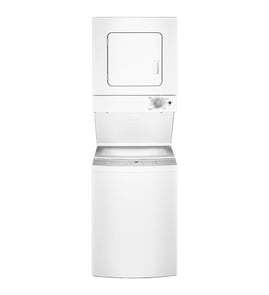


What model Kenmore washer do I have?
If you have a Kenmore stacked laundry center, the model number is printed on the appliance’s rating label. For this unit, the model is Kenmore 2671532412; confirm it by matching the number on the label to what’s shown in the owner's manual.
Where to find the model number on a stacked laundry center
On Kenmore laundry centers like 2671532412, the rating label is typically in one of these spots:
- Behind the washer lid (lift the lid and look around the rim or underside)
- Inside the washer opening near the top edge
- On the back panel of the unit near the power cord
- Along the side of the cabinet when you open the washer lid
What the model number looks like (and why it matters)
Kenmore model numbers are usually a long number (often 8 to 12 digits) or a number with a prefix on some products. Using the exact model number ensures the parts list matches your washer and dryer sections correctly.
Why it matters
The same-looking Kenmore laundry center can use different belts, lid locks, or control boards. Matching the model number prevents ordering the wrong replacement part.
Quick check: model number vs. common part lookups
Use this table to decide what to do next.
| What you see on the label | What it means | What to do next |
|---|---|---|
| 2671532412 | Exact model match | Use the parts list for 2671532412 |
| Similar number (one digit different) | Different revision/model | Use the parts list for the exact number on your label |
| Label missing or unreadable | Model not confirmed | Use the how to find your appliance model number (and what it means for parts) guide to locate alternate label positions |
If you’re trying to identify the washer section specifically
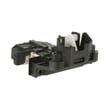
On a laundry center, the washer and dryer share one model number, but troubleshooting often points to washer-specific parts. For example, if the washer will not start or won’t lock, the washer lid lock is a common match for this model: washer lid lock WH44X10288.
Last updated: February 2026
Is it worth repairing a Kenmore washing machine?
Yes, repairing a Kenmore washer is worth it when the problem is a common, replaceable part and the machine is in otherwise good condition. For the Kenmore 2671532412 laundry center, repairs like a lid lock, drain pump, or drive belt replacement usually cost far less than replacing the entire unit; major tub or basket repairs are the tipping point.
Quick rule of thumb (repair vs. replace)
We use these practical guidelines for a stacked washer/dryer like model 2671532412:
- Repair when the issue is isolated (won’t spin, won’t drain, lid won’t lock).
- Repair when the fix is a single part and labor is straightforward.
- Replace when multiple major systems are failing (washer plus dryer, or repeated breakdowns).
- Replace when the outer tub or basket kit is needed and the unit is older.
- Repair when the cabinet, wiring, and controls are in good shape.
Common repairs that are usually worth it on this model
These are frequent, high-impact fixes for the washer side of a laundry center:
- Lid won’t lock or cycle won’t start: washer lid lock WH44X10288
- Won’t drain or leaves water in tub: washer drain pump WH23X10040
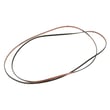
- Won’t agitate or spin (belt-driven symptoms): washer drive belt WH01X20436
- Intermittent operation or no response (after power checks): electronic control board (compare cost carefully)
Cost-impact comparison
| Repair type | Typical symptom | Usually worth it? |
|---|---|---|
| Lid lock replacement | Won’t start, lid error, won’t spin | Yes |
| Drain pump replacement | Won’t drain, humming, standing water | Yes |
| Drive belt replacement | Weak/no spin, burning rubber smell | Yes |
| Outer tub and basket kit | Loud roaring, severe leaks, basket damage | Often no |
Why it matters
A laundry center combines two appliances in one footprint. When a washer repair is small (lid lock, pump, belt), you restore full use quickly and avoid the higher cost and hassle of replacing a stacked unit. When the repair involves the tub and basket, the parts cost and labor usually outweigh the value.
Before you decide
Use the owner's manual to confirm basic checks (cycle selection, lid closure, load size) and to identify symptoms that point to a specific part.
Last updated: February 2026
Where is the thermal fuse on a Kenmore stackable dryer?
On the Kenmore laundry center model 2671532412, the dryer thermal fuse is typically mounted on the blower housing inside the dryer cabinet, close to where the exhaust duct connects. You access it by removing the appropriate cabinet panel and locating the small, flat fuse attached with two wires (usually near the high-limit thermostat). See the 2671532412 owner's manual for the correct access panel and fastener locations.
What you will usually see when you find it
- A small, flat plastic or metal-bodied fuse mounted with 1 to 2 screws
- Two wire terminals (spade connectors)
- Placement on or near the blower housing (airflow path), not on the drum itself
- Nearby safety devices such as a high-limit thermostat
Safe access steps (stacked laundry center)
- Unplug the laundry center (and shut off gas if your unit is gas).
- Pull the unit forward enough to work safely behind or in front.
- Remove the panel that provides access to the blower housing area.
- Locate the blower housing and follow the exhaust outlet path; the thermal fuse is mounted on that housing.
- Take a photo of the wiring before disconnecting anything.
How to confirm it is the thermal fuse
Use a continuity test with a multimeter (power disconnected).
| Test result | What it means | What to do next |
|---|---|---|
| Continuity (closed circuit) | Fuse is good | Check venting, thermostats, door switch, and controls |
| No continuity (open circuit) | Fuse is blown | Replace the fuse and correct the overheating cause |
Why it matters
A blown thermal fuse is a safety cutoff that stops the dryer from running or heating when airflow is restricted or temperatures get too high. Replacing the fuse without fixing the root cause (often a clogged vent, crushed duct, or lint buildup) can lead to repeat failures.
Common causes of a blown thermal fuse
- Blocked or long vent run
- Crushed or kinked exhaust duct
- Lint buildup in the blower housing or duct trap
- Failed thermostat causing overheating (for example, a high-limit thermostat)
If you are troubleshooting overheating-related symptoms, the dryer high-limit thermostat WE4M137 is one of the safety parts commonly checked in the same area.
Last updated: February 2026