 Owner’s manual
 Error Codes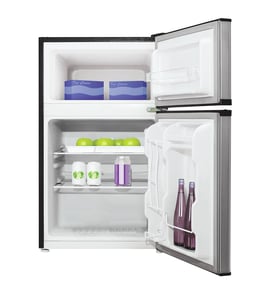



Where can I buy discontinued refrigerator parts?
For a discontinued part for your Frigidaire FFPA4422UM compact refrigerator, start by confirming the exact model and part identification in the owner's manual. Then check for compatible substitute parts, used parts, or professional repair options (especially for sealed-system items that involve refrigerant).
Best ways to track down a discontinued part
- Use the model number FFPA4422UM and the part description from the manual or parts diagram to avoid mismatches.
- Look for a substitute or updated replacement part number (common when manufacturers revise designs).
- Check for used or refurbished parts from appliance recyclers or parts resellers.
- Ask a qualified appliance technician to source the part through service channels or salvage networks.
- If the issue is cosmetic (bins, shelves, door parts), consider repairing the existing part when safe and practical.
Safety note for compact refrigerators (important)
This model uses flammable refrigerant, so we recommend leaving sealed-system repairs (refrigerant lines, compressor area, punctured tubing) to trained service personnel. The manual warns not to puncture refrigerant tubing and to follow all safety precautions before servicing. Refer to the owner's manual before attempting any repair.
Quick decision guide
| What you need | Best option | Why |
|---|---|---|
| Electrical or control part | Substitute part or technician sourcing | Reduces wrong-part returns and wiring risk |
| Shelf/bin/door accessory | Used part or repair existing | Often discontinued first; usually non-electrical |
| Cooling system issue | Technician service | Refrigerant is flammable; specialized tools required |
Why it matters
Discontinued parts are easiest to match when you use the exact model identification and the correct part description. That also helps you avoid unsafe repairs, especially on compact refrigerators where refrigerant tubing damage can create a fire risk.
Last updated: February 2026
What are the main 5 parts of a refrigerator?
The five main working parts in a refrigerator cooling system are the compressor, condenser, metering device (capillary tube/expansion device), evaporator, and thermostat/temperature control. In your Frigidaire FFPA4422UM compact refrigerator, these parts work together to move heat out so food stays cold (see the FFPA4422UM owner's manual).
The “big 5” and what each one does
- Compressor: pumps refrigerant through the sealed system; it is the main driver of cooling.
- Condenser coil: releases heat to the room as refrigerant condenses back to a liquid.
- Metering device (capillary tube/expansion device): drops pressure so refrigerant can get cold.
- Evaporator coil: absorbs heat from inside the cabinet as refrigerant evaporates.
- Thermostat/temperature control: senses temperature and cycles cooling to maintain the set point.
Common “major” parts people also mean (not part of the sealed system)
Many customers call these “main parts” because they affect temperature, efficiency, and leaks:
- Door gasket (keeps warm air out)
- Shelves/bins/crisper (storage components; vary by model)
- Interior light (some models)
- Defrost/drip tray setup (some models)
Quick reference table
| Part | System area | What you notice when it fails |
|---|---|---|
| Compressor | Sealed system | Not cooling, clicking, or runs but no cold air |
| Condenser | Back/bottom heat exchange | Poor cooling, cabinet feels hotter than normal |
| Metering device | Refrigerant restriction | Frost pattern issues, weak cooling |
| Evaporator | Inside cooling coil area | Warm fridge, unusual frost/ice buildup |
| Thermostat/control | Temperature sensing | Too warm, too cold, or won’t cycle properly |
Why it matters
Knowing these core components helps you troubleshoot smarter. For example, the manual stresses proper air circulation and avoiding extreme room temperatures (below 50°F or above 110°F) because those conditions can make even a healthy cooling system perform poorly.
Last updated: February 2026
Can I look up Frigidaire parts by model number?
Yes. For your Frigidaire compact refrigerator model FFPA4422UM, you can look up compatible replacement parts by searching the full model number and then matching parts to the correct diagram and description; the owner's manual also helps you confirm features and configuration.
How to look up parts by model number
- Use the complete model number exactly as shown on the rating label: FFPA4422UM.
- Confirm the appliance type is compact refrigerator so you land on the correct parts list.
- Use the parts diagrams to match the part by location and shape, not just by name.
- Compare key details (finish, door swing, shelf style) to avoid ordering a similar-looking part.
- Keep your purchase record handy if you are also checking warranty coverage.
Where to find the model number on a compact refrigerator
Most compact refrigerators place the model/serial label:
- Inside the fresh food compartment on a side wall
- Near the crisper area (if equipped)
- On the cabinet frame behind the door
What to verify before ordering
| What to verify | Why it matters | What to match |
|---|---|---|
| Exact model number | Ensures correct parts list | FFPA4422UM (no missing characters) |
| Part location in diagram | Prevents ordering the wrong item | Section and callout number |
| Electrical vs. mechanical part | Avoids compatibility issues | Voltage/connector style vs. mounting style |
| Symptom you are fixing | Helps choose the right part | Cooling, light, noise, odor, door seal |
Why it matters
Compact refrigerator parts often look interchangeable, but small differences (door configuration, control style, light housing, or shelving) can change which parts fit. Using the full model number and confirming against the documentation reduces returns and downtime.
Last updated: February 2026
What is the most common problem with Frigidaire refrigerators?
Cooling complaints are the most common issue we see with Frigidaire refrigerators, including the Frigidaire FFPA4422UM compact refrigerator. The usual symptoms are the refrigerator running but not staying cold enough, temperature swings, or the unit not running at all; many are caused by control settings, airflow, or basic power problems.
Most common symptoms (and what they usually point to)
- Refrigerator not running: plug not fully seated, blown fuse or tripped breaker, control set to “0” or “OFF”, or the unit is in a defrost cycle
- Refrigerator too warm: control set too warm, door not sealing, frequent door openings, or poor airflow around the cabinet
- Refrigerator too cold: control set too cold (items freezing in the fresh-food section)
- Noisy or vibrating: cabinet not level, floor is weak, or normal operating sounds amplified by placement
- Odors: interior needs cleaning, spills, or uncovered foods
Quick checks we recommend first (FFPA4422UM)
Start with the “Common Occurrences” and “Before you call” troubleshooting in the FFPA4422UM owner's manual.
- Confirm the plug is fully seated in the outlet.
- Check the home fuse or breaker (the manual references a 15 amp time-delay fuse).
- Verify the control is not set to “0” or “OFF”.
- If it just stopped, wait 20 minutes in case it is in a defrost cycle.
- After any temperature change, allow 24 hours for temperatures to stabilize.
Temperature adjustment guide (refrigerator-only)
| Symptom in the refrigerator section | What to change | What to expect |
|---|---|---|
| Too warm | Set the control colder | Stabilizes in about 24 hours |
| Too cold or items freezing | Set the control warmer | Stabilizes in about 24 hours |
| Temperature swings | Keep door closed, avoid overloading, recheck setting | Improves after 24 hours |
Why it matters
Most “not cooling” calls are resolved by correcting settings, improving airflow, and giving the compact refrigerator time to stabilize. That protects food quality and prevents unnecessary parts replacement.
Last updated: February 2026





