Owner’s manual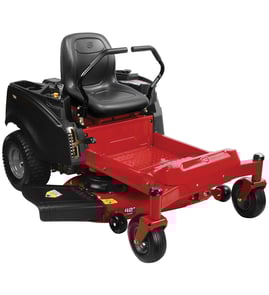



What is the difference between a front engine and rear engine riding lawn mower?
A front-engine riding mower carries the engine ahead of the operator, while a rear-engine riding mower (like Cub Cadet model 17AI2ACP756) places the engine behind the seat. Rear-engine designs typically improve forward visibility and maneuverability; front-engine designs typically support larger frames and heavier-duty cutting systems.
| Feature | Front-engine rider | Rear-engine rider (17AI2ACP756 type) |
|---|---|---|
| Engine location | In front of operator | Behind operator |
| Typical best for | Larger yards, heavier work | Smaller to mid-size yards, tighter turns |
| Visibility | Hood can block some view | Clearer view of cutting path |
| Weight balance | More weight up front | More weight to the rear |
- Turning and trimming: Rear-engine riders usually feel easier to steer around trees and beds.
- Ride and traction: Front-engine riders often feel more planted on uneven ground because of their larger chassis.
- Service access: Front-engine layouts can make some engine checks simpler; rear-engine layouts can make deck access feel more open.
- Noise and heat: Rear-engine riders put the engine closer to the operator, so you may notice more engine sound behind you.
Regardless of engine location, stability on hills is the big safety separator. For this Cub Cadet rear-engine rider, we follow the slope guidance in the owner's manual:
- Do not mow slopes over 15°.
- Mow across slopes, not up and down.
- Avoid sudden speed changes that can cause a tip-over.
- If traction is lost, disengage blades and proceed straight down slowly.
Choosing front-engine vs rear-engine affects how the mower handles, what size yard it fits best, and how stable it feels on turns and slopes. Matching the design to your terrain helps you mow faster, cut more evenly, and operate more safely.
Last updated: February 2026
Is the Cub Cadet engine a good engine?
Yes. Cub Cadet riding mowers like model 17AI2ACP756 are built around proven small-engine designs; when they are maintained on schedule (oil changes, clean air filter, fresh fuel), they deliver strong starting, consistent power, and long service life for typical residential mowing.
A good mower engine is one that starts reliably, holds RPM under load, and stays leak-free and cool. For Cub Cadet rear-engine riders, engine satisfaction usually comes down to maintenance and correct operation.
Key signs your engine is performing well:
- Starts without extended cranking (cold and hot)
- Runs smoothly at full throttle with minimal surging
- Maintains blade speed in thicker grass
- No excessive smoke, fuel smell, or oil consumption
- No abnormal knocking, backfiring, or overheating
Use the service intervals and specifications in your owner's manual. These items have the biggest impact on engine life and performance:
- Change engine oil on schedule and keep the level correct
- Keep cooling fins and air intake screens clear of debris
- Replace or clean the air filter as required
- Use fresh, clean gasoline; avoid old fuel in storage
- Inspect the muffler area and keep the exhaust path clear
| What you want | What to do | What you’ll notice |
|---|---|---|
| Reliable starting | Fresh fuel, clean air filter, good ignition | Faster starts, less cranking |
| Strong cutting power | Run at full throttle while mowing | Less bogging in tall grass |
| Long engine life | On-time oil changes, clean cooling | Lower temps, fewer leaks |
| Fewer no-start issues | Maintain ignition and wiring connections | More consistent spark |
A rear-engine riding mower depends on steady engine RPM to keep the deck cutting cleanly and to protect belts and pulleys from extra strain. Good engine performance also reduces vibration, improves fuel efficiency, and helps the mower last longer overall.
Last updated: February 2026
Does the Cub Cadet 17AI2ACP756 have a hydrostatic transmission?
Yes. The Cub Cadet 17AI2ACP756 uses a hydrostatic drive system (hydrostatic transmission), which provides smooth speed control without manual gear shifting.
We recommend checking the transmission and drive section in the owner's manual for the exact drive description and any model-specific notes.
Common signs you have a hydrostatic setup:
- Forward and reverse are controlled by a pedal or lever, not a shift pattern
- Speed changes smoothly while the engine stays at a steady throttle
- There is typically a transmission bypass or freewheel feature for moving the mower with the engine off
Hydrostatic drive is designed for easy speed changes and consistent traction. You generally run the engine at a higher throttle for mowing, then control ground speed with the drive control.
| Drive type | How you change speed | What you feel | Typical upkeep |
|---|---|---|---|
| Hydrostatic | Pedal/lever varies pump output | Smooth, variable speed | Usually sealed; service as needed |
| Manual/gear | Shift gears | Stepped speeds | Clutch/belt adjustments more common |
Hydrostatic systems are durable, but they can be damaged by improper handling.
Follow these basics:
- Avoid towing the mower unless your manual specifically allows it
- Use the bypass/freewheel procedure when moving it without engine power
- Keep the drive area clean; debris buildup can affect belts, pulleys, and cooling airflow
- If you notice loss of drive, surging, or uneven tracking, inspect linkage and drive components first
Knowing you have hydrostatic drive helps you use the correct operating method (steady throttle, variable ground speed) and avoid practices like towing that can shorten transmission life.
Last updated: February 2026
How much is a used Cub Cadet 17AI2ACP756 worth?
A used Cub Cadet 17AI2ACP756 rear-engine riding mower is typically worth about $500 to $1,500, with the final value driven mostly by engine hours, overall condition, and whether the mower deck and drive system operate smoothly. Use the pricing and maintenance guidance in the owner's manual to judge condition and upkeep.
These ranges reflect common private-party pricing for rear-engine riders in the U.S. market.
- $500 to $800: Runs but needs work (worn tires, weak battery, rough idle, deck issues)
- $800 to $1,200: Good runner, normal wear, cuts evenly, no major leaks
- $1,200 to $1,500: Very clean, well-maintained, strong start, tight steering, good deck condition
- Above $1,500: Only when condition is exceptional or recent major service adds real value
- Engine hours: Lower hours generally raise value; very high hours lower it.
- Cut quality: Uneven cut often points to deck wear, spindle issues, or belt/pulley problems.
- Drive performance: Slipping, surging, or poor hill performance reduces value quickly.
- Maintenance records: Oil changes, blade service, and tune-ups support a higher price.
- Cosmetics and rust: Faded plastics are normal; heavy rust on the deck or frame is not.
Use this as a quick, consistent way to evaluate a used 17AI2ACP756.
| Check | What “good” looks like | What lowers value |
|---|---|---|
| Cold start | Starts quickly without excessive smoke | Hard starting, heavy smoke |
| Deck engagement | Smooth engagement, no squeal | Belt squeal, vibration |
| Cut test | Even cut, no scalping | Streaking, uneven height |
| Leaks | Dry engine and transaxle area | Oil or fuel seepage |
| Steering/brakes | Predictable steering, solid stopping | Wandering, weak braking |
A rear-engine riding mower’s resale value is mostly a reflection of how reliably it will mow for the next owner. Consistent maintenance and correct adjustments (especially deck and drive-related) protect both performance and price; our owner's manual outlines the service intervals and adjustment basics.
Last updated: February 2026
How do I find the right Cub Cadet part?
For your Cub Cadet model 17AI2ACP756 rear-engine riding mower, the right part match starts with the exact model number and the correct parts diagram for that model. Use the exploded views and part listings in the owner's manual and then match by part name and part number before ordering.
- Confirm the model number is 17AI2ACP756 (use the product label, commonly under the seat or near the frame).
- Open the parts diagrams for the exact model and locate the assembly (deck, drive, steering, engine area).
- Identify the part by its callout number in the diagram, then match the part number.
- Compare the part description to what you are replacing (nut vs. flange nut, bolt length, pulley diameter, etc.).
- If your mower has variations (deck size, transmission type, or serial break), match the correct variation shown for your unit.
- Order using the exact part number to avoid fit issues.
| Part type | What to double-check | Example from this model’s parts list |
|---|---|---|
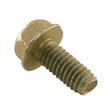
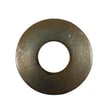
| Nuts and washers | Thread size, flange vs. lock, quantity needed | Mtd lawn and garden equipment nut 712-04064 |
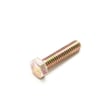
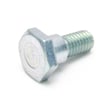
| Fasteners | Diameter, thread pitch, length, self-tapping vs. machine | Mtd lawn & garden equipment self-tapping bolt, 5/16-18 x 3/4-in 710-1260A |
| Pulleys | Outside diameter and bore style | Pulley, idler, 4.25" dia. 756-04129 |
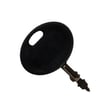
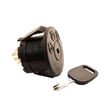
| Electrical parts | Connector style and key positions | Ignition switch 725-04228 |
Using the exact 17AI2ACP756 lookup prevents ordering a part that looks similar but does not fit your deck, drive system, or hardware stack-up. Correct fit helps avoid vibration, belt misalignment, and premature wear.
Last updated: February 2026