


How do I reset an Amana air conditioner?
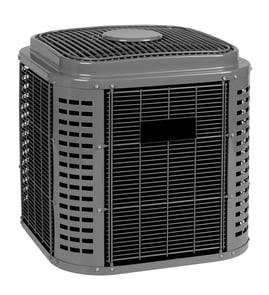
To reset your Amana ARCF30U01D central air conditioner, we start by fully power-cycling the system: turn the thermostat to OFF, shut off power at the outdoor disconnect or breaker, wait 5 minutes, then restore power and call for cooling. This clears many control and lockout conditions.
- Set the thermostat mode to OFF.
- Turn OFF power to the outdoor condensing unit at the disconnect box (or the circuit breaker).
- Wait 5 minutes (this protects the compressor and lets controls fully discharge).
- Turn power ON again.
- Set the thermostat to COOL and lower the set temperature 3 to 5 degrees.
- Wait up to 10 minutes for the outdoor unit to start (some systems have built-in delays).
- Thermostat: confirm it has power and is set to COOL.
- Breaker/disconnect: confirm both indoor air handler and outdoor unit power are on.
- Airflow: replace a dirty filter and make sure supply/return vents are open.
- Outdoor coil: clear leaves and debris; keep at least 2 feet of clearance.
- Wiring: look for loose or damaged low-voltage wires (with power off). If you need guidance, use how to repair broken or damaged wires video.
| What you see | What it usually means | What we do next |
|---|---|---|
| Unit restarts after power cycle | Temporary control glitch or delay | Monitor operation for a full cooling cycle |
| Outdoor fan runs, no cooling | Possible compressor or capacitor issue | Have a technician diagnose electrical components |
| Nothing runs at all | Power, thermostat, or control issue | Recheck breakers, thermostat settings, and wiring |
A proper power-cycle reset is the safest first step for an outdoor condensing unit because it clears minor faults without forcing the compressor to restart under pressure, which can shorten component life.
Last updated: February 2026
How old is my air conditioner by serial number?
For your Amana ARCF30U01D condensing unit, the serial number is the fastest way to estimate the unit’s age because it typically contains a built-in date code. We recommend finding the data plate on the outdoor condenser cabinet, then decoding the serial format used on your specific unit.
On most central air outdoor units, the serial number is on the rating/data plate attached to the cabinet.
- Check the outside of the condenser cabinet near the service panel
- Look for a label that lists model and serial
- Write the serial number exactly as shown (letters and numbers)
- Take a clear photo before the label fades further
- If the label is damaged, check for a secondary sticker inside the electrical/control compartment (power off first)
Amana serial formats vary by production era, but many HVAC serial numbers use a year + week or year + month pattern.
Here are the most common patterns you’ll see across central air equipment:
| Common date code style | What it looks like | How to read it |
|---|---|---|
| Week + year | 4 digits like WWYY |
Week of year, then 2-digit year |
| Year + month | 4 digits like YYMM |
2-digit year, then month |
| Embedded year | 2 digits in the middle | Find the 2-digit year within the serial |
Once you think you have the year, confirm it matches the rest of the system.
- Compare the condenser age to the indoor coil/air handler or furnace age
- Check if the refrigerant type on the label matches the era (older systems often differ)
- Look for installation stickers on the disconnect box or inside the electrical panel
- If the unit is 10 to 15+ years old, plan for more frequent maintenance and possible part wear
Knowing the manufacture year helps us match the right Amana ARCF series parts, choose compatible electrical hardware, and set realistic expectations for repairs versus replacement planning.
If you’re removing panels to access the label or wiring compartment, replacing missing fasteners helps keep the cabinet sealed and safe.
Last updated: February 2026
How to tell the tonnage of an Amana AC unit?
To tell the tonnage of your Amana central air conditioner (model ARCF30U01D), find the unit’s cooling capacity in BTU/hr on the data plate and divide by 12,000. The result is the nominal tonnage (for example, 36,000 BTU/hr = 3 tons).
On most outdoor condensing units, the cooling capacity is listed on the rating label (data plate). Check these common spots:
- Inside the service panel (after power is shut off)
- On the exterior cabinet near the electrical compartment
- On a label near the refrigerant lines or compressor area
- On the original spec sticker if it is still legible
Use this as a fast reference once you have the BTU/hr number.
| Cooling capacity (BTU/hr) | Nominal tonnage |
|---|---|
| 18,000 | 1.5 tons |
| 24,000 | 2 tons |
| 30,000 | 2.5 tons |
| 36,000 | 3 tons |
| 42,000 | 3.5 tons |
| 48,000 | 4 tons |
| 60,000 | 5 tons |
We use the model number and the unit’s rating label to identify the correct capacity. If the label is damaged, these steps help narrow it down:
- Confirm the full model number (ARCF30U01D) and any additional numbers on the tag
- Look for a “BTU/hr”, “Cooling capacity”, or “Capacity” line on the label
- Check the indoor coil/air handler label too; it often lists a matched system size
- Use a flashlight and take a close-up photo; faded labels are easier to read in a photo
- If you’re opening panels, shut off power at the disconnect first
For help confirming the exact model number format before ordering parts, use how to find your appliance model number (and what it means for parts).
Correct tonnage helps you match system components (like the indoor coil and metering device) and avoid performance problems such as poor humidity control, short cycling, and higher energy use.
Last updated: February 2026
How to look up AC model number?
For your Amana central air conditioner condensing unit, the model number is on the unit’s rating plate; once you copy the full code exactly as shown, you can use it to match the correct parts list and diagrams for your system (for this page, the model is ARCF30U01D).
Most outdoor condensing units place the rating plate in one of these spots:
- On the outside cabinet side panel (often near the service access panel)
- Inside the electrical/control compartment (behind the access panel)
- Near the refrigerant line connections (where the copper lines enter the cabinet)
- On the back side of the cabinet (facing the house)
- Occasionally on the inside of the top grille area (less common)
Copy the information exactly as it appears on the label.
- Model number (full alphanumeric string)
- Serial number (helps identify production run)
- Electrical ratings (volts, phase, Hz, MCA, MOCP)
- Unit size/capacity (often embedded in the model number)
| Label field | Why it matters for parts | Example of what to capture |
|---|---|---|
| Model No. | Primary key for diagrams and part fit | ARCF30U01D |
| Serial No. | Helps confirm exact build | Full serial as printed |
| Electrical data | Confirms correct electrical components | Voltage and MOCP |
Central air conditioner parts can look similar across ARCF-series units, but fasteners, wiring hardware, and electrical connections can vary by model and production run. Using the exact model number helps us match the correct components and avoid ordering the wrong item.
Use these steps to get a usable model number:
- Turn off power at the disconnect before opening any access panel
- Wipe the plate gently; dirt and oxidation can hide characters
- Take a clear photo and zoom in to confirm letters vs numbers (for example, O vs 0)
- If you still cannot read it, use our guide: how to find your appliance model number (and what it means for parts)
Last updated: February 2026
What AC parts are most commonly replaced?
For an Amana ARCF30U01D condensing unit, the most commonly replaced items are usually electrical and hardware components (fasteners, wire connections, and wire management) plus major system parts like the run capacitor, contactor, condenser fan motor, and compressor. The exact “most replaced” list depends on age, environment, and maintenance.
- Run capacitor: Helps start and run the compressor and fan motor; a frequent no-cool culprit.
- Contactor/relay: Switches high voltage to the outdoor unit; can pit or stick.
- Condenser fan motor: Wears out from heat and constant cycling.
- Compressor: Less common than capacitors or contactors, but a major failure when it happens.
- Coils (evaporator or condenser): Can leak or corrode; coil issues often show up as poor cooling.
- Low-voltage wiring and connections: Loose, burned, or corroded connections can stop operation.
This model’s parts list includes several small but important items that often get replaced during service because they strip, corrode, or get damaged during access:
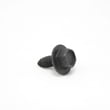
- Screw WP90767
- Tap screw WP489427
- Keps nut WP488130
- Cord clip WPM0104106
- Wire joint WPA0317601
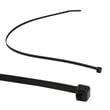
- Tie WPW10339879
| Symptom | Common part to check first | What you may notice |
|---|---|---|
| Outdoor unit hums but fan will not start | Run capacitor | Fan blade spins with a push, then stops |
| Outdoor unit will not run at all | Contactor, capacitor, wiring | No click at the contactor, intermittent operation |
| Runs but cools poorly | Coils, refrigerant-related issues, airflow | Longer run times, warm supply air |
| Rattling or vibration | Fan blade/mounting hardware | Noise increases on startup/shutdown |
Replacing the right part first saves time and prevents repeat failures. For example, a weak capacitor can overheat a fan motor or stress the compressor, turning a small repair into a major one.
- Shut off power at the disconnect and breaker before opening the condensing unit.
- Take a photo of wiring before disconnecting anything.
- Use correct fasteners; mismatched screws can strip panels and cause vibration.
- If you test electrical parts, use a meter rated for HVAC work.
For tool basics, we recommend reviewing must have tools for appliance repair.
Last updated: February 2026