Owner’s manual
 Error Codes


What's the lifespan of a bottom freezer fridge?
Most bottom-freezer refrigerators last about 12 to 15 years with normal household use and basic maintenance. For your Samsung RF32FMQDBSR, keeping airflow clear, doors sealing tightly, and the ice and water system maintained helps you reach the upper end of that range; see the RF32FMQDBSR owner's manual for model-specific care steps.
What affects lifespan the most
- Condenser and ventilation: Dust buildup and blocked airflow make the compressor run hotter and longer.
- Door seal condition: Leaky gaskets cause constant run time and moisture issues.
- Ice maker and water system health: Mineral buildup and slow fills can strain valves and fans.
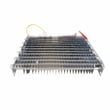
- Defrost performance: Frost buildup reduces airflow and forces longer run cycles.
- Room conditions: High ambient heat and tight cabinetry shorten component life.
Typical lifespan by major component
| Component | Typical service life | What you may notice when it’s failing |
|---|---|---|
| Compressor | 10 to 20 years | Warm temps, clicking, long run time |
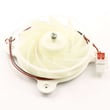
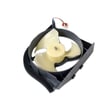
| Evaporator fan motor | 8 to 12 years | Noisy fan, warm fridge section |
| Temperature sensor | 8 to 12 years | Temps swing, odd cycling |
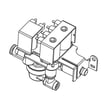
| Water valve | 5 to 10 years | No ice, slow water, leaking |
Maintenance that helps you get 12 to 15 years
- Vacuum dust from the rear and lower areas (and keep vents unobstructed).
- Confirm doors close fully and seals are clean and pliable.
- Replace water filters on schedule and flush the dispenser after changes.
- Keep freezer drawers and bins aligned so doors seal evenly.
- If ice production drops, follow the steps in why your Samsung fridge stopped making ice and how to fix it.
Why it matters
A bottom-freezer design is efficient, but it relies on steady airflow and tight door seals. Small issues like frost buildup or a weak seal can add months of extra compressor run time each year, which shortens overall life.
Last updated: January 2026
What are the disadvantages of a bottom freezer?
A bottom-freezer design on the Samsung RF32FMQDBSR puts frozen food in a lower drawer, so the main tradeoff is convenience: you often bend more to access freezer items, and the drawer layout can make it harder to see and organize small packages. For model-specific features and storage details, use the RF32FMQDBSR owner's manual.
Common disadvantages (what most owners notice)
- More bending and digging: freezer drawers usually require crouching and moving items to reach the bottom.
- Harder visibility: stacked bags and boxes can hide what you have, which leads to food waste.
- Heavier access: a loaded freezer drawer can feel heavy to pull out, especially on uneven floors.
- Less “grab-and-go”: compared with side-by-side freezers, you may open the drawer longer while searching.
- Large frozen items can be awkward: wide pizza boxes or tall items may not fit as neatly depending on basket layout.
Bottom freezer vs other styles (quick comparison)
| Feature | Bottom freezer | Side-by-side | Top freezer |
|---|---|---|---|
| Fresh food access | Best (at eye level) | Good | Fair |
| Frozen food access | More bending | Least bending | Some bending |
| Freezer organization | Drawer/baskets | Shelves/door bins | Shelves |
| Best for | Fresh-food heavy households | Frozen-food heavy households | Budget and simplicity |
Tips to reduce the downsides
- Use bins to group items (breakfast, veggies, meat) so you lift one bin instead of digging.
- Keep a “first-out” basket for items you use weekly.
- Store flat items vertically when possible to improve visibility.
- Avoid overfilling; airflow and access both suffer.
Why it matters
Bottom-freezer refrigerators are popular because fresh food is easiest to reach, but the freezer drawer design can slow you down day-to-day. If you rely heavily on frozen foods, organization and drawer usability become the deciding factors.
Last updated: January 2026
What is the most common problem with Samsung refrigerators?
The most common problems we see on Samsung refrigerators like model RF32FMQDBSR are cooling problems (warm fridge or freezer) and ice maker issues (no ice, small cubes, or ice buildup). These usually trace back to airflow, frost buildup, or water supply problems.
Most common symptoms and what they usually point to
- Fridge section warm but freezer cold: restricted airflow or an evaporator fan issue
- Both sections warm: compressor start components, control issue, or sealed system problem
- Ice maker not making ice: water supply restriction, frozen fill path, or ice room airflow issue
- Frost or ice behind rear panel: defrost problem or door not sealing
- Clicking, buzzing, or fan noise: fan motor, ice room fan, or compressor overload protector
Quick checks we recommend first (no parts needed)
- Confirm temperature settings: 37°F for fresh food, 0°F for freezer (typical targets).
- Make sure vents are not blocked by food packages.
- Check door gaskets for gaps and clean the sealing surfaces.
- Clean condenser coils and make sure the unit has proper clearance for airflow.
- If ice maker is the issue, verify the shutoff arm or ice maker setting is ON and confirm strong water flow at the dispenser (if equipped).
Parts that commonly relate to these problems on RF32FMQDBSR
If the basic checks do not help, these model-related parts are often involved:
| Problem area | Common suspect part | What it does |
|---|---|---|
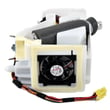
| Poor airflow in fresh food section | Refrigerator evaporator fan motor | Circulates cold air through the refrigerator |
| Ice room not cooling well | Refrigerator ice room fan motor assembly | Moves cold air to the ice maker compartment |
| Temperature reading issues | Refrigerator temperature sensor (example: DA32-10104N) | Reports temperature to the control |
For model-specific diagnostics, wiring, and component locations, use the RF32FMQDBSR manual.
Why it matters
Cooling and ice maker complaints are often connected. If airflow is weak or frost builds up, the refrigerator can run longer, temperatures drift, and the ice maker can stop producing reliably.
Helpful DIY guidance
- Use why your Samsung fridge stopped making ice and how to fix it to walk through the most common ice maker failure points.
- If you see an error code, use Samsung rf32fm model 4 door refrigerator error codes to match the code to likely causes.
Last updated: January 2026