Installation guide
 Owner’s manual


What is the capacity of the WTW5300VW0?
The Whirlpool WTW5300VW0 washer has a 3.5 cu. ft. wash basket capacity. That size is designed for everyday family loads, including mixed clothing and medium-size bedding, as long as you load loosely and avoid packing items down (per the loading guidance in the owner's manual).
What 3.5 cu. ft. means for real-world loads
A 3.5 cu. ft. top-load washer like the WTW5300VW0 typically handles these load types well:
- Daily mixed loads (shirts, jeans, towels) without overfilling
- Medium towel loads (load evenly so items move freely)
- A bedding item like a comforter only if it fits loosely and can circulate
- Heavier items (hoodies, jeans) best washed with fewer pieces per load
Loading tips that protect cleaning and spin performance
Overloading is one of the most common reasons for poor cleaning, out-of-balance spinning, and extra wear on drive components.
- Load items loosely; do not push clothes down into the basket
- Mix large and small items to keep the load balanced
- Keep the load at or below the top of the basket
- Choose a water level that matches the load size (small loads need less water)
- If the washer struggles to spin out, reduce the load and redistribute items
Quick reference
| Spec | Whirlpool WTW5300VW0 |
|---|---|
| Washer type | Top-load |
| Capacity | 3.5 cu. ft. |
| Best practice | Load loosely; do not overload |
Why it matters
Matching your load size to the 3.5 cu. ft. capacity helps the washer agitate and rinse properly, reduces vibration, and can prevent premature wear on parts involved in agitation and spinning.
Last updated: February 2026
What does error code 530 mean?
On the Whirlpool WTW5300VW0 washer, “530” is not a standard washer fault code; it is most often a non-washer message (commonly an internet or access error) or a misread display. For washer problems, we use the troubleshooting steps and any model-specific diagnostics in the WTW5300VW0 owner's manual.
What to check first (WTW5300VW0)
- Unplug the washer for 1 minute, then plug it back into a grounded 3-prong outlet.
- Make sure you are not using an extension cord.
- Confirm the Timer knob is aligned with a cycle; turn it slightly to the right and pull to start.
- Verify both hot and cold water faucets are fully on.
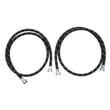
- Check inlet hoses for kinks.
- If filling is weak, clean the water inlet valve screens (turn off water first).
If the washer will not run, fill, rinse, or agitate
The manual’s “won’t run/fill” checks are the right path for this model. A “code” can show up when the washer stops mid-cycle due to a basic condition like power, water supply, or a lid safety issue.
Parts that commonly relate to “won’t start” or “won’t spin” symptoms
| Symptom | Common area | Example part for this model |
|---|---|---|
| Won’t start or stops when lid opens | Lid safety circuit | Washer lid switch assembly WP8318084 |
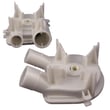
| Won’t drain or leaves water in tub | Drain system | Washer drain pump WP3363394 |
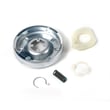
| Agitates poorly or slips | Drive/agitator | Agitator dog 80040 |
Why it matters
Treating “530” as a washer-specific error can lead to replacing the wrong part. Starting with power, timer setting, and water supply checks fixes the most common no-run and no-fill complaints on direct-drive top-load washers like the WTW5300VW0.
Last updated: February 2026
What is the most common problem with a washing machine top loader?
The most common top-load washer problem is an unbalanced load, which causes banging, walking, or a spin that stops early. On the Whirlpool WTW5300VW0, many “common problems” also trace back to leveling, drain setup, or the lid not fully closing, all of which are covered in the owner's manual.
Quick checks that fix the most calls
- Redistribute the load; mix large and small items so the basket stays centered.
- Confirm the washer is level and the front feet are installed with the nuts tightened.
- Push the basket back to center if it was pulled forward during loading.
- Make sure the lid is fully closed; this washer will not agitate or spin with the lid open.
- Check for excessive suds; measure detergent and use less in very soft water.
If the symptom is vibration, noise, or a “crooked” basket
An off-balance load is the top cause, but setup matters just as much.
| What you notice | Most likely cause | What to do first |
|---|---|---|
| Loud banging in spin | Load not balanced | Rebalance and restart spin |
| Washer “walks” | Washer not level | Level the feet; recheck floor |
| Basket looks off-center before start | Basket pulled forward | Push basket to center |
| Stops spinning mid-cycle | Lid not closed or load out of balance | Close lid; rebalance |
If the symptom is “won’t drain” or “won’t spin”
Drain and spin complaints are also very common on top-load washers.
- Verify the drain hose is not clogged or kinked.
- Confirm the drain hose height is correct; the end of the drain hose should not be more than 96 in. (244 cm) above the floor.
- Make sure the drain hose is not sealed to the standpipe; it needs an air gap.
- If the lid switch is failing, the washer may not spin; the washer lid switch assembly WP8318084 is a common related part.
Why it matters
Running unbalanced loads or operating with an unlevel cabinet increases wear on the suspension, drive components, and basket support. Fixing balance and installation issues first prevents repeat breakdowns and unnecessary part replacement.
Last updated: February 2026