Error Codes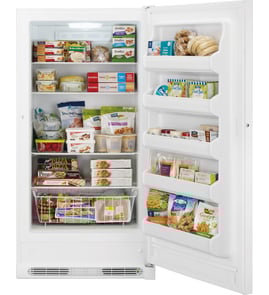



How many cubic feet is my upright freezer?
For Kenmore upright freezer model 1068263910, the exact cubic-foot capacity is determined by the cabinet’s internal usable space (not the outside dimensions). Most upright freezers fall into common size ranges, so you can estimate capacity by measuring the interior and converting to cubic feet.
Quick ways to estimate capacity
Option 1: Measure the interior (most accurate)
- Unplug the freezer and remove baskets/shelves if they block measuring.
- Measure interior width, height, and depth in inches (usable space).
- Multiply:
W x H x Dto get cubic inches. - Convert to cubic feet: divide by 1,728.
Option 2: Use typical upright freezer size ranges
Most upright freezers fit one of these capacity bands:
- Compact: 3 to 5 cu ft
- Small: 5 to 9 cu ft
- Medium: 10 to 16 cu ft
- Large: 17+ cu ft
| Size class | Typical capacity | Typical outside size (W x H x D) |
|---|---|---|
| Compact | 3 to 5 cu ft | 20 to 24 in x 31 to 37 in x 20 to 25 in |
| Small | 5 to 9 cu ft | 21 to 25 in x 55 to 60 in x 22 to 26 in |
| Medium | 10 to 16 cu ft | 23 to 31 in x 60 to 73 in x 27 to 30 in |
| Large | 17+ cu ft | 27 to 34 in x 64 to 76 in x 29 to 30 in |
Why it matters
Capacity affects how much food you can store, how you organize shelves and bins, and whether the freezer will fit your space with proper airflow clearance.
Helpful tip while measuring
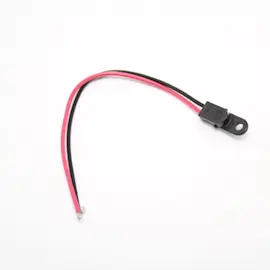
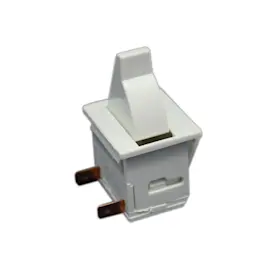
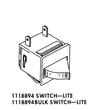
If the door does not stay open or the interior light is not working while you measure, a worn door/light switch can cause frustration during setup and organization. The light switch W11384469 is the model-matched switch listed for this freezer.
Last updated: February 2026
How to clean coils on Kenmore upright freezer?
To clean the coils on your Kenmore upright freezer model 1068263910, unplug the freezer, pull it out for access, then vacuum and brush dust off the condenser coil area and the condenser fan intake. Keeping coils clean helps the compressor run cooler and more efficiently.
Before you start (safety and setup)
- Unplug the freezer (or switch off the breaker).
- Protect the floor with cardboard or a towel before sliding the cabinet.
- Use a coil brush and a vacuum with a crevice tool; avoid sharp tools.
- If you see damaged wiring or brittle insulation, stop and schedule service.
Step-by-step: cleaning the condenser coil area
- Move the freezer: Pull it straight out so you can reach the lower rear area (or lower front, depending on how your unit is built).
- Remove the access cover or grille (if equipped): Take out any retaining screws and set the panel aside.
- Dry-clean first: Use a coil brush to loosen packed lint and pet hair.
- Vacuum thoroughly: Vacuum the coil surfaces, the base pan area, and around the condenser fan (if present).
- Wipe the surrounding area: A lightly damp cloth is fine on nearby metal surfaces; keep water off electrical parts.
- Reassemble and restore power: Reinstall the cover, push the freezer back (leave a little clearance for airflow), then plug it in.
What to use (and what to avoid)
| Item | Good choice | Avoid |
|---|---|---|
| Cleaning tools | Coil brush, vacuum, soft brush | Compressed air (blows dust into components) |
| Moisture | Lightly damp cloth on non-electrical surfaces | Spraying water or cleaner into the coil compartment |
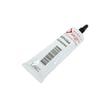
| Seal/patch (only if needed) | Cement WP279368 for sealing small gaps after cleaning | Household caulk not rated for appliances |
How often should we clean freezer coils?
- Every 6 months in most homes
- Every 3 months if you have pets, heavy dust, or the freezer sits in a garage
- Any time you notice the cabinet running hotter than normal or run times getting longer
Why it matters
Dirty condenser coils trap heat, which forces the sealed system and compressor to work harder. That can raise energy use, reduce cooling performance, and shorten the life of major components.
Last updated: February 2026
Where is the model number on a Kenmore upright freezer?
On a Kenmore upright freezer like model 1068263910, the model number is printed on a rating label inside the cabinet or on the exterior cabinet. We most often see it on an inside side wall; it can also be on the ceiling area, behind the kick plate, or on the back.
Common places to check first
- Inside the freezer on the left or right interior wall (near the front opening)
- Inside at the top (ceiling area) above the shelves or light
- Behind the lower kick plate or toe grille (front bottom)
- On the back exterior panel
- Along the door frame edge (hinge side or latch side)
What the label looks like (and what to write down)
The label is usually a white or silver sticker/plate with multiple fields. Record these exactly:
- Model (example: 1068263910)
- Serial number
- Electrical ratings (volts/amps)
- Sometimes a manufacturing code
| What you need | Why we need it | Example format |
|---|---|---|
| Model number | Ensures parts match your exact freezer design | 1068263910 |
| Serial number | Helps confirm production variation and correct revisions | Letters and numbers |
Why it matters
Kenmore upright freezers can have similar-looking cabinets across different production runs. Using the exact model number helps us match the correct diagrams and parts (like a thermostat or light switch) the first time.
If the interior light area is what you are checking
If you are looking near the light housing, the model label is sometimes nearby. If your light is not turning on when the door opens, the door switch can be involved; see the light switch W11384469 if you are already confirming parts for model 1068263910.
Last updated: February 2026
Does a Kenmore upright freezer have a reset button?
Most Kenmore upright freezers, including model 1068263910, do not have a single dedicated “reset” button. A practical reset is to power-cycle the freezer (unplug, wait, plug back in); on some versions with electronic controls, a button-combo reset may also be available.
Quick reset options (safest first)
- Power reset: Unplug the freezer for 5 minutes, then plug it back in.
- Breaker reset: If it is hardwired or not easily unplugged, turn the circuit breaker OFF for 5 minutes, then ON.
- Control reset (if your unit has Up/Down keys): Press and hold Temp Up and Temp Down together for about 5 seconds.
- After any reset, allow 24 hours for temperatures to fully stabilize.
What to check if it still will not cool or the alarm returns
- Confirm the outlet has power (try a lamp) and the cord is firmly seated.
- Make sure the temperature control is set colder (mid-range is a good starting point).
- Check the door is sealing and closing fully; warm air leaks can trigger alarms.
- Listen for the compressor and fan operation; repeated clicking can indicate a start issue.
- If the interior light stays on with the door closed, the freezer can warm up.
Common symptom-to-next-step table
| Symptom | Most likely next step |
|---|---|
| Display/controls frozen or acting erratic | Do the 5-minute power reset |
| Warm freezer, compressor runs constantly | Check door seal and airflow, then verify thermostat setting |
| Light stays on when door is shut | Inspect/replace the light switch W11384469 |
| No cooling and no sound | Verify power at outlet/breaker, then schedule service |
Why it matters
A reset clears minor control glitches and restores normal cycling. If a cooling problem remains after a reset, it usually points to an airflow, door-seal, control, or sealed-system issue that needs targeted troubleshooting.
Last updated: February 2026
Why is my Kenmore upright freezer not freezing?
If your Kenmore upright freezer model 1068263910 is running but not freezing, the most common causes are poor airflow from heavy frost, dirty condenser coils, a temperature control problem, or a sealed-system/compressor issue. Start with airflow and temperature checks before suspecting major repairs.
Quick checks we recommend first
- Confirm the control is set colder; wait 24 hours after any adjustment.
- Make sure the door closes tightly and the gasket is sealing all the way around.
- Check for heavy frost on the back wall or shelves (points to a defrost/airflow problem).
- Verify the freezer is not overpacked; leave space for air to circulate.
- Clean condenser coils (if accessible) and ensure the unit has proper clearance for ventilation.
- Listen for the evaporator fan (inside) and condenser fan (near compressor, if equipped).
What the symptoms usually mean
| What you notice | Most likely cause | What to do next |
|---|---|---|
| Runs constantly, warm inside, little or no frost pattern | Sealed system or compressor problem | Plan for professional service; compare repair cost vs. replacement |
| Heavy frost buildup, weak airflow | Defrost system issue or door leak | Defrost fully, check door seal, then monitor |
| Light works, but temperature won’t respond to dial | Temperature control thermostat issue | Consider replacing the thermostat 4389248 |
| Interior light stays on when door is closed | Door/light switch stuck | Test and replace the light switch W11384469 if needed |
DIY steps that solve many “not freezing” complaints
- Power reset: Unplug for 5 minutes, plug back in.
- Full manual defrost: Move food to a cooler, unplug, leave door open until all ice melts; dry everything, restart.
- Coil cleaning: Vacuum dust from coils and the compressor area (unplug first).
- Temperature verification: Use a freezer thermometer; target is typically 0°F.
Why it matters
A freezer that is not freezing can spoil food quickly and can also overwork the compressor. Catching airflow, frost, or control issues early often prevents more expensive sealed-system damage.
Last updated: February 2026
Why is my upright freezer leaking water on the floor?
On Kenmore upright freezer model 1068263910, water on the floor most often comes from a clogged or frozen defrost drain that forces meltwater to spill inside the cabinet and out the bottom. Clearing the drain path and confirming the door seals close tightly usually stops the leak.
Quick checks we recommend first
- Unplug the freezer before working near wiring or the evaporator area.
- Look for a sheet of ice on the freezer floor or near the back wall (classic drain-freeze symptom).
- Check whether the leak happens after a defrost cycle (often points to the drain).
- Inspect the door gasket for gaps, tears, or heavy frost around the opening.
- Verify the freezer is level or slightly tilted back so the door self-closes.
How to clear a clogged or frozen defrost drain
- Remove food and shelves as needed to access the rear interior panel and floor area.
- Melt visible ice with warm (not boiling) water and towels.
- Flush the drain hole with warm water using a turkey baster or squeeze bottle until it flows freely.
- If the drain keeps refreezing, check for warm air leaks at the door and heavy frost buildup.
Parts that can be involved
If the leak is actually from condensation or a door that is not closing, the interior light can stay on and add heat, increasing moisture and dripping.
| Symptom you notice | Most likely cause | What to do next |
|---|---|---|
| Ice on bottom, water after defrost | Drain frozen/clogged | Thaw and flush drain |
| Water beads around door, heavy frost | Door not sealing | Clean gasket, level unit |
| Light seems to stay on | Door switch not closing | Test/replace switch |
If you suspect the door switch, use the model-matched part: light switch W11384469.
Why it matters
A blocked drain or air leak makes moisture build up, which can create recurring ice, temperature swings, and water damage on the floor. Fixing the drain and sealing issues keeps defrost water going where it belongs.
Last updated: February 2026