Owner’s manual
 Error Codes


What is the average lifespan of a Kenmore Elite refrigerator?
Most Kenmore Elite refrigerators, including model 79551822411, last 12 to 15 years with normal use. With consistent maintenance (clean condenser coils, good door seals, and proper temperatures), it’s common to reach the upper end of that range before major sealed-system repairs become a factor.
Typical lifespan by component
A refrigerator usually gets replaced because one major system becomes too costly to repair.
| Component | Typical service life | What you’ll notice when it’s failing |
|---|---|---|
| Compressor (sealed system) | 10 to 15 years | Warm fridge/freezer, long run times |
| Electronic controls | 8 to 15 years | Erratic temps, intermittent cooling |
| Evaporator fan | 8 to 12 years | Noisy fan, warm fresh food section |
| Water/ice system parts | 5 to 10 years | Slow dispensing, leaks, no ice |
Maintenance that extends life
We recommend these habits to help your Kenmore Elite side-by-side run longer and more efficiently:
- Vacuum and brush the condenser area regularly to reduce heat load on the compressor.
- Keep door gaskets clean so the doors seal tightly and humidity stays out.
- Set and verify temps (about 37°F fresh food and 0°F freezer).
- Replace the water filter on schedule to protect valves and improve flow.
- Keep vents inside the compartments unblocked for proper airflow.
For model-specific care and cleaning intervals, use the 79551822411 owner’s manual.
When repair vs. replace makes sense
A simple way to decide is to compare the repair cost to the refrigerator’s age.
- Under 8 years: Repairs like fans, valves, or controls often make sense.
- 8 to 12 years: Repair is reasonable if the sealed system is healthy.
- 12+ years: Major sealed-system work (compressor, refrigerant leak) often pushes owners toward replacement.
Why it matters
Lifespan is mostly about compressor workload and moisture control. Clean coils and tight door seals reduce run time, which lowers wear on the compressor and helps prevent temperature swings that stress electronics.
Last updated: January 2026
How many cubic feet is my Kenmore refrigerator model 79551822411?
The exact cubic-foot capacity for Kenmore model 79551822411 is listed on the model’s specifications in the 79551822411 owner’s manual. Most Kenmore Elite side-by-side refrigerators fall in the 20 to 30 cu. ft. range, but the precise number depends on the specific configuration.
Where to find the exact capacity
Check these common places first (fastest to most detailed):
- The specifications section in the 79551822411 owner’s manual
- The model and serial tag inside the fresh food compartment (often on a side wall)
- The product rating label area near the door opening (varies by design)
- Any original sales receipt or product listing that includes “capacity”
Quick capacity ranges (what to expect)
If you are estimating capacity for planning shelves, bins, or kitchen fit, these typical ranges help:
| Refrigerator style | Typical capacity range |
|---|---|
| Side-by-side (standard depth) | 22 to 28 cu. ft. |
| Side-by-side (counter depth) | 20 to 24 cu. ft. |
| Bottom freezer / French door (varies widely) | 20 to 30 cu. ft. |
Why it matters
Capacity affects how much food you can store, but it also impacts airflow and temperature stability. Overpacking can block vents and reduce cooling performance, which can lead to warm spots or frost issues.
Related parts customers often replace
Capacity questions often come up when customers are also maintaining water and ice features. If you are refreshing performance, these model-matched parts are common:
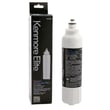
- Kenmore refrigerator water filter 9490 ADQ73613402 (water taste, flow, and ice quality)
- Refrigerator water reservoir MJM61904702 (chilled water storage inside the cabinet)
- Refrigerator water inlet valve AJU34125552 (water supply to dispenser and ice maker)
Last updated: January 2026
What are the common problems with Kenmore Elite refrigerators?
Common problems on the Kenmore Elite 79551822411 side-by-side refrigerator include weak or no cooling, ice maker or water dispenser issues, frost buildup from airflow or defrost problems, water leaks, and unusual noises. Most fixes start with basic maintenance, airflow checks, and a few high-failure parts.
Most common symptoms and what usually causes them
- Not cooling or warm temperatures: dirty condenser coil, failed evaporator fan motor, control board issues, or sealed-system/compressor problems
- Ice maker not making ice: clogged water filter, low water pressure, inlet valve problem, ice maker assembly fault
- Water dispenser slow or not dispensing: restricted filter, frozen reservoir/line, inlet valve issue
- Frost buildup or icing: door not sealing, blocked vents, evaporator fan not moving air, defrost system trouble
- Water under the refrigerator: clogged defrost drain or drain tube, ice buildup in the drain trough
- Buzzing, clicking, or rattling: condenser fan area debris, failing fan motor, compressor start issues
Quick checks we recommend first (in order)
- Confirm controls are set correctly; allow 24 hours after any temperature change.
- Make sure vents inside both compartments are not blocked by food packages.
- Clean dust from the condenser area (unplug first).
- Check door gaskets for gaps and make sure doors close firmly.
- If water or ice is weak, replace the filter and purge air from the water line.
Parts that commonly solve these issues on this model
| Symptom | Part to consider | What it affects |
|---|---|---|
| Slow water, bad taste, ice issues | Kenmore refrigerator water filter 9490 ADQ73613402 | Water flow and filtration to dispenser and ice maker |
| No ice or weak fill | Refrigerator water inlet valve AJU34125552 | Water supply into the refrigerator |
| Leaking/puddles | Refrigerator drain tube 5251JA3003D | Defrost drain routing and drainage |
| Warm freezer or noisy airflow | Refrigerator freezer evaporator fan motor EAU62064602 | Circulates cold air through freezer and fresh food |
Why it matters
Catching airflow restrictions, drain clogs, and water-supply problems early prevents food spoilage, ice buildup, and repeated leaks. It also helps you avoid replacing major components (like a compressor) when the real issue is a filter, fan, or drain.
Model-specific help
For control settings, filter replacement steps, and component locations, use the 79551822411 manual.
Last updated: January 2026