Installation guide
 Owner’s manual
 Error Codes



How long do GE wall ovens last?
Most GE electric wall ovens like model JK955SF1SS last 12 years with normal household use; with consistent cleaning, correct installation, and prompt repair of heating or cooling issues, 15 years is typical.
What affects lifespan the most
- Heavy use (daily high-heat baking, frequent broiling, frequent self-clean cycles)
- Overheating around the control area (restricted airflow, failed cooling fan)
- Power issues (loose wiring, repeated breaker trips)
- Door seal condition (heat loss makes elements and controls work harder)
- Cleaning habits (spills left to bake on can damage finishes and create hot spots)
Quick maintenance checklist (high impact)
- Keep the door closing tightly; replace a worn gasket if you feel heat leaking.
- Avoid running self-clean back-to-back; let the oven cool fully between cycles.
- Make sure the cooling fan runs during and after baking; fan operation is normal and can continue after shutoff.
- Use the correct rack positions to prevent overheating food spills and improve bake results.
- If temperatures seem off, use the calibration steps in the owner's manual.
Common “end of life” symptoms and what they usually mean
| Symptom | Most common cause | Typical fix |
|---|---|---|
| Oven will not heat | Safety device opened, failed element, control issue | Diagnose heat circuit; replace failed part |
| Takes too long to preheat | Weak element, sensor drift, poor door seal | Test element/sensor; replace gasket |
| Fan runs long after cooking | Normal cooling cycle or airflow restriction | Verify venting; check fan |
| Self-clean problems or door lock issues | Door lock switch/limit issue | Inspect lock circuit |
Why it matters
A wall oven’s lifespan is usually limited by heat stress on electronics, wiring, and safety controls. Keeping airflow clear and addressing heating problems early helps your GE JK955SF1SS avoid repeated overheating cycles that shorten component life.
Last updated: January 2026
How to find wall oven model number?
On the GE wall oven model JK955SF1SS, the model and serial number label is typically on the side trim or on the front of the lower oven behind the oven door. We recommend writing both numbers down before ordering parts or scheduling service. See the JK955SF1SS owner's manual for the exact label locations.
Where to look on a GE wall oven
Check these common spots in order:
- Side trim (often visible when the door is open)
- Front frame area of the lower oven, behind the oven door
- Along the oven frame near the door opening
- On a rating label that is easiest to read with the oven door fully open
Quick checklist before you search
Doing these steps helps you find the label faster and avoid misreading characters.
- Turn the oven light on so the trim and frame are easier to see
- Wipe grease or dust off the label with a dry cloth (do not soak it)
- Copy the full model number and serial number exactly (letters and numbers)
- Take a clear photo of the label for reference
- Use the full model number when ordering parts like an oven rack or light bulb
Model number vs. serial number (what each is for)
| Item | What it tells us | When you need it |
|---|---|---|
| Model number | The exact product design and parts fit | Ordering parts, looking up diagrams, manuals |
| Serial number | The unit’s production information | Warranty and service history, some service bulletins |
Why it matters
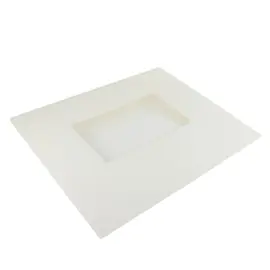
We use the model number to match the correct GE wall oven parts and diagrams. Even small model variations can change which control components, door glass, or racks fit correctly.
Last updated: January 2026
How do you reset a GE oven?
To reset a GE JK955SF1SS wall oven, we recommend pressing CLEAR/OFF to stop the current function, then restoring power at the breaker for at least 30 seconds and setting the clock again. This clears many control glitches and “F” error codes.
Reset options (from quickest to strongest)
- Cancel the current cycle: Press CLEAR/OFF once.
- Power reset (recommended): Turn the oven circuit breaker OFF for 30 seconds, then turn it back ON.
- After a power outage: Press CLEAR/OFF, set the clock, then re-enter your bake or broil settings.
- If the display is blank: Check the home fuse or breaker, then restore power and reset the clock.
What to do for common reset situations
| Symptom | What we do | What it usually fixes |
|---|---|---|
| “F” plus a number/letter flashes | Power reset for 30 seconds | Temporary control faults, stuck logic |
| Controls seem unresponsive | Press CLEAR/OFF, then power reset | Frozen keypad or control state |
| Display flashes | Set the clock | Power interruption memory loss |
| LOCKED DOOR light is on | Press CLEAR/OFF and let oven cool | Door lock staying engaged after high temp |
Safety and best practices
- Turn the breaker OFF before touching wiring or removing panels.
- Wait for the oven to cool if the door is locked; the lock releases only after temperature drops.
- If an “F” code returns right after a reset, service is typically needed.
- If the oven will not heat after resetting, check for overheating protection issues such as a tripped thermal device.
Why it matters
A reset restores the electronic control to a known good state, which often clears false error codes after a surge, power flicker, or an interrupted self-clean cycle. For model-specific control features and troubleshooting steps, use the JK955SF1SS owner's manual.
For code definitions and next steps when an “F” code repeats, use our GE wall oven error codes reference.
Last updated: January 2026
What is the difference between GE and GE Profile wall ovens?
GE Profile wall ovens are GE’s step-up line; they add more premium cooking features, upgraded controls, and higher-end styling compared with standard GE wall ovens, which focus on core bake and broil functions. Your GE JK955SF1SS is a GE Profile model; confirm its exact features in the JK955SF1SS owner’s manual.
Typical differences between GE and GE Profile
These are the most common ways the lines differ across model years:
- More cooking modes on GE Profile (often expanded convection options)
- More advanced controls and displays (more settings and prompts)
- More convenience features (timed cooking, specialty cycles, added customization)
- More premium exterior styling (trim, handle design, control panel look)
- More feature-heavy electronics, which can affect parts like control boards and sensors
How we recommend comparing two specific models
When you’re deciding between a standard GE wall oven and a GE Profile wall oven, compare the items below side by side using each model’s feature list.
| What to compare | Standard GE wall oven | GE Profile wall oven |
|---|---|---|
| Cooking modes | Core bake and broil | More modes, often more convection choices |
| Controls | Simpler interface | More advanced interface and settings |
| Fit and finish | Basic trim and styling | More premium trim and design |
| Service parts impact | Fewer electronic variations | More electronics and feature-specific parts |
For installation-related differences (hard-wiring, junction box requirements, cutout guidance), use the JK955SF1SS installation guide and compare it to the installation guide for the other model.
Why it matters
Knowing whether you’re looking at GE or GE Profile helps set expectations for cooking flexibility, control complexity, and long-term serviceability. It also helps you order the right replacement parts because control panels, sensors, and trim can differ even when ovens look similar.
Last updated: January 2026